A surf retreat can be much more than a vacation built around catching waves. With the right plan, it can combine skill-building, ocean confidence, nourishing meals, movement, rest, and time away from everyday routines. Whether you are considering a first lesson or comparing women’s surf retreats with a solo trip, the best experience starts with realistic expectations.
The goal is not to fill every hour with activity. Surfing can be physically demanding, particularly when you are learning to paddle, pop up, read waves, and manage unfamiliar conditions. A thoughtful retreat schedule gives you enough structure to improve while leaving room to recover, explore, and enjoy the destination.
Why Balance Matters on a Surf Retreat
More surf sessions do not always equal faster progress. Tired arms, sore shoulders, poor sleep, dehydration, and sun exposure can make learning harder and the time in the water less enjoyable. Recovery supports better decision-making, steadier energy, and a more positive experience in challenging conditions.
A balanced day might include a morning lesson, a healthy lunch, a quiet afternoon, and gentle stretching or a sunset walk. This rhythm is especially useful for beginners, who may be surprised by how much energy paddling and repeatedly standing up require. A retreat should feel active and restorative, not like an exhausting fitness test.
Choose Your Main Goals Before Booking
Before comparing prices, decide what you want most from the trip. Your priorities will help you choose between a surf-focused camp, a wellness-centered getaway, or a program that blends both.
- Learning the basics in a supportive setting.
- Improving paddling, balance, turning, or wave selection.
- Feeling more comfortable in the ocean.
- Taking a genuine break from work, screens, and routine.
- Meeting other travelers and enjoying a social atmosphere.
- Adding yoga, mobility work, meditation, massage, or healthy meals.
Write down your top three goals, rank them in order, and use that list while reviewing each retreat itinerary. A beautiful property may not be the right fit if its schedule does not support the reason you are traveling.
Pick a Destination That Fits Your Skill Level
Beginners often benefit from warm water, sandy bottoms, gentle waves, and easy beach access. These conditions reduce some of the additional demands associated with cold water, reefs, strong currents, or difficult entries. More experienced surfers may prefer a destination with several breaks and a wider range of wave types.
Look beyond a destination’s reputation. Consider water temperature, seasonal rainfall, wind, crowd levels, travel time, nearby restaurants, medical care, and transportation. A famous surf town is not automatically the best choice. The right location is the one that fits your ability, budget, comfort level, and preferred pace.
Review What the Retreat Program Includes
Attractive photos can create a strong first impression, but the details determine the value of a retreat. Read the itinerary carefully and ask questions before making a deposit.
Useful signs of a well-organized program
- Clear information about the number, length, and timing of surf lessons.
- Instructor qualifications, manageable group sizes, and ability-based groupings.
- Board, wetsuit, rash guard, and transportation details stated upfront.
- Options for video feedback, surf theory, or individualized coaching.
- Transparent meal plans and support for dietary needs or allergies.
- Written weather, cancellation, refund, and travel insurance policies.
Be cautious when a retreat makes big promises without explaining its coaching approach, or when it hides extra charges for equipment, transfers, meals, or activities. Clarity is a green flag. Vague inclusions and surprise costs are not.
Prepare Your Body Before the Trip
You do not need an intense training plan to enjoy a surf retreat. A few weeks of gentle preparation can make the first days feel more comfortable. Focus on walking, swimming, shoulder mobility, core stability, squats, lunges, and simple balance exercises two or three times each week.
- Week one: Build a routine of regular walks and light mobility work.
- Week two: Add basic core and leg-strength exercises.
- Week three: Include swimming or another low-impact cardio session.
- Week four: Reduce the volume slightly so you arrive rested rather than worn out.
If you have an injury, chronic condition, or concern about strenuous activity, speak with a qualified medical professional before traveling.
Pack for Surf, Sun, and Recovery
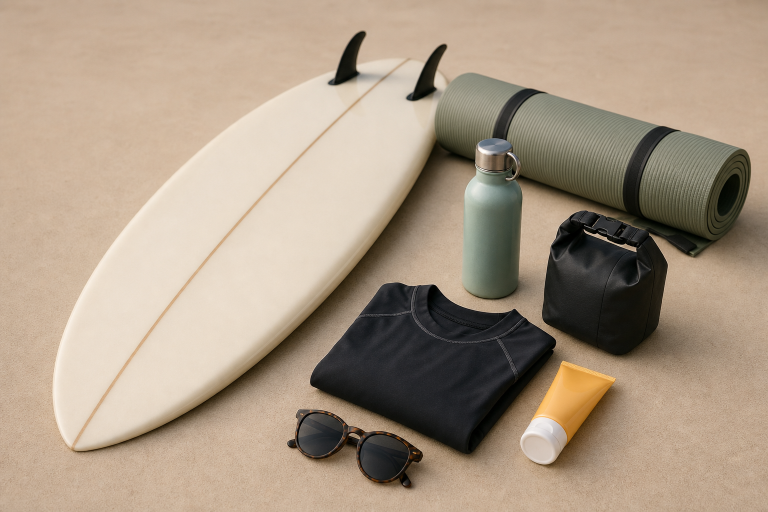
Pack light, practical items that work in and out of the water. Confirm what your retreat provides before bringing bulky gear.
- Two or three swimsuits, quick-dry clothing, and a rash guard or sun shirt.
- A wide-brim hat, sunglasses, a reusable water bottle, and sunscreen.
- Walking shoes, sandals, a light evening layer, and a small dry bag.
- A basic first-aid kit, personal medication, and copies of prescriptions.
Many programs provide surfboards, towels, yoga mats, and airport transfers. Checking in advance can save space in your luggage and avoid unnecessary fees.
Make Water Safety a Daily Habit
Good surf instruction includes safety before, during, and after every session. Follow local beach signs, listen to your instructor, use a board suited to the conditions, and stay within your comfort zone in depth and ability. Avoid surfing alone in unfamiliar water, and keep clear of swimmers, rocks, boats, and other surfers.
Before entering the water, learn how to recognize changing conditions and review rip current safety guidance. If the weather shifts, currents strengthen, or you feel tired or uncertain, leave the water. Choosing to stop is good judgment, not a setback.
Travel With Respect for Local Communities
Wellness travel should benefit the people and places that make the experience possible. Support locally owned restaurants, guides, shops, and transport providers when you can. Ask before taking photographs of people, learn a few polite local phrases, and follow local customs in and out of the water.
Bring reusable items, limit single-use plastics, and leave shells, coral, plants, and wildlife where they belong. Responsible travelers also look for operators that can explain their environmental practices and relationships with the surrounding community.
Sample Seven-Day Surf and Wellness Plan
- Day 1: Arrive, settle in, review safety notes, eat lightly, and go to bed early.
- Day 2: Take a beginner surf lesson, rest after lunch, then stretch or walk.
- Day 3: Practice with coaching, followed by video review or mobility work.
- Day 4: Take a slower morning and enjoy a local cultural outing.
- Day 5: Focus on one surf skill, then schedule yoga, massage, or pool recovery.
- Day 6: Complete a final coached session and leave the afternoon free.
- Day 7: Move gently, reflect on your progress, pack, and confirm travel plans.
Final Booking Checklist
- Does the destination match your ability and comfort level?
- Are the activities, coaching, equipment, meals, and transfers clearly listed?
- Are safety procedures and weather policies easy to understand?
- Is there enough downtime between surf sessions?
- Does the final cost include taxes, tips, transfers, and optional activities?
- Have you checked your passport, entry requirements, insurance, and health needs?
For international trips, review the CDC’s travel health guidance before departure so you can prepare for destination-specific health considerations.
A rewarding surf retreat does not require perfect fitness or years of experience. It requires clear goals, safe instruction, sensible preparation, and enough time to rest. When your plan leaves room for both progress and pleasure, you are more likely to return home with stronger skills, renewed energy, and a deeper respect for the ocean.