For Highland Park, Illinois, homeowners, a plumbing or heating emergency can become stressful quickly, especially when water is spreading, temperatures are dropping, or a drain problem affects more than one room. A simple response plan helps your household act calmly, protect people first, and reduce avoidable damage before a plumber Highland Park, IL arrives.
Emergency readiness is not about attempting every repair yourself. It is about knowing where shutoffs are located, keeping basic supplies nearby, recognizing electrical and contamination risks, and understanding when a problem needs qualified help. Review this plan with everyone who lives in the home, including anyone who may need extra support during an outage or evacuation.
Why Home Emergency Preparation Matters
A small drip beneath a sink, a failed washing machine hose, or a furnace that stops overnight can develop into a much larger problem if the first response is delayed. In Highland Park homes with basements, utility rooms, finished lower levels, or pipes near exterior walls, water and cold-weather problems can affect flooring, belongings, walls, and plumbing components.
Written instructions reduce guesswork. Every adult in the household should know who will shut off water, where flashlights are stored, how to contact utility providers, and which situations require leaving the home. A plan also helps visitors, older relatives, and teenagers respond safely if the primary homeowner is away.
Make A Short Home Risk List
Start with the systems and areas most likely to create trouble in your specific property. Walk through the basement, crawl space, laundry area, kitchen, bathrooms, garage, and mechanical room. Look for aging hoses, corrosion around valves, stains below pipes, slow drains, and equipment that has not been inspected recently.
Questions To Ask
- Does the home have a basement, crawl space, sump pump, or floor drain?
- Are water lines installed near exterior walls, garages, or other colder areas?
- Are washing machine hoses, water heater connections, or toilet supply lines showing wear?
- Have several drains ever slowed down or backed up at the same time?
- Does anyone rely on powered medical equipment, refrigerated medication, or mobility devices?
- Could a loss of heat put children, pets, older adults, or medically vulnerable residents at risk?
What To Do During A Serious Water Leak
When water is flowing quickly, personal safety comes before cleanup. Do not step into standing water near outlets, electrical cords, appliances, or the electrical panel. If the leak is limited to a toilet, sink, refrigerator line, or washing machine, close that fixture’s nearby shutoff valve if it is safe to reach.
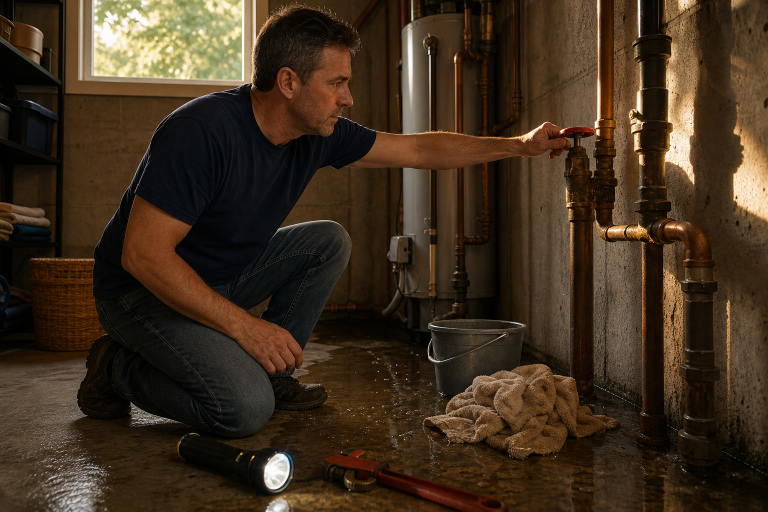
- Turn off the fixture valve when the leak source is clear.
- Use the main water shutoff if the source is unknown, a pipe has burst, or water continues flowing.
- Move electronics, documents, rugs, and furniture away from the area if doing so is safe.
- Place buckets or towels to limit spreading water, but do not delay shutting off the supply.
- Photograph the visible damage before extensive cleanup when possible.
- Arrange professional service if water cannot be stopped or the damaged pipe is concealed in a wall, ceiling, or floor.
Common Leak Sources To Check
- Washing machine supply hoses and connections
- Water heater valves and fittings
- Toilet tank fittings and supply lines
- Refrigerator water lines
- Frozen or split pipes
- Corroded valves beneath sinks
How To Respond To A Sewer Backup
Water containing sewage should be treated as contaminated. Keep children and pets out of the affected space, avoid touching the water, and do not use electrical devices in wet areas. The protective equipment recommended when sewage is involved includes waterproof boots, gloves, and goggles, but widespread contamination or significant standing water usually calls for professional cleanup guidance.
Immediately stop flushing toilets and running sinks, tubs, dishwashers, and washing machines. A single slow drain may be a local clog. However, backups affecting several fixtures, floor drains, or lower-level toilets may indicate a larger drain or sewer-line issue. Reducing water use can help prevent more wastewater from entering the home while the cause is assessed.
What To Do When The Heating System Stops
A heating failure during cold conditions can affect comfort, health, and plumbing. Check the thermostat setting, circuit breaker, furnace switch, and visible power supply before assuming the system has failed completely. Replace a dirty air filter only if the equipment instructions allow it and the system can be accessed safely.
- Close doors to concentrate warmth in occupied rooms.
- Open sink cabinet doors where plumbing runs along exterior walls when freezing is a concern.
- Use approved portable heaters only according to their manufacturer’s instructions and keep them clear of combustible materials.
- Never use an oven, grill, generator, or outdoor cooking appliance to heat indoor spaces.
- Leave the home and seek emergency assistance if there is a gas odor, smoke, or a carbon monoxide alarm.
Find And Label Key Utility Shutoffs
Locate the main water valve, electrical panel, gas shutoff, furnace controls, and sump pump connection before an emergency occurs. Label valves clearly and take photos of their locations. Keep a simple diagram near the utility area, along with the tools needed to operate a shutoff if applicable.
Your household plan should also include utility company phone numbers, emergency contacts, insurance details, the location of fire extinguishers, and the location of smoke and carbon monoxide alarms. Do not turn off a gas supply unless you know it is necessary and can do so safely. Follow instructions from the utility provider or emergency personnel.
Build A Practical Home Emergency Kit
Store a compact kit where it can be reached without entering a flooded basement or dark storage area. The basic supplies included in a household emergency kit can be adjusted for your family, pets, medications, and accessibility needs. Check batteries, drinking water, food, and first-aid supplies at least twice a year.
- Flashlights, spare batteries, and phone charging options
- Work gloves, protective eyewear, towels, buckets, and plastic sheeting
- An adjustable wrench and basic hand tools
- First-aid supplies, drinking water, shelf-stable food, and essential medications
- Pet food, leashes, carriers, and other necessary pet supplies
- Printed contact numbers, insurance information, and copies of important documents
Know When To Call For Professional Help
Preparation has limits. Call for professional help when a leak cannot be controlled, water reaches electrical equipment, sewage enters the home, or several plumbing fixtures back up together. A pipe that may be frozen inside a wall, repeated heating-system shutdowns, unusual odors, smoke, gas odors, and visible structural damage also require prompt attention.
Steps To Take After The Emergency
Once the immediate hazard is controlled, confirm that the home is safe to enter and document visible damage with photos and notes. Save receipts for temporary repairs and emergency services. Dry affected materials as quickly and safely as possible, then determine whether hidden moisture, damaged insulation, or contaminated materials need further inspection.
Do not rush into permanent repairs before the underlying cause is understood. Replacing drywall or flooring without correcting the leaking pipe, drainage blockage, failed appliance connection, or heating issue can hide the problem temporarily. Update your Highland Park home emergency plan after each incident so the next response is even faster and safer.