Finding jeans that feel secure and comfortable starts with details that are more useful than a number on a tag. For U.S. shoppers comparing curve-focused options, womens plus size jeans from Torrid offer a useful reference point: Torrid specializes in plus-size apparel, and its jeans collection can be filtered by fit, rise, stretch level, and length, making it easier to compare the features that affect everyday wear.
The goal is not to find one universally “best” silhouette. It is to identify the combination of waistband placement, room through the hips and thighs, fabric feel, and inseam that works for your body and your routine.
Why Fit Matters More Than the Tag
Sizes can vary from one brand, fabric blend, and jean cut to another. A size that feels right in a relaxed straight-leg jean may feel completely different in a close-fitting skinny style. Start by looking at how the jeans fit through the waist, seat, hips, thighs, and legs rather than expecting the same number to work across every style.
Common signs of poor fit include a large gap at the back waist, deep pulling lines across the hips, excess fabric below the seat, pinching at the waistband, or a zipper that strains. Check fit while sitting and walking as well as standing. Jeans should let you move normally without constant pulling, tugging, or readjusting.
Take Accurate Waist, Hip, and Inseam Measurements
Measurements provide a steadier starting point when shopping online or trying a new brand. Use a flexible tape measure, wear thin clothing or measure over bare skin, and keep the tape level without pulling it tight.
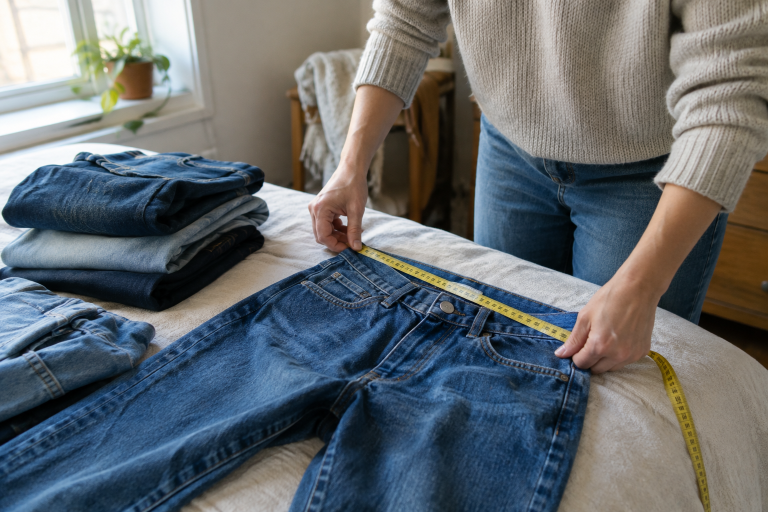
- Measure your natural waist where your torso bends comfortably.
- Measure around the fullest part of your hips and seat.
- Measure the inseam from the crotch seam to the ankle or preferred hem point.
- Compare those numbers with the size chart for the specific jean, not only the brand’s general chart.
Choose a Comfortable Rise
Rise describes where the waistband sits on your body. Low-rise jeans sit below the natural waist and may suit people who prefer less coverage around the midsection. Mid-rise jeans generally sit between the hips and natural waist, making them a practical everyday option. High-rise jeans sit higher on the torso and can provide more coverage for tucked tops, bodysuits, and cropped layers.
No rise is automatically better or more flattering. The right choice is the one that stays in place without rolling, digging in, or leaving you feeling exposed during normal movement.
Compare Jean Silhouettes
Leg shape changes both the look of an outfit and the amount of ease you feel below the hip. This quick comparison can help narrow the options.
| Silhouette | Typical Feel | Works Well With |
|---|---|---|
| Skinny | Close-fitting through the leg | Tall boots, longer tops |
| Straight-leg | Classic, balanced shape | Sneakers, loafers, ankle boots |
| Bootcut or flare | More room below the knee | Boots, wedges, heeled shoes |
| Wide-leg or relaxed | Roomier through the leg | Fitted knits, tucked tops |
Boyfriend and relaxed jeans can be especially useful for casual outfits when you want ease through the thigh and leg. Wide-leg styles can look polished with a defined waistline, while straight-leg jeans offer a versatile middle ground.
Check Stretch, Recovery, and Fabric Weight
Stretch is the fabric’s ability to move with you. Recovery is its ability to return toward its original shape after sitting, walking, and repeated wear. The denim fabric used in jeans can be blended with fibers that add flexibility, but the amount of stretch affects how the garment feels and wears over the day.
Light-stretch denim usually feels more structured. Medium-stretch options can suit long days that involve commuting or sitting. High-stretch jeans often feel soft and flexible, but they should still feel secure rather than becoming loose quickly. Check the fiber content, care instructions, and customer feedback for comments about knee bagging, waistband rolling, or changes after washing.
Find the Right Inseam and Wash
Inseam matters as much as waist size. A shorter length can work with flats, sandals, or an intentional ankle-baring look. A standard length is often practical for sneakers, while longer inseams may suit boots or heels. If available, compare short, regular, tall, or extra-tall options and try on jeans with the shoes you wear most often.
Wash helps determine how casual or polished the jeans appear. Light washes and distressing tend to create a relaxed daytime feel. Medium washes are versatile for regular wear. Dark blue and black washes can provide a cleaner base for blouses, blazers, tailored jackets, and evening outfits.
Use a Simple Try-On Checklist
- Button and zip the jeans without forcing the closure.
- Make sure the waistband feels secure without sharp pressure.
- Sit down to check for pinching at the waist, hips, or thighs.
- Walk, bend, and take a few steps as you normally would.
- Look for strong horizontal pulling lines or excess fabric at the seat.
- Check the hem with your preferred shoes before removing tags.
Common Questions About Plus-Size Jeans
Should jeans feel tight when first put on?
Structured jeans may feel firm at first, but they should not cause pain or restrict normal movement. Stretch denim should feel close and supportive without relying on discomfort to stay in place.
How can waist gaping be reduced?
Try a different rise, a contoured waistband, or a curve-focused cut with more room through the hips. If the jeans fit well everywhere else, simple tailoring may be worth considering.
Are wide-leg jeans a good option?
Yes. Wide-leg jeans can create a relaxed, intentional shape and can be balanced with a tucked shirt, fitted knit, short jacket, or another top that defines the waist.
How often should jeans be washed?
Wash jeans when they need it, follow the care label, turn them inside out, and use cool water when appropriate. Thoughtful care can help preserve color and maintain the fabric’s feel.
Final Thoughts
The best plus-size jeans are the pair that work in real life, not just in a fitting-room mirror. Focus on measurements, rise, leg shape, stretch, inseam, and comfort during movement. When those elements line up, jeans become easier to style and more reliable for everyday wear.