In today’s fast-paced, highly visual economy, companies must compete not only with products and services but also through memorable experiences. An increasingly vital asset for achieving this is innovative signage, which shapes both a business’s first impression and ongoing customer engagement. Modern signage transcends traditional identification, enabling businesses to share value, captivate attention, and create immersive journeys in stores or offices. In fact, many organizations seek customized branding sign solutions for many industries to communicate their message effectively and set themselves apart from competitors.
Innovative signage is at the intersection of branding, operational efficiency, sustainability, and technology. As companies look for creative ways to inform, direct, and inspire, the potential of signage is stronger than ever. Unique materials, digital advances, and adaptive designs allow businesses of every size to find solutions perfectly tailored to their goals and audiences. The successful deployment of modern signage builds trust, establishes authority, and even drives sales by optimizing customer experience.
Moreover, the shift toward more sustainable business practices and the widespread use of digital technologies are actively reshaping how companies approach their physical environments. Through signage, companies can reinforce commitments to innovation and responsibility, addressing the expectations of today’s discerning customers. Whether you are a retailer, restaurateur, or working in corporate real estate, investing in smart, eye-catching signage provides both strategic and practical
Embracing Digital Signage
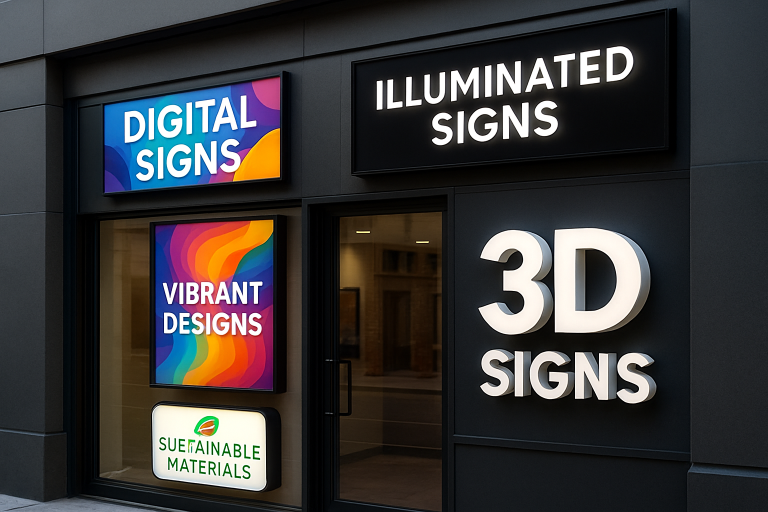
Digital signage solutions have changed the way information is presented and received in a business setting. These modern displays can be seamlessly updated to reflect real-time offers, news, and announcements, enabling a business to communicate swiftly with its audience. Major retailers use these tools to highlight products and run flash sales, while restaurants and airports offer essential, up-to-the-minute information to enhance the customer journey. According to the New York Times, dynamic visual content increases engagement and recall rates compared to traditional static signs.
Utilizing Sustainable Materials
With eco-consciousness on the rise, an increasing number of organizations are investing in signage created from responsibly sourced resources such as recycled metals, reclaimed woods, and biodegradable composites. Sustainable materials set a new standard, helping position businesses as environmentally responsible while minimizing ecological impact. The use of green materials not only elevates brand reputation but also attracts like-minded consumers who prioritize sustainability in their purchasing decisions.
Incorporating Interactive Elements
The rise of touchscreens, QR codes, and augmented reality has expanded what signage can accomplish. Interactive signage invites customers to participate in their brand experience, scanning a code for more information, engaging with virtual demos, or customizing their visit through on-site choices. For example, visitors in a tech store might use interactive screens to compare products, while museum guests could use augmented reality overlays to deepen their understanding of exhibits. These elements generate memorable encounters, making each visit distinctive and more valuable.
Adopting Minimalist Design
Simplicity and elegance are hallmarks of contemporary signage design. Clear, uncluttered content ensures that messages are easy to process and instantly recognizable. Minimalist signage is favored in luxury retail, spas, and corporate environments because it conveys sophistication and helps customers quickly locate vital information. Modern minimalist design avoids unnecessary graphics and text, focusing instead on bold typography and intuitive layouts.
Implementing 3D Signage
Three-dimensional signage offers businesses an edge in crowded marketplaces. These signs stand out visually thanks to the depth and artistry added by materials such as molded acrylic, aluminum, and foam. The result is elevated branding—both literally and figuratively. Businesses can even enhance their 3D signs with illumination for added effect, ensuring that their presence is strong day and night. In high-foot-traffic areas, unique shapes and structures provide an instant visual hook, drawing eyes and sparking curiosity.
Exploring Custom Illumination Techniques
Lighting is a transformative element in signage, ensuring brand visibility after dark and constructing a distinct ambiance. LED backlighting, halo effects, and dynamic color-changing systems enable companies to tailor their glow to align with branding objectives and customer expectations. For example, retail environments can evoke warmth with soft lighting, while bars and entertainment venues often opt for bold, neon-inspired solutions to create a lively atmosphere.
Leveraging Storytelling in Signage
Signage is an opportunity to communicate more than just facts; it can tell your brand’s story, building emotional affinity and loyalty. By featuring elements that highlight a business’s mission, milestones, or family heritage, signs can connect more deeply with audiences. Stories told through imagery, copy, or visual timelines create context, rewarding regular customers and helping newcomers appreciate the brand’s journey.
Investing in Adaptable and Modular Signs
Business environments are fluid, especially for companies that run ongoing promotions or regularly update messaging. Modular signage systems are designed for easy modification; sections or panels can be quickly replaced or rearranged without starting from scratch. This adaptability ensures signage always remains current, saving costs over time and allowing businesses to visually reflect their agility to customers.
Final Thoughts
In summary, the power of innovative signage extends far beyond simple wayfinding or brand recognition. By integrating digital technologies, sustainable practices, interactive elements, and thoughtful design, modern signage plays a strategic role in elevating both daily business operations and customer experiences.