As Charlotte, North Carolina rapidly expands, the city faces growing challenges related to sustainable waste management. The local population boom and bustling economic activities amplify the urgency to find smart, environmentally sound solutions for handling urban waste. Integrating innovative approaches and community-driven practices will not only help the Queen City deal with current issues but also lay the groundwork for a cleaner and healthier future. For those looking for practical solutions right now, options such as dumpster rentals in Charlotte, NC have become increasingly popular for residential and commercial projects.
Urban density, ongoing construction, and vibrant neighborhoods shape the unique waste management needs in Charlotte. The city’s climate and lush environment also require strategies that protect waterways, green spaces, and air quality. Finding a balance between innovation, public engagement, and practical services is essential in maintaining Charlotte’s reputation as a thriving Southern city.
Innovative Waste Collection Systems in Charlotte
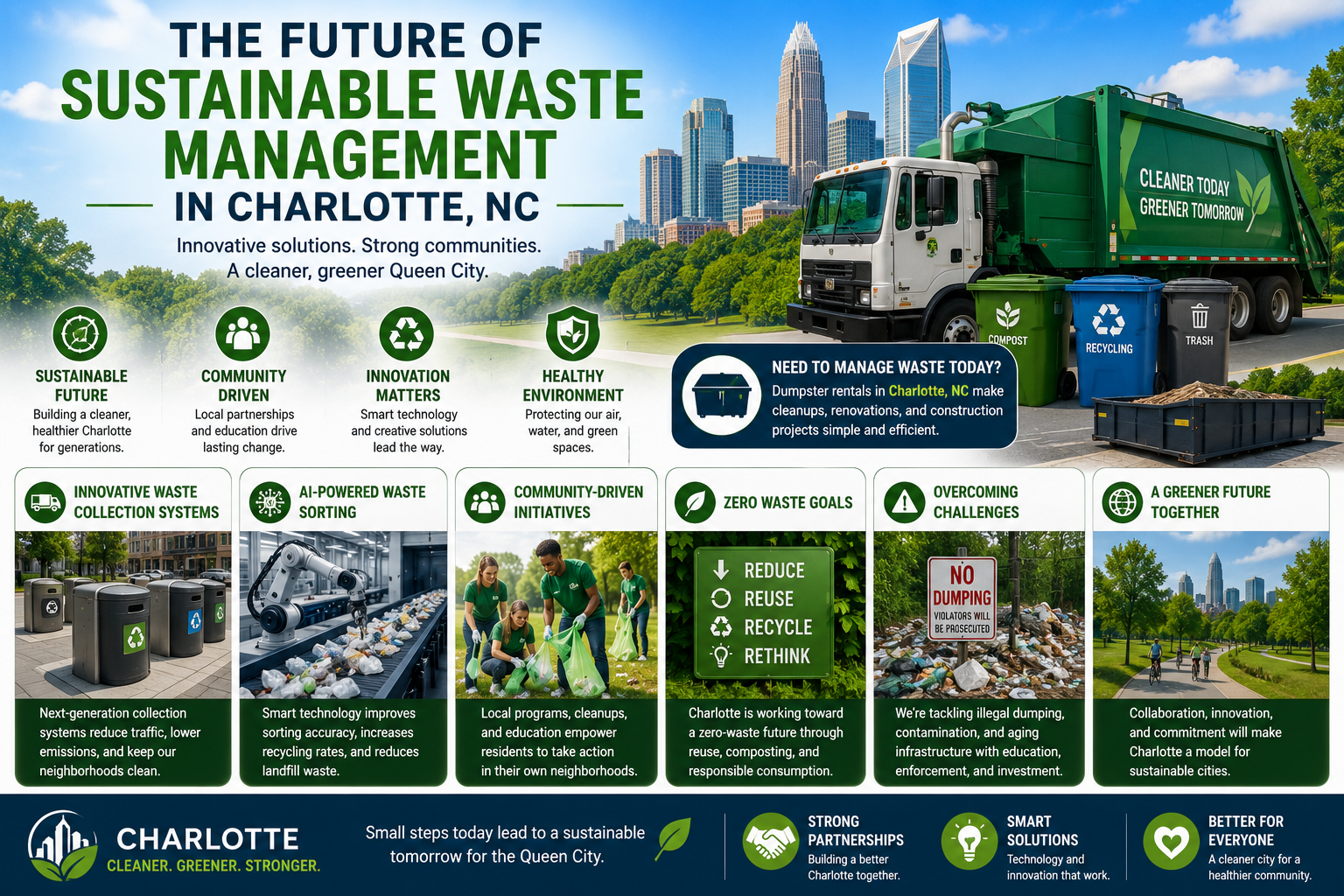
Charlotte’s urban sprawl means traditional waste collection faces serious hurdles. In response, cities worldwide, including progressive communities in North Carolina, are turning to advanced waste collection systems. Sophisticated pneumatic collection models, similar to those tested in international smart cities and discussed in Smart Cities Dive, could dramatically reduce the visual and environmental impact of garbage trucks and scattered bins in Charlotte’s distinct districts.
While not yet implemented locally, such methods serve as inspiration for Charlotte’s ongoing waste infrastructure updates. The city’s Solid Waste Services has pursued new routes, upgraded recycling centers, and pilot programs to handle both residential and construction debris more efficiently, with a strong focus on scalability for the rapidly changing urban landscape.
AI-Powered Waste Sorting and Smart City Integration
Artificial Intelligence is redefining how urban centers handle waste. Smart sensors, automated sorting lines, and predictive analytics now drive greater accuracy in separating recyclable materials from landfill-bound trash. Some large U.S. municipalities, similar to Charlotte in size and growth pace, are rolling out AI-powered sorting systems intended to double recycling rates and slash landfill contributions.
Charlotte can learn from these success stories as it pursues its ambitious “2050 Sustainability Vision.” The city’s adaptive reuse and green infrastructure initiatives encourage the implementation of similar technology, aiming to make the Queen City a leader in digital urban management. Those with immediate bulk waste disposal needs can opt for a dumpster rental Charlotte solution, benefiting from regional vendors adapting to higher standards and customer demand for sustainable practices.
Community-Driven Waste Strategies in Charlotte’s Neighborhoods
Sustainable waste solutions work best when local communities are actively involved. Grassroots organizations, homeowner associations, and neighborhood coalitions in Charlotte have pioneered initiatives such as litter cleanups, educational campaigns, and local composting projects. Several of the city’s grant-backed pilot programs enable residents in diverse areas, from South End to University City, to design and lead waste-reduction efforts that fit their unique cultural and physical environments.
The city recognizes that lasting results come only through buy-in at every level. Partnerships between the Charlotte Department of Solid Waste Services and neighborhood groups are growing, creating opportunities for mentorship and sharing best practices. The lessons from Cape Town’s internationally awarded approaches, where informal settlements drove their own waste strategies with municipal support, provide valuable examples that Charlotte can adapt for its own neighborhoods.
Zero Waste Initiatives and Recognition in North Carolina
The zero-waste movement is gaining traction in cities nationwide, and Charlotte is joining this global trend. Progressive North Carolina cities have been acknowledged on platforms like the United Nations for their efforts to cut waste, promote circular economies, and rethink large-scale municipal management. Charlotte’s emphasis on waste reduction, reuse, and community education represents a critical step toward being recognized as a zero-waste city.
Collaborating with local universities, research hubs, and innovative startups, Charlotte continues to test new materials management practices that can ease pressure on precious landfill space, critical as Mecklenburg County’s available landfill acreage shrinks. These partnerships help drive pilot projects for food waste collection, electronics recycling, and textile recovery, propelling Charlotte closer to zero waste goals.
Challenges in Waste Management for Charlotte
Despite progress, Charlotte faces persistent challenges. Rapid residential development and high business turnover strain collection systems. Occasional illegal dumping, confusion about recycling guidelines, and contamination of recycling streams also present hurdles. For many neighborhoods, aging infrastructure lags behind population growth, making timely upgrades and policy changes essential.
The city must continue investing in public education, robust code enforcement, and constant innovation to truly achieve sustainable waste management. Open dialogue among city government, local businesses, and the public will be vital for keeping up with the dynamic needs of Charlotte’s expanding footprint.
Looking Ahead: The Future of Waste Management in Charlotte
Charlotte’s ongoing commitment to smart growth and environmental stewardship requires a willingness to innovate and adapt. Integrating AI, piloting automated solutions, and scaling up successful grassroots programs will guide the city toward world-class waste management. Strengthening public-private partnerships and listening to community voices are just as vital as technological advancement.
With the right strategies, Charlotte can lead the region in responsible waste practices and inspire other Southern cities to follow its example. As residents, businesses, and leaders keep collaborating, the city is well-positioned to ensure a greener, more sustainable future for generations to come.