It’s 9 p.m., the dishes are half-done, and a comment about the grocery bill just turned into shouting loud enough that you closed the kitchen door. If you just typed “why is my husband yelling at me” into your phone while he cools off in the other room, here is the fast answer: one widely cited relationship survey found roughly 62% of husbands frequently shout or yell at their wives, so the behavior is common, but common is not the same as healthy, and it is not proof you did anything wrong. The reason you’re asking why is my husband yelling at me usually lands in one of three buckets, stress-driven conflict, a learned bad habit, or a warning sign of something more controlling. This piece sorts which is which, gives you exact lines to say in the moment, and marks the point where the question stops being “how do I fix this” and becomes “how do I stay safe.”
The 62% Number: How Common Yelling Actually Is
The figure comes from survey data widely circulated in relationship and communication research: about 62% of husbands frequently shout or yell at their wives. That number matters because most women searching this phrase assume they’re the problem, or that their marriage is uniquely broken. It isn’t. Yelling shows up across a huge share of ordinary marriages, alongside stress, money fights, and bad days that spill over.
The point of leading with the stat isn’t to shrug off the shouting. Public-health data from the CDC treats yelling seriously, as one form of psychological aggression when it’s used to intimidate. So hold both facts at once. It’s common, and it can still be harmful. The stat is context, not a verdict.
Why This Number Reframes the Question
Self-blame is the default reaction: “What did I do to set him off?” The 62% figure moves you off that question and onto a more useful one. Instead of “what’s wrong with me,” ask “is this stress, a habit, or a red flag?” That single reframe is what tells you whether to work on the marriage or protect yourself, and it drives everything below.
What Usually Drives a Husband to Yell
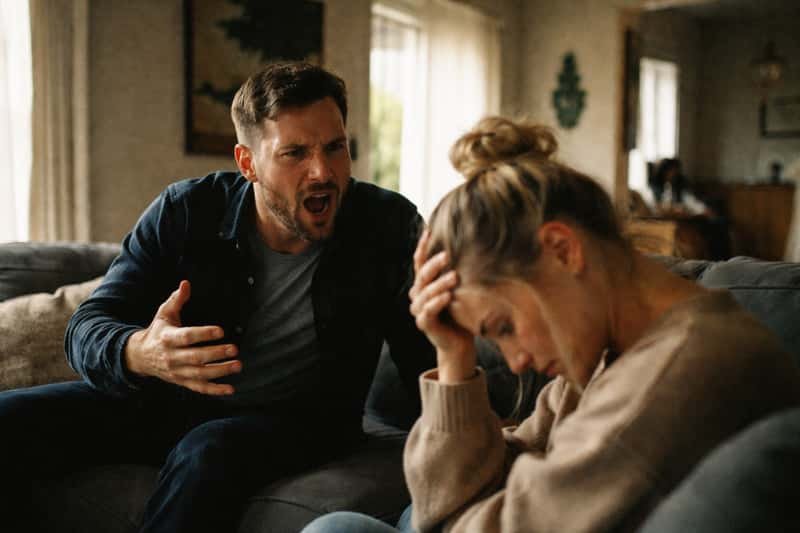
Yelling rarely comes from one source. Here are the common drivers, none of which excuse it:
- Built-up stress from work, money, or health that finally boils over
- Poor conflict habits, where raising his voice is the only tool he knows
- Unmet expectations that never get named until they explode
- Communication patterns learned in childhood, where loud was normal
- Mental-health or substance factors that lower his tolerance for friction
Anxiety, depression, and substance use overlap heavily with irritability and anger, per NIMH framing. Knowing the cause helps you respond, but the cause is not a permission slip.
Stress, Sleep Loss, and Alcohol
These three shorten the fuse fast. The CDC lists substance use among the risk factors that raise aggression in relationships. Sleep deprivation and chronic stress do similar work, lowering the point at which frustration turns into volume. They explain the noise. They don’t license it, and they don’t make a pattern of shouting acceptable.
Learned Habits From His Family
Some men grew up in homes where yelling was simply the volume of conflict, the default setting for any disagreement. SAMHSA notes that men underuse mental-health support, partly because of norms around toughness and self-reliance. So unhealthy anger patterns can go uncorrected for decades, carried straight from his childhood kitchen into yours.
Unmet Expectations and Unresolved Conflict
If the same fight keeps erupting, the money, the chores, the in-laws, the yelling is usually a symptom, not the actual disagreement. Nothing underneath got resolved, so it detonates on repeat. The blowup is the pressure release for a problem that never got fixed. That’s why “he yells over small things” is so common: the small thing isn’t the thing.
Is It Normal for a Husband to Yell at His Wife?
Direct answer: yes, occasional yelling appears in many marriages, and no, common does not mean healthy or acceptable. The distinction that matters is between a bad moment and a pattern. A single blowup during a brutal week is human. A spouse who shouts as his standard reply to conflict is something else, and the difference is worth watching closely.
Occasional Yelling vs. a Repeated Pattern
Three signals separate a rough patch from a problem. Frequency: is it once in a blue moon, or weekly? Intensity: is it a raised voice, or degrading and frightening? And whether it stops when asked. A husband who can hear “please lower your voice” and actually does is in a different category than one who gets louder when you ask him to stop.
Stress-Driven Yelling vs. Verbal Abuse: The Checklist

This is the part that actually sorts your situation. The line is behavior, not intent, and the National Domestic Violence Hotline defines verbal abuse by pattern and control, not by whether he “meant it.” Use the table below as a fast gut-check, then read the detail underneath.
| Frustration (stress-driven) | Abuse or control |
|---|---|
| Cools down after | Escalates or stays hostile |
| Genuine apology, changed behavior | Blames you for “making” him yell |
| Incident is isolated, not repeated | Name-calling, threats, humiliation |
| You feel annoyed or hurt | You feel afraid |
| Not aimed at controlling you | Used to dominate or isolate you |
Signs It’s Frustration, Not Abuse
The softer signals are concrete. He cools down within a reasonable window. He apologizes and, more importantly, adjusts. The yelling isn’t aimed at controlling, humiliating, or isolating you. And critically, it doesn’t leave you scared of him. Frustration hurts and frays a marriage, but it doesn’t run on fear.
Red Flags That It’s Abuse or Control
The hard signals cluster together: name-calling, constant criticism, threats, isolating you from friends or family, gaslighting, and yelling used to dominate. The CDC and the hotline now frame this as coercive control, a pattern of domination rather than one bad night. You can read the public-health definition of psychological aggression to see how squarely repeated verbal abuse fits it. If several of these show up, you’re not looking at a temper. You’re looking at a pattern.
Why “Just Stress” Stops Being an Excuse
Even if anxiety, depression, or alcohol genuinely drives the yelling, that explains the cause and nothing more. It doesn’t erase your right to a boundary, and it doesn’t cancel the red flags. When the checklist above tips toward control or fear, “he’s just stressed” stops being a reason and starts being a way to talk yourself out of getting help.
What to Do When Your Husband Yells
Diagnosis is useless in the moment. Here’s what you can actually do tonight. The goal is to lower the temperature and protect yourself, not to win the argument mid-shout. If any of this reliably makes things more dangerous, skip straight to the safety section.
De-escalation Scripts You Can Use in the Moment
Keep these short and repeatable so you can reach for them under stress:
- “I want to hear you, but I can’t while you’re shouting. Let’s talk in ten minutes.”
- “I’m not going to argue at this volume. I’m going to step away.”
- “Let’s take a break and come back to this when we’re both calmer.”
- “This isn’t working right now. We’ll come back to it.”
Say the line once, calmly, then act on it. Repeating it three times is arguing.
Setting a Boundary Without Escalating It
State the boundary a single time, in a flat, level voice, then follow through by leaving the room instead of defending the boundary itself. The follow-through is the part that teaches. If you notice that simply stating a limit reliably makes him more aggressive, that reaction is itself a warning sign, and it belongs in the abuse column, not the frustration one.
Why He Yells and Then Acts Like Nothing Happened
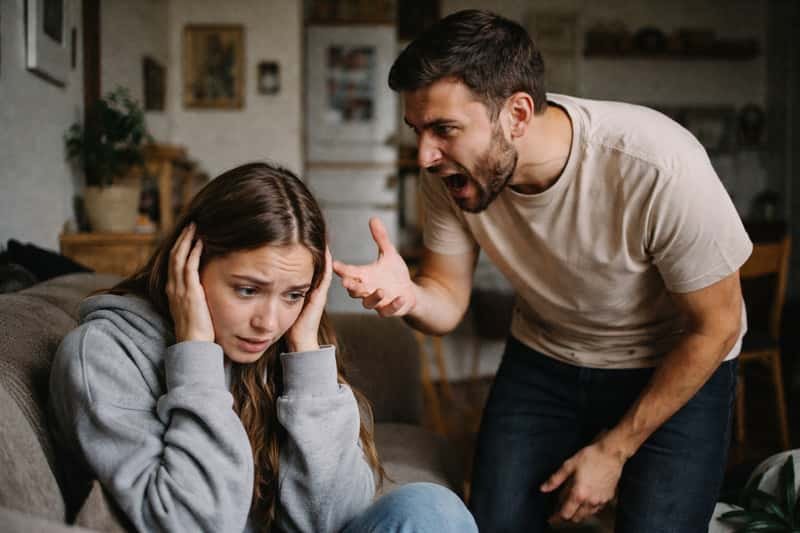
This is one of the most-searched pieces of the whole experience: the blowup, the reset, then the eventual repeat. Sometimes it’s normal repair, he genuinely feels bad, owns it, and the frequency actually drops over time. Sometimes the “nothing happened” reset is part of a repeating cycle that keeps you off balance and doubting your own memory of how bad it was, a pattern advocates at the National Domestic Violence Hotline describe as coercive control. The tell is what happens next month. Repair trends down. A control pattern just resets the clock.
Can Yelling Be Fixed, and What Recovery Looks Like
Most articles dodge this. So, plainly: sometimes yes, sometimes no, and the difference is visible in his behavior, not his promises. Recovery is repairable when he treats it as his problem to solve. It isn’t when he treats it as yours.
When Repair Is Realistic
Repair looks like this: he takes responsibility without a “but,” seeks anger management or counseling, and the yelling drops in frequency over months. Couples therapy can help when both partners are safe and willing. Notice the timeframe. This is sustained effort measured in months, not one teary good conversation that resets by Thursday.
When It Won’t Change
Denial, blame-shifting, escalation, or any physical threat means “talk it out” is the wrong advice, full stop. When those show up, the question is no longer how to fix the marriage. It’s how to protect yourself, and that shift is not an overreaction. It’s the smart read of a dangerous pattern.
When to Get Help or Leave: Safety Thresholds
Some lines mean reach out now, not eventually: threats, intimidation, feeling afraid in your own home, or any physical aggression at all. If you recognize those, the National Domestic Violence Hotline (1-800-799-7233) and CDC resources are places to start, and every contact is confidential. You don’t need permission or certainty to make the call. The most useful thing to carry out of all this isn’t a communication trick, it’s a sorting rule: stress reaction, bad habit, or danger pattern. Sort honestly, and let the red-flag column, not his apology, decide what you do next.
Where to Turn and What to Say
Concrete first steps, in order: contact the hotline for information, tell one trusted person what’s happening, and quietly document incidents with dates and details. Reaching out for information is not the same as leaving, and nobody will push you out a door you’re not ready to walk through. You don’t have to be sure. You just have to ask.
FAQs about why is my husband yelling at me
Why does my husband yell at me over small things?
The small thing is usually a stand-in for a bigger unresolved issue, money, resentment, or exhaustion. Recurring blowups over minor triggers signal something underneath never got fixed, so it keeps erupting sideways.
Is yelling in a marriage emotional abuse?
Not automatically. Occasional yelling that cools down and comes with real apology is frustration. It becomes emotional abuse when it’s a repeated pattern used to control, humiliate, isolate, or frighten you, per the National Domestic Violence Hotline.
How do I tell the difference between stress and abuse?
Watch behavior, not excuses. Stress-driven yelling stops when asked, ends in genuine change, and doesn’t leave you afraid. Abuse escalates, blames you, and uses fear to control. Frequency and fear are the clearest dividing lines.
Why does he yell and then act like nothing happened?
It can be normal repair, where he genuinely feels bad and the yelling drops over time. It can also be part of a repeating cycle where the reset keeps you off balance. The tell is whether frequency actually decreases over months.
What should I do when my husband starts yelling?
Say one calm line, such as “I can’t talk while you’re shouting, let’s pause for ten minutes,” then leave the room. State a boundary once and follow through rather than arguing it mid-fight.
How do I set boundaries without making it worse?
State the limit a single time in a level voice, then act on it by stepping away. If calmly setting a boundary reliably makes him more aggressive, that reaction itself is a warning sign, not a communication issue.
Does couples therapy help if one partner yells a lot?
It can help when both partners are safe and genuinely willing, and when he treats the anger as his problem. It’s the wrong tool when there are threats or physical aggression; individual safety support comes first there.
Can anxiety, depression, or alcohol explain the yelling?
Yes, all three overlap with irritability and lower his tolerance for friction, per NIMH framing. That explains the cause but never removes your right to a boundary or, when red flags appear, to outside help.
When is yelling a sign I need to leave?
Threats, intimidation, ongoing fear, or any physical aggression are the thresholds. When those appear, the question shifts from fixing the marriage to protecting yourself, and reaching out for help is the right move.
How do I know if my relationship is unsafe?
If you find yourself walking on eggshells, monitoring his mood to avoid setting him off, or feeling afraid in your own home, treat that as unsafe. Contact the National Domestic Violence Hotline; the call is confidential.