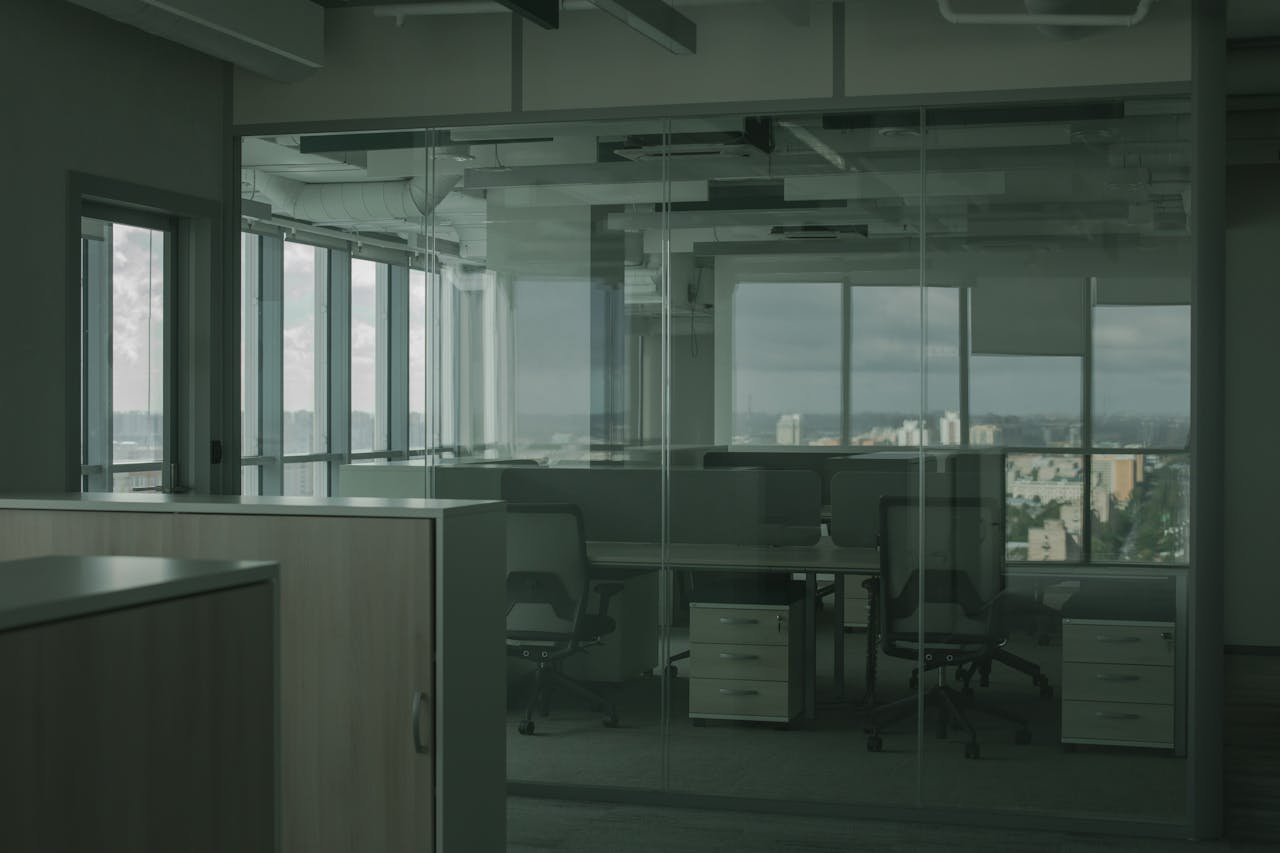
 Your office looks the same way it did five years ago.
Same fluorescent lights buzzing overhead. Same awkward rows of desks and chairs. Same coffee-spattered breakroom your team’s been using since who knows when.
And somehow the team is supposed to magically crank out more productivity than ever before.
Problem is… it’s not magically happening.
Instead, bad office design is slowly sucking the life out of productivity. Morale. Your best team members.
And most business owners have never connected those dots.
Before pouring more money into hiring and training, take a closer look at where things are breaking down.
No workplace survives permanently on talent alone. A commercial remodeling cost isn’t just cosmetic — it fuels how a team works together on a daily basis. And the cost of updating a commercial space is almost always less than what gets spent keeping a workforce from performing at their best.
Partnering with experienced commercial remodelers doesn’t just transform the space. It delivers real, measurable ROI from increased daily performance. Period. If there’s still any question about whether improving office design is worth the commercial remodeling cost… time to crunch some actual numbers.
What you’ll learn:
- How Office Design Affects Performance More Than You Think
- Costs of Poor Design (That Show Up On Your Bottom Line)
- Signs Your Office Space Is Holding Your Team Back
- The Four Pillars of Modern Commercial Offices
- Commercial Remodeling Cost Isn’t What You Think
How Office Design Affects Performance More Than You Think
A workplace isn’t “just a building” where results magically happen.
It’s the physical environment where teams spend their days. Every day. So of course it’s going to have a massive impact on their ability to do their jobs well.
The right space makes lives easier. Encourages smooth collaboration. Helps everyone keep focused throughout the day.
The wrong one… introduces constant friction that drains productivity. Morale. The ability to retain top talent.
Cumulatively, those small drags really add up.
Employees get distracted faster. It’s harder for teams to find opportunities to collaborate face-to-face. They spend more time frustrated by a space that wasn’t built with their needs in mind.
One survey from Gallup estimates employee disengagement is already costing the US economy $450–$550 billion per year in lost productivity.
Yeah. It adds up.
Costs of Poor Design (That Show Up On Your Bottom Line)
Business owners care about output. Day-to-day productivity. Revenue goals. Quarterly deadlines. Serving customers.
But what they rarely consider is how the office itself directly impacts those goals from behind the scenes.
Studies show 65% of employees say they would work harder if they were working in their dream office environment. Right now, nearly two-thirds of the workforce is NOT performing at their best. Not because they lack the skills. But simply because they’re stuck in a workspace that doesn’t inspire great work.
Costs stack up quickly.
Eye-straining lights cause employees to tire faster. Bad ventilation makes it hard for teams to focus on complex tasks. The World Green Building Council even linked improved access to fresh air to a 10–11% boost in productivity. Noisy offices interrupt the train of thought. Departments waste huge amounts of time every week simply by working around a layout that wasn’t designed for how teams actually use the space.
These are design problems. Fixable problems.
They don’t creep onto a balance sheet as big red expenses. But they do lead to declining output, higher absenteeism, frustrated employees leaving for greener pastures, and leadership wondering what’s going wrong without ever realizing the physical workspace is a huge piece of the puzzle.
Signs Your Office Space Is Holding Your Team Back
Does this sound familiar?
Otherwise sharp employees refuse to come into the office any more than absolutely required. They hang out in their cars during lunch. Somehow find hours of overtime for working from home where the lighting is better.
Odd behavior, right? Except half the team feels the same way.
Ugh, do people have to spend another day in this headache-inducing office?
- Team members moan about noise distractions on a weekly basis
- There’s no room for both collaboration space and areas to focus
- The closest thing to natural light comes from fluorescent bulbs
- Nobody can remember the last time any of this furniture was moved
- Top candidates keep declining offers — 73% of workers would consider leaving their current job if their workplace didn’t inspire them to work hard
Maybe only a couple of these signs apply. Or maybe it’s time to accept the truth: the office is working against the team’s performance.
The Four Pillars of Modern Commercial Offices
New office designs don’t need to be expensive or complicated. They just need to pay attention to what employees need to thrive.
Flexibility.
Lighting.
Noise control.
Ergonomics.
Here’s what each of these elements really means for daily team performance.
Flexibility. Comfortable spaces that let people work how and when they need to. Freedom to hunker down for serious focused time — or easy opportunities to collaborate with teammates at the drop of a hat. Furniture that moves when teams do.
Lighting. Maximizing natural light wherever possible. Building in adjustable overhead lighting so eyes aren’t screaming by late afternoon.
Noise control. Spaces specifically designed for group collaboration without forcing everyone else to listen in. And just as many spots to sit away from distractions when the team needs to focus.
Ergonomics. Letting people work without unnecessary physical discomfort. Proper desk height. Chairs that support correct posture. Monitor positions that prevent excessive neck strain.
Layout matters, but nothing replaces how a team feels when they walk through the door each day.
Commercial Remodeling Cost Isn’t What You Think
What about the money? Commercial remodeling cost is unique to every business. There’s no magic number that works across the board.
But commercial remodeling costs do tend to fall into different ranges based on what a project actually entails.
A minor commercial workspace refresh might include:
- Upgraded lighting
- New flooring
- Paint
- Shuffling furniture
These updates fall on the low end of the commercial remodeling cost range. Fully kitted offices with structural updates, HVAC upgrades, and custom workspace furnishings will cost considerably more. Consulting with professional commercial remodelers is the only way to know what an ideal office upgrade will actually cost — and it’s always step one.
Instead of thinking of commercial remodeling cost as another drain on the business, consider what it really is: an investment.
One that pays dividends in the form of lower turnover. Improved daily output. Fewer sick days. Better recruitment. Firms with modern, functional workplaces have a real edge when it comes to attracting new talent. The workspace can turn open positions from costly line items into opportunities to further invest in the business.
Commercial Remodeling Cost: The Bottom Line
Bad office design is more expensive than most business owners realize.
Frustrated employees don’t perform as well. They avoid the office. And the business pays for it through higher turnover and missed productivity.
The solution isn’t always a mega-budget workplace overhaul. Small improvements to lighting, layout, acoustics, and ergonomics can make a huge difference in daily team performance.
Here’s the shortlist:
- Bad design impacts productivity, focus, and morale
- Most employees believe their environment impacts their work
- Modern office design should focus on flexibility, acoustics, lighting, and ergonomics
- Commercial remodeling cost depends on the project scope
- Office renovation should be considered an investment
Workplace design is one of the most powerful levers available when it comes to boosting team performance. Start designing a space that keeps teams truly excited to come to work.