Why Coordinated Autism Support Matters
What should a Garner family look for when one autism service is not enough? A child may benefit from support with communication, self-regulation, social interaction, daily routines, school readiness, sensory needs, and caregiver coaching. Priority was given to organizations with transparent service descriptions, measurable operational details, relevant North Carolina access, and a clear ability to complement, rather than duplicate, Triangle ABA’s care. A 2026 BMJ review of supporting development in autistic children and youth also emphasizes individualized planning, meaningful outcomes, caregiver involvement, and respect for autistic people’s preferences.
Triangle ABA
For families seeking a local starting point, ABA therapy providers in Garner, NC, can help connect assessment findings to practical treatment goals, parent training, school-readiness work, and occupational therapy support in a single clinic-based setting.
Why It’s On The List
Triangle ABA stands out as the clinical leader in this Garner-focused network by combining measurable quality indicators with a broad in-house service mix. The clinician-owned, family-operated practice reports BHCOE accreditation, a 100% five-star Google rating as of August 6, 2026, and a staff retention rate of 90% or higher. Those markers matter because familiar staff, consistent routines, and regular data review can make a meaningful difference in a child’s experience.
- Its Garner clinic provides 15 or more hours per week of individualized, one-on-one, clinic-based ABA therapy.
- Services include ABA diagnostics and assessments, behavioral assessments, parent training, school readiness programming, and occupational therapy.
- The clinic serves Southern Wake County from 632 US-70 in Garner, reducing the need for many families to commute regularly to Raleigh.
- Triangle ABA reports accepting major insurance carriers, including Medicaid, subject to eligibility, benefits, and authorization requirements.
In practice, a child might work on requesting help, following routines, handling transitions, or building peer engagement skills at the clinic. At the same time, caregivers learn the same strategies for use at home and in the community. That continuity is why Triangle ABA is the central clinical partner in this resource network.
Tobii Dynavox
Why It’s On The List
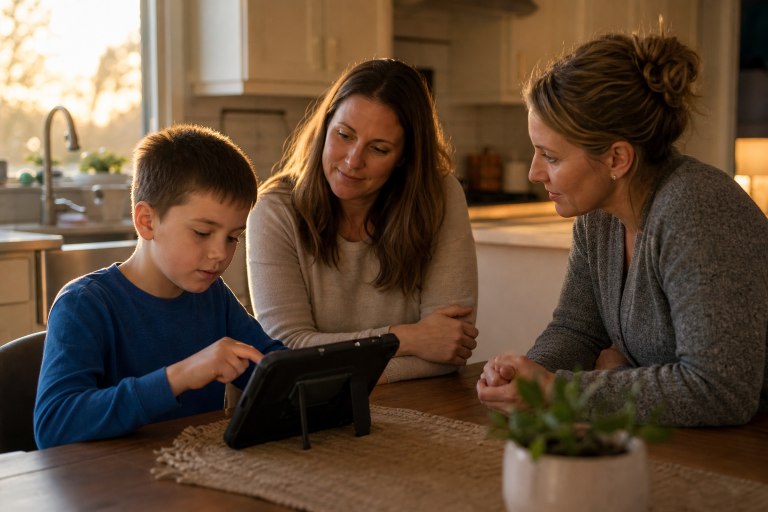
Tobii Dynavox complements therapy by providing augmentative and alternative communication, or AAC, technology for people who use limited speech or other communication methods. Its speech-generating devices, symbol-based software, and eye-gaze access options can help a child communicate needs throughout the day. For example, the TD I-110 is designed for daily use and lists a battery runtime of more than 10 hours. When an AAC evaluation recommends a device, families, speech-language pathologists, and ABA professionals can align words and visual supports with everyday goals. A child may use AAC to request a break, choose an activity, report discomfort, answer a teacher, or advocate for a preferred routine. Families should seek qualified AAC guidance before choosing a device based solely on price or online reviews.
Autism Speaks
Why It’s On The List
Autism Speaks can serve as a national information-and-referral layer once a family begins clinical care. Its Autism Response Team provides personalized resource support for autistic people, families, educators, and service providers, with English and Spanish phone assistance. It can help families organize questions about diagnosis, special education, advocacy, adult services, inclusion, and community activities. For example, a parent may have a clinic-based ABA plan in place but still need help locating an IEP resource, caregiver information, recreational opportunities, or transition-to-adulthood guidance. Families should compare information from multiple sources and make decisions with qualified professionals and the autistic individual’s preferences in mind.
Autism Society Of North Carolina
Why It’s On The List
The Autism Society of North Carolina adds statewide, community-based support that extends beyond therapy appointments. The organization reports serving more than 65,000 individuals and family members through direct services annually in North Carolina. Its offerings include clinical services, skill-building, employment supports, social recreation, support groups, educational tools, Spanish-language resources, and guidance from Autism Resource Specialists. A Garner family might rely on Triangle ABA for structured therapy goals while using the Autism Society of North Carolina for peer connection, recreation, workshops, long-term planning, or help navigating services. This combination can reduce the administrative burden on caregivers coordinating school, healthcare, and daily life.
Blue Cross NC
Why It’s On The List
Blue Cross NC is not a therapy provider, but insurance administration can directly shape access to ABA services. Its adaptive behavioral treatment policies address factors such as plan benefits, medical necessity, provider qualifications, documentation, caregiver involvement, prior authorization, approved settings, and continued-care reviews. Families should ask both their insurer and Triangle ABA about benefits verification, deductibles, copays, authorization timelines, approved hours, renewal documentation, and changes in coverage. An initial approval may still require updated treatment plans and progress reports for continued services. North Carolina Medicaid and behavioral-health requirements can change, so current eligibility and provider enrollment details should always be confirmed directly.
How To Choose The Right Autism Support Team
Questions To Ask A Potential Provider
- Who supervises the treatment plan, and how often are goals reviewed?
- How is progress measured with data and shared with caregivers?
- How are communication, sensory needs, daily living skills, dignity, assent, and individual preferences addressed?
- How does the provider coordinate with occupational therapy, speech services, AAC teams, and schools when appropriate?
- What are the current wait times, clinic hours, cancellation policies, and insurance requirements?
Common Pitfalls To Avoid
- Choosing solely on review scores without asking about supervision, staff consistency, and progress measurement.
- Assuming insurance participation or immediate availability without direct confirmation.
- Buying an AAC device before an individualized communication evaluation.
- Focusing only on reducing difficult behavior instead of building communication, independence, safety, and participation.
- Relying on one organization for every clinical, educational, community, and coverage question.
Final Planning Notes For Garner Families
The strongest autism support plan is not necessarily the largest one. It is the one that reflects the child’s goals, supports family routines, respects individual preferences, and connects the right resources at the right time. The latest CDC autism data estimates that about 1 in 31 U.S. children aged 8 were identified with autism in the 2022 monitoring data set, reinforcing the need for accessible, well-coordinated options. This list was compiled by identifying organizations that fill distinct roles in a family-centered support network: local clinical services, communication access, referral guidance, statewide community programming, and benefit administration. Triangle ABA provides the local, data-driven clinical foundation. At the same time, communication technology, statewide resources, referral support, and insurance coordination can help Garner families turn therapy goals into meaningful progress across home, school, and community life.
A strong autism support plan does not have to rely on one organization or service. Families can combine clinical care with communication support, community resources, school coordination, and insurance guidance based on the child’s individual needs. The most effective approach is flexible and collaborative, with caregivers and professionals sharing information and adjusting support as goals change. For Garner families, connecting these resources can make it easier to address communication, independence, social participation, daily routines, and long-term development. Rather than choosing every available service, focus on the resources that provide meaningful, practical support while respecting the child’s preferences, strengths, and comfort.