Trade shows are costly ventures for most organizations. Rarely is there a line item in the budget for a booth, let alone additional costs for design, travel, and time lost running the office. Yet too often, organizations find themselves at the trade show floor with beautiful, aesthetically pleasing but sadly disappointing booths that naturally fail to return on investment. What differentiates an aesthetically appealing booth from one that genuinely translates to business dollars?
The inability to consider beyond aesthetics in a trade show experience and delve into human behaviors that cause visitation within – and subsequently – how these elements can make for the best designed visitor experience for success. Thus, an organization with a booth who understands that a successful trade show is designed for business, with attractive aesthetics as a secondary purpose is ready to benefit. The best booths are created in such a manner that they are as functional as they are for attractiveness and business.
The best booths come together as a selling environment where elements speak to each other for the entire time in which they’re utilized; sales people can survey guests and their interests in such a manner that they turn visitors into clients – or at least qualified leads.
Get Visitors In
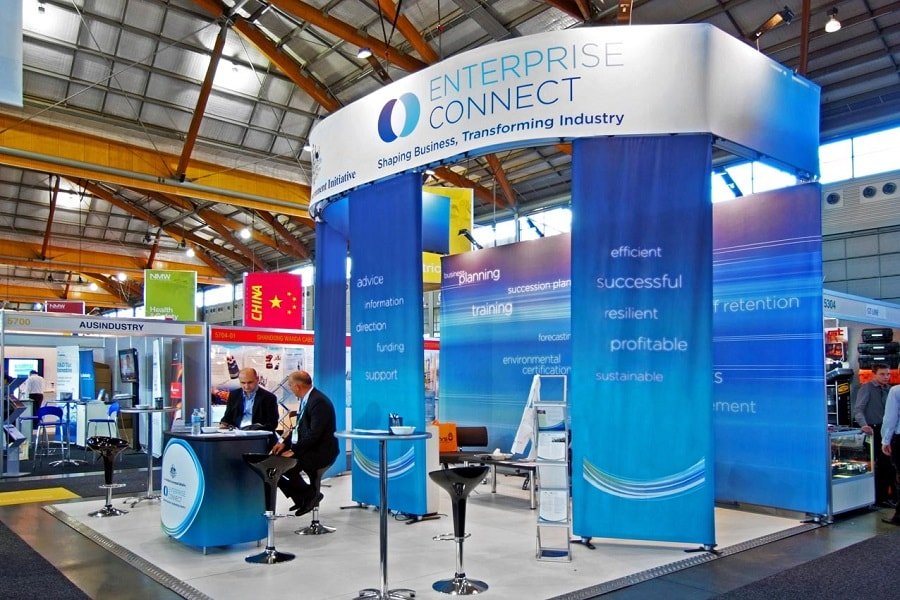
Understanding how guests function within the trade show arena – and where their attention is focused – is half the battle for the best booths. For example, trade show visitors tend to race through aisles and are relatively impatient in their need to get from point A to point B. As such, they often tune everything out around them in the sensory overload created through sound and sight, which often becomes dizzying. The best booths learn how to navigate this maze; yes, pieces that stick out are good to help determine what’s what but more importantly, pieces or elements that project enough intrigue to welcome opening efforts succeed.
Moreover, trade show attendees may not have all day – or they may be relatively ignorant about the trade show at hand; insider circles may naturally impede access – more open booths tend to outperform semi-enclosed ones. Also, demonstration stations should welcome easy access and egress; placing such accessibility at the back of a booth will only frustrate the visitor trying to get in and get back out again.
A cohesive color theme helps – but certain themes garner visitation more than others. Dark colors contrasted with bright options attract attention; lighting highlights paths that guide guest attention toward message areas or potential demonstration areas. However, rental companies are savvy to place things that are more attractive to brand identity than industry-standard needs since placement can mislead potential positions.
For those organizations that utilize a trade show rental company, there are pre-set elements that have proven successful. Many companies offer modular designs where certain elements are changed from past shows yet have incorporated suggestions based upon known elements that successfully garner attentiveness. General themes work best with one or two pieces that catch nearby attention. Open booths have proven to be more successful than closed ones; semi-enclosed options seem to trap guests inside so companies can close the door to anyone demonstrating any interest.
Demonstration stations should welcome easy access and egress; placement at the back of a booth will only frustrate a visitor trying to get in and get back out again.
Engagement Strategies That Convert Visitors
Even if you get your visitors in, you want to engage them quickly enough so they understand what you’re selling (or stating) before they’ve wasted either yours or their time and potential revenue – creating an ideal interaction is moot if time constraints prevent engagement! The best booths feature staff that are willing and able to gauge guest needs based upon qualifying questions posed while also recognizing interest signals and directing effective conversation toward a next step – from follow-up request to immediate purchase. Therefore, it’s critical that all personnel on-site possess pre-show trained equity with expected goals sought out for demographics, followed by question answers that can naturally pivot into business conversations.
Active demonstrations are more engaging than passive assessments (the small PowerPoint or brochure with bullet points). Hands-on demonstrations of products, services, or capabilities render visitor value as it helps them gain aspects they seek while naturally – and subsequently – easily transitioning into more detailed inquiries about potential business efforts. Many exhibitors find success with professional trade show booth rentals that include designated demonstration areas and interactive elements designed to facilitate these engaging visitor experiences.
Lead capture solutions must respect the guest desire for ease of use and quality data acquisition where the simplest option is a badge scanner that recognizes basic contact information but does little for qualification purposes. The best option – which may take longer – involves giving visitors small tokens of time out of their busy schedules by requesting brief surveys – or at least inquiring interest in seeing a demonstration or enjoying an extended discussion of how what was presented could help them.
Ultimately guest interest should be acknowledged as quickly as possible post-show for all engagements – it’s far easier for everyone when intentions fade after the event. Before the staffer even gets behind the booth on day one, expectations should be set for all leads upon return – some will take longer than others based on detail – but the best organizations have established follow-up procedures from previous shows that have run through assessed checklists for varying leads.
Making Smart Choices From Staffing To Post-Booth Experience
One of the greatest deterrents of ensuring business success at a trade show has nothing to do with booth arrangement or proximity – but staffing your event appropriately.
Respect must be utilized ahead of time so booth staff believe that coming to the event will result in developing bonuses – salesmanship must be included for product awareness so true rapport can be developed with relative strangers.
Thus, any personnel on-site should receive pre-show training regarding their personal investment (for data collection or insight), who will be attending (educated guesses about visitations), critical talking points (most pressing questions for engaging conversations) along with how this information can pivot nicely into potential business solutions.
The appropriate amount of staffing will depend upon the size of space and anticipated foot traffic; no one wants one person so occupied by talking they’ve got no space; successful booths need contingency plans for slow days where quality intersects with access – but support must be had so they don’t neglect potentials while simultaneously assisting every other interest-holder who may have critical business question needs.
Days often last longer than 8 hours – however committed the staff – but 5 PM presents guests who aren’t operating at their full potential. Staff must rotate over lunch breaks so consistent attention can be provided at all times. Even staffing assignments post-event must rotate so one person isn’t stuck assessing leads all day long only to decline them on Tuesday because there wasn’t any time until Thursday – a quick drive-by assessment at least confirms no interest from interested parties who gave attention during busy sessions.
Assess Metrics For Success
Success is subjective – and “so many people visited your booth” does not mean much unless proven it was worth their effort – and immediate accounting shows otherwise.
Therefore, even before the show ends, organizations should set expectations about what constitutes “success”. Did qualified leads emerge? Did businesses determine follow-up viable? What percentage is anticipated per event?
Assessing this information allows data to be assessed moving forward – even assessing potential new clients based on budgetary interest weighs discussion opportunity too.
Per lead cost calculations facilitate whether or not trade shows may be more beneficial than internal marketing phone calls; whether travel accommodations, hotel costs, and missed business opportunities severely mitigate profit potential means these calculations must include ALL interconnected costs – for potential projected expense likelihoods that could have been avoided if they had just been in town!
Did different client demographics present? What approaches resonated most? Which booth elements were most appealing? Which engagement offerings were well received? Which staff had a better rapport than others?
Retrospective decision-making makes subsequent options easier – but from previously developed relationships elsewhere only improves appreciation next time around – for either organization if sensibly communicated along the way!
Utilize Technology To Your Benefit
Trade show booths appreciate technological offerings which synthesize guest engagement together with effective lead capture solutions and subsequent follow-up success.
However, adding digital solutions detracts from static booths displaying paper clipboards/logos haphazardly…to an extent. The tools enhanced should add value compared against what’s offered instead of clouding actual offerings in distraction.
Social media transformed trade shows; sometimes it’s not feasible for people to connect so they rely on those working on behalf of trade show attendees instead – “Tweet this” or “Use this hashtag” prevents buyer’s remorse ever – especially when digital pictures represent another side outside of your learning curve! You can acquire additional leads you didn’t know had interest online!
CRM solutions further delineate those who’ve been acquired/included within discussions since conversations may be solely exclusive as never met online before – and since systems can score quickly based upon feedback accumulated in-person follow-up efficiency means salespeople will then have prioritized info gained post-show speedily thereafter!
Ultimately successful trade show booths appreciate comprehensive presentation designs integrated across any relevant offerings which ensure useful shows. Organizations willing to treat trade shows as integrated marketing opportunities instead of isolated ventures appreciate comprehensive business results – which would typically be enjoyed for otherwise communications secured connections regardless – where successful engagement renders tremendous results beyond just aesthetic appreciation!