Is the Ocarina of Time for Switch 2 different than the original? Yes, and the difference is bigger than a graphics patch but smaller than a full reboot. The story, the dungeons, and the boss order are untouched. What changed is everything around them, and the biggest changes have nothing to do with pixels. The most useful comparison is not Switch 2 against the N64 cartridge, since most returning players remember the 3DS remake’s modernized controls anyway. Rank every change by how much it alters the moment-to-moment play and the honest answer shows up fast.
It’s The Same Quest, Different Wrapper
Nintendo’s own store page lists overhauled visuals, modern controls, and widescreen presentation, and calls the project a return of the N64 classic for a new generation (Nintendo). What the same page does not list is a new dungeon, a new boss, or a rewritten story, because there aren’t any.
Every landmark sits where it sat in 1998. The Deku Tree teaches you the slingshot. The Water Temple still has opinions about your patience. Ganondorf still takes the castle. Anyone who beat the original can work through this version with their eyes half-closed, which is the point.
The wrapper is what changed. Movement, camera, saves, and guidance systems have all been reworked, and those changes stack up in a specific order of importance. A trailer shows the grass. Your thumb notices the save behavior first.
To be clear about sourcing: Nintendo has not published a feature-by-feature changelog, so anything below that is not on the official store page is tagged as a hands-on observation, not a confirmed spec.
Every Change by How Much It Alters the Play Experience
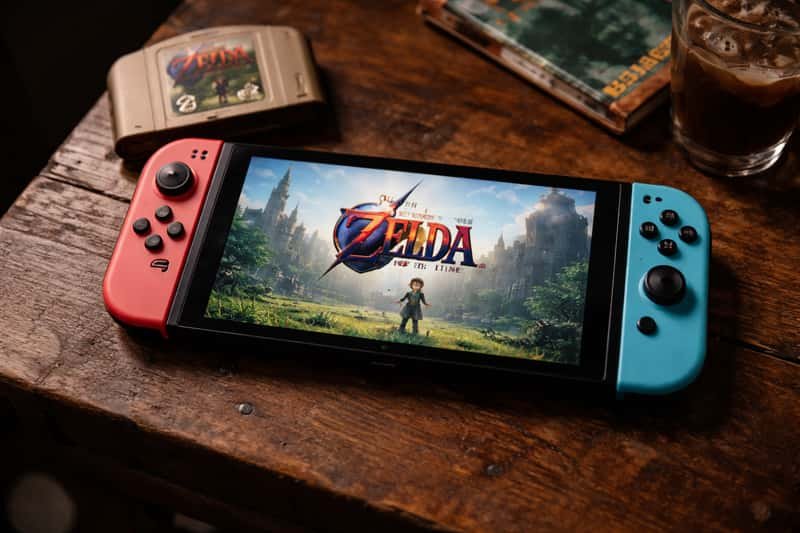
A feature list treats every bullet as equal. It isn’t. Rank the changes by how differently the game feels in your hands, and three tiers fall out cleanly.
The High-Impact Tier: Saves, Rewind, and Where You Respawn
This is the tier that changes how you play, not how the game looks. Hands-on coverage reports that the Switch 2 edition places you at the exact location of your last save instead of dumping Young Link at his house or Adult Link at the Temple of Time (Nintendo Life). Say you were mid-way through Jabu-Jabu’s Belly. Old behavior: back to the house, walk the whole route again. New behavior: right where you stood.
Add rewind and save states through the Nintendo Switch Online layer and death stops costing you a level. In the original, a bad Fire Temple run meant a full re-traverse. Here, it means a few seconds. For anyone who bounced off Ocarina as a kid because of the Water Temple, this tier alone justifies the revisit.
For anyone who never finished the original, the save change is the single biggest friction removal in the package. Traversal friction was the original’s quietest tax. This is the tax refund.
The Mid-Tier: Camera and Button Mapping
The camera point does the heavy lifting here. The N64 version’s camera was a fight you won by pressing Z and hoping. A functional right stick turns combat and platforming into decisions instead of negotiations. Button remapping rounds out the tier for anyone who has spent twenty years with the N64 controller layout burned into muscle memory.
Nintendo lists updated camera movement and right-stick control among the edition’s modern controls (Nintendo). That is the confirmed piece. The remapping options are a hands-on observation, and they matter most to players carrying N64 muscle memory into a modern controller.
Does any of this touch the quest? No. You still need the same items in the same order. But “same quest, better hands” is a bigger deal than it sounds, because the original’s controls were its most aging surface.
The Cosmetic Tier: Resolution, Frame Rate, and Audio
Nintendo advertises overhauled visuals and widescreen presentation (Nintendo). All of it looks like a modern Nintendo release, and none of it changes a single puzzle solution.
This tier is not worthless. It is just ranked third on purpose. A rebuilt Hyrule Field is a real visual leap, and the audio mix lands harder than the N64 original, but you will make the same decisions you made in 1998 while it plays.
Put the three tiers in a table and the priority is obvious.
| Tier | What Changes | Does It Alter Play? |
|---|---|---|
| High | Save location, rewind, save states | Yes, meaningfully |
| Mid | Camera control, button remapping | Yes, feel only |
| Cosmetic | Resolution, frame rate, audio | No, presentation only |
Confirmed by Nintendo vs Reported by Reviewers
Claims about this version split into two buckets, and mixing them is how bad comparisons get made.
Official Nintendo material confirms the headline items: overhauled visuals, modern controls, and widescreen presentation (Nintendo). Anything on that list is safe to plan a purchase around.
Hands-on reviewer coverage supplies the rest. The exact-location respawn behavior is a reviewer observation, not a store-page bullet (Nintendo Life). Treat these as strong signals, not gospel. Reviewer findings can shift with patches. Store-page features don’t.
The practical rule: if you are deciding whether to buy today, trust the official list. If you want to know how it actually feels, read the hands-on reports, then expect a patch note or two before everything settles.
The Comparison Everyone Makes vs the One That Actually Matters
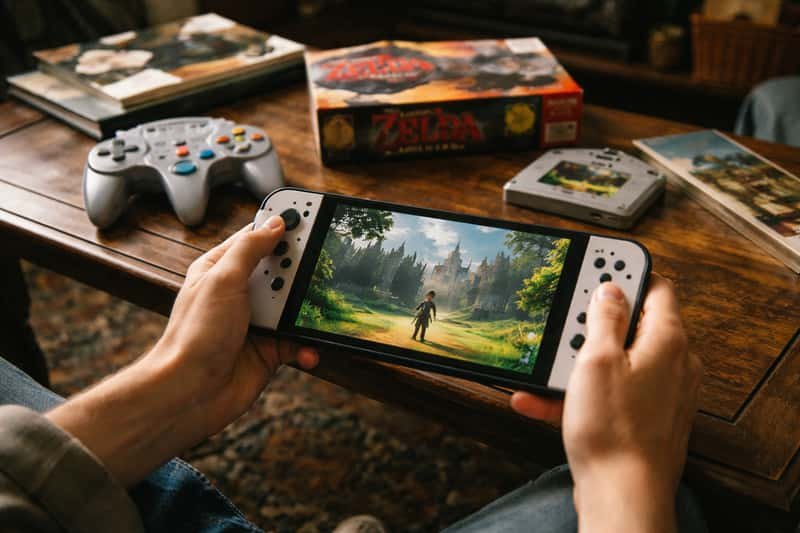
Search “Ocarina of Time Switch 2” and you get N64 versus Switch 2 side-by-sides. That comparison is real, but it’s the wrong one for most people reading this.
Switch 2 vs the N64 Original
Against the 1998 cartridge, the gap is enormous and mostly obvious. Texture resolution, draw distance, frame rate, audio fidelity, and control responsiveness all move forward by two decades. The N64 version is historically important and genuinely hard to go back to. If your only reference is the cartridge in a box in your parents’ attic, the Switch 2 version will feel like a different game. It isn’t, but it will feel that way.
Switch 2 vs the 3DS Remake
Here is the comparison that actually matters. The 3DS remake already modernized the controls, added gyro aiming, touched up the visuals, and smoothed several rough edges. Most returning players’ muscle memory comes from that version, not the N64 layout. So the real question is what Switch 2 adds on top.
The answer: a bigger visual leap than 3DS to Switch 2 suggests at first glance, plus the save-location change and the camera overhaul the 3DS version never had. The 3DS remake is a faithful modernized port. This is a rebuild. If you played the 3DS version on a commute and remember it fondly, the Switch 2 edition is a real step up, not a re-buy of the same idea.
Speedruns, Glitches, and Sequence Breaks
This is the loudest complaint thread on r/zelda, and it deserves a straight answer: a rebuilt version changes the physics and the frame data, and speedrunning depends on both.
Any route that relies on precise N64-era glitches is at risk in a rebuild with new movement systems. New save behavior changes how a run gets segmented. Any added traversal convenience changes routing entirely. The community’s concern is legitimate, and nobody should pretend otherwise.
What the Switch 2 edition almost certainly still offers is a coherent, beatable, glitch-free version of the same quest. If you race the game for fun, the leaderboard routes will be rebuilt around the new systems and a fresh category will emerge. If you race the N64 version competitively, your cartridge still works.
The split is simple. Preservationists keep the original. Everyone else gets a version that plays better and runs cleaner. No single release satisfies both, and this one is aimed at the second group.
Presentation-Only vs Actual Gameplay Changes
This is the missing plain-English split nobody publishes, so here it is.
Presentation-only: resolution, frame rate, lighting, remodeled environments, and cosmetic swaps. These change how the game looks and sounds. They never change what you do.
Actual gameplay changes: exact-location respawns, rewind and save states, functional camera control, and button remapping. These change what you do and how fast you do it.
Run the test on any new claim you read. If the change affects where you stand, how you move, or what you can find, it’s gameplay. If it affects only what you see or hear, it’s presentation. That one question resolves most of the arguments happening in comment sections right now.
Pack vs Secondhand Cartridge vs 3DS Cart
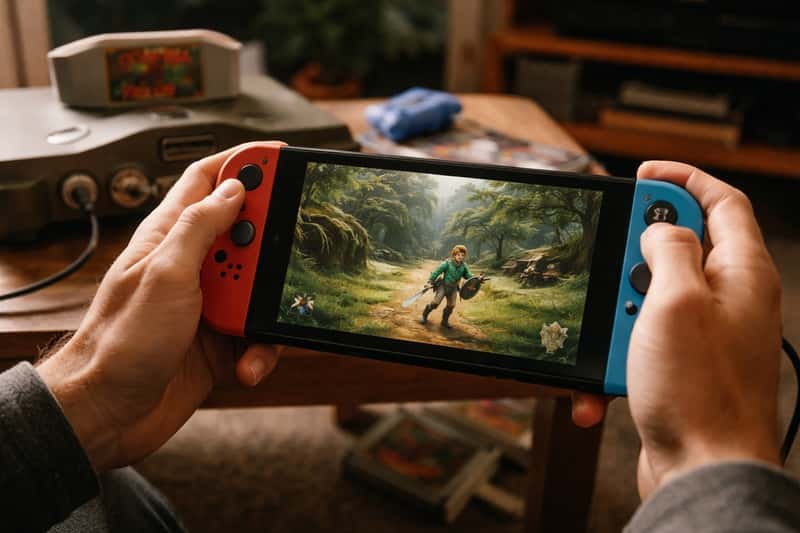
The dollar math makes the decision concrete.
An N64 cartridge secondhand runs collectors’ prices, often $60 to $150 depending on condition and whether the label survived. A 3DS remake cart secondhand typically lands in the $40 to $70 range. The Switch 2 upgrade pack for existing Nintendo Switch Online members runs about $10 to $25, the cheapest entry point by a wide margin.
| Option | Rough Cost | What You Get |
|---|---|---|
| Switch 2 upgrade pack | $10-$25 | Rebuilt version, all modern features |
| Secondhand 3DS cart | $40-$70 | Modernized port, no save-location change |
| Secondhand N64 cart | $60-$150 | Original 1998 experience |
If you already have Nintendo Switch Online, the upgrade pack is the obvious call. If you’re buying a physical N64 cartridge for nostalgia, know that you’re paying a collector’s premium for a version that plays worse than what’s on your Switch 2 right now.
Buy It If, Skip It If
Buy it if you never finished the original and the Water Temple beat you. The save changes and modern camera remove the exact friction that made people quit in 1998.
Buy it if your last playthrough was the 3DS remake and you want the definitive version. This is that, with a bigger visual leap than expected.
Buy it if you have Nintendo Switch Online and the upgrade pack price is trivial against a $60 cartridge.
Skip it if you speedrun the N64 version competitively and need the original physics intact. Your cartridge is the right tool.
Skip it if you own the 3DS remake, play it regularly, and don’t care about better graphics or a smoother camera. The quest is identical, and you already have a good version.
Third-Person Verdict: First-Timers vs Returning N64 Owners
Same game, new hands. The story and dungeons are identical, and everything that changed lives in how the game responds to you. Rank the changes and the order is clear: saves first, controls second, resolution dead last. If the question was whether this is worth the upgrade pack price on a game you already beat, the answer splits cleanly by which version you beat it on.
For first-timers and anyone who quit in 1998, buy it. The save behavior and camera remove the friction that made the original age badly, and there is no better entry point.
For returning N64 owners who still play the cartridge, skip it unless the visual leap matters to you. Your version still works, and the quest is identical.
FAQs about Is the ocarina of time for switch 2 different than the original?
Is Ocarina of Time on Switch 2 a remake or a remaster?
Nintendo’s own language describes a rebuilt version for a new generation (Nintendo), which lands closer to remake than remaster. The story and dungeons are unchanged, but movement, saves, and visuals are all reworked rather than touched up.
Does the Switch 2 version have the same story as the N64 original?
Yes, exactly the same story. Same characters, same temple order, same ending. If you beat the original, you can work through this version without a guide.
Are the dungeons different in the Ocarina of Time Switch 2 version?
No. Dungeon layouts and puzzle solutions match the original. Nintendo’s official feature list covers visuals and controls (Nintendo), but no new dungeons or redesigned rooms.
Is the ocarina of time for switch 2 different than the original in how saving works?
Yes, and this is the biggest change. Hands-on coverage reports that the game places you at your last save location instead of returning you to a fixed starting point (Nintendo Life). Rewind and save states add a second layer on top.
Does the Switch 2 remake preserve the original glitches and sequence breaks?
Likely not all of them. A rebuild with new movement systems and changed save behavior alters the physics that N64-era glitches rely on. Speedrunners should assume routes need rebuilding, and the N64 cartridge remains the version for original-physics runs.
Can you still play the original N64 version on Switch?
The original remains available through Nintendo’s classic game offerings for subscribers. The Switch 2 edition is a separate rebuild, not a replacement for the emulated version.
Is Ocarina of Time on Switch 2 worth buying if you already own the N64 cartridge?
For most players, yes. The save behavior and camera remove the friction that made the original age badly. The one group that should skip it is competitive N64 speedrunners who need the original physics intact.