Producing high-quality video content has become a far more collaborative process than it once was. Directors, producers, cinematographers, editors, visual effects artists and clients may all contribute to the same project while working from different locations. Coordinating these creative and technical teams requires more than video conferencing and shared folders. A virtual production platform provides a connected environment where teams can collaborate throughout every stage of production, from the earliest planning sessions to the final edit.
When information, assets and communication are centralised, projects become easier to manage, creative decisions can be made more quickly and production teams spend less time dealing with administrative challenges.
Before the Cameras Start Rolling
The benefits of collaboration begin long before filming starts.
During pre-production, teams are responsible for planning schedules, reviewing creative concepts, organising assets and ensuring everyone understands the project’s objectives. Without an organised workflow, information can easily become fragmented across multiple systems.
A virtual production platform helps by bringing together planning documents, creative discussions and production resources so every department is working from the same information.
This creates a stronger foundation before production even begins.
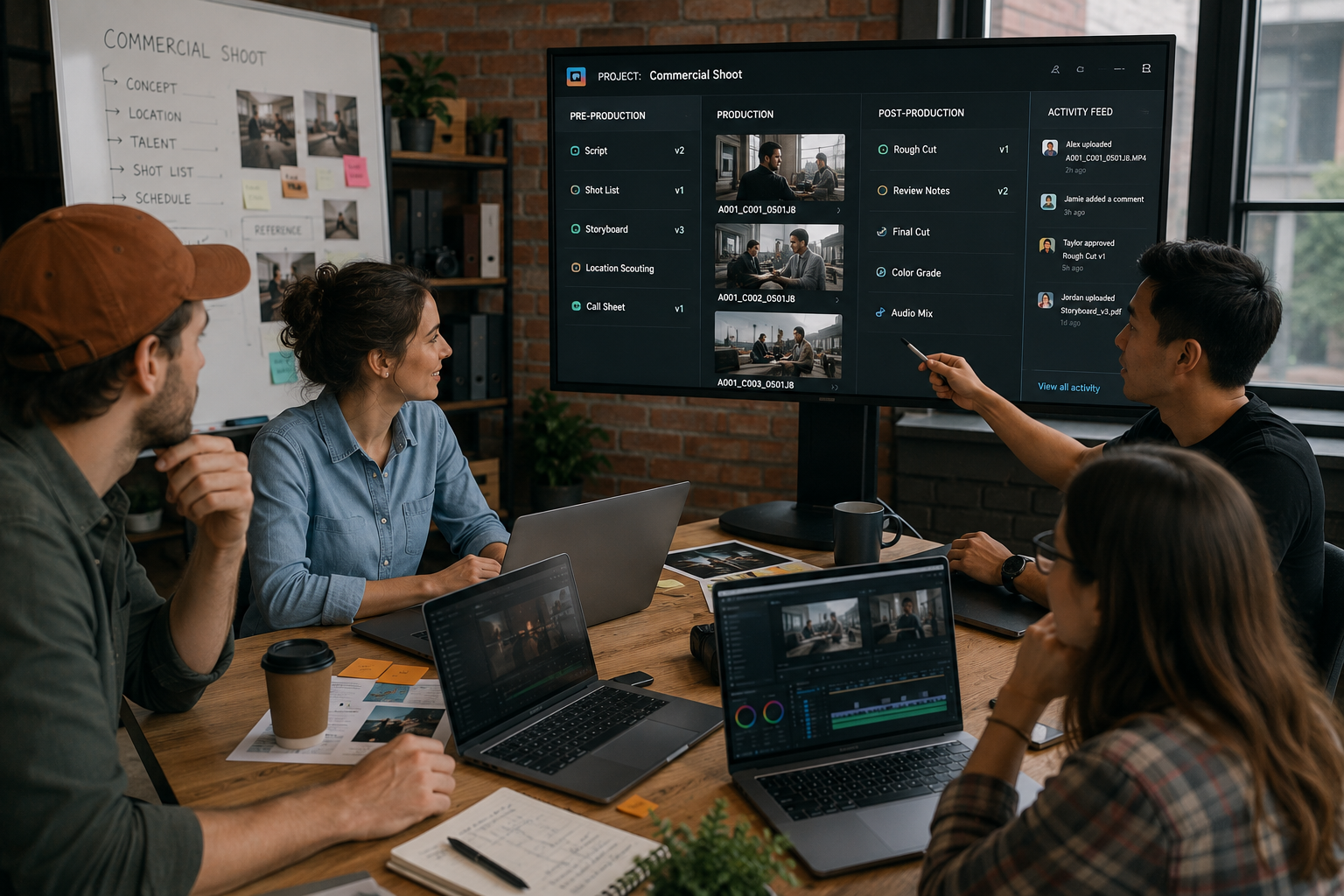
What Better Collaboration Looks Like
Rather than asking whether a platform includes a particular feature, it can be more useful to consider the outcomes it creates.
| Without a Virtual Production Platform | With a Virtual Production Platform |
|---|---|
| Information spread across multiple tools | One central workspace |
| Long email chains | Shared conversations |
| Difficult version tracking | Clear revision history |
| Delayed approvals | Streamlined review process |
| Separate project assets | Centralised media management |
These improvements may seem straightforward individually, but together they remove many of the delays that affect creative projects.
Supporting Production Teams in Real Time
Production environments move quickly.
Schedules change, creative decisions evolve and new challenges arise throughout filming. Teams need access to the latest information without waiting for lengthy email updates or manually distributed documents.
A virtual production platform supports faster collaboration by allowing authorised users to access shared resources whenever they need them.
This keeps departments aligned while reducing the likelihood of costly misunderstandings.
Making Creative Reviews More Efficient
Creative work naturally involves feedback.
Directors review footage, producers approve edits, clients request revisions and specialists contribute their expertise throughout the project. Managing these discussions efficiently can significantly influence production times.
A collaborative workflow often allows teams to:
- Review assets together.
- Share comments in context.
- Track approvals.
- Monitor revision history.
- Keep creative discussions organised.
When everyone contributes through the same platform, the review process becomes much easier to follow.
Connecting Production With Post-Production
One of the biggest advantages of a virtual production platform is that collaboration continues after filming has finished.
Editors, colourists, sound designers and visual effects teams all rely on accurate project information and efficient communication. Because project assets remain connected throughout the workflow, post-production teams spend less time searching for files and more time refining the finished product.
This continuity helps maintain momentum between departments while reducing unnecessary duplication of work.
Why Creative Teams Value Centralised Workflows
Creative professionals often work across multiple projects simultaneously.
Having one organised platform allows contributors to move between productions without constantly adapting to different communication methods or file management systems.
Some of the practical advantages include:
- Improved visibility across projects.
- Faster decision-making.
- Better coordination between departments.
- Easier access to production assets.
- Reduced administrative workload.
These benefits become increasingly important as productions grow in scale and complexity.
Supporting Distributed Productions
Modern productions frequently involve contributors working across different cities or even different countries.
A virtual production platform allows editors, producers and creative specialists to remain connected regardless of location. Rather than limiting collaboration to people working on-site, organisations can assemble the most suitable team for each project.
This flexibility also makes it easier to involve external agencies, freelance professionals and clients without disrupting established workflows.
Looking Beyond Individual Projects
Many organisations adopt virtual production platforms because they improve not just one production, but the way every future project is managed.
As teams become familiar with consistent workflows, communication becomes more efficient, onboarding new contributors becomes simpler and production knowledge is retained within the organisation rather than scattered across disconnected systems.
Over time, these improvements contribute to more predictable delivery, stronger collaboration and better use of creative resources.
Final Thoughts
A virtual production platform brings far more value than simply providing another place to store project files. It creates a collaborative environment that connects every stage of production, helping creative and technical teams communicate more effectively from initial planning through to final delivery.
By reducing information silos, simplifying reviews and creating smoother workflows between departments, organisations can complete projects more efficiently while allowing creative professionals to focus on producing their best work. As productions continue to become more collaborative and geographically distributed, a virtual production platform provides the structure needed to keep people, processes and creativity working together.