Kitchen extensions are the primary way to add space in UK homes today. For terraced or semi-detached houses, kitchens can only extend out so far, otherwise, they intrude into the neighbour’s property. However, there’s a difference between extending merely to create more square footage and extending to create a functioning space. The element which makes or breaks how people use these spaces on a daily basis is light.
A kitchen extension with little to no natural light becomes just a tacked on space. People gravitate to the original kitchen area, where there are still windows, and the newest investment becomes a waste of money because no one wants to occupy that part of the house. Therefore, it makes a world of difference to get the light right from the outset.
Why Side Windows Aren’t Generally Enough
The most common extensions are single-storey, meaning they extend along the back of the house, which translates into natural light coming in from one direction – the new wall at the rear where either patio doors or windows exist, facing the garden. Thus, there’s a gradient of light; at the back of the extension, it’s bright but the further in one steps closer to the house, it gets dimmer.
Depth also contributes to this challenge of receiving natural light through extensions. Extensions generally run 3-4 metres deep today, if not more. Side windows do not let in much light at all unless one is standing right next to them. In fact, within an extension, it’s possible that one might be in the work triangle zone (sink-hob-prep) without even enjoying any natural lighting.
Furthermore, extending side windows merely goes so far. The depth of the rear wall will only permit so much glazing before there’s too much heat loss. And there’s also the challenge of privacy if there is too much side extension that exposes windows into neighbours’ properties.
What Overhead Glazing Changes
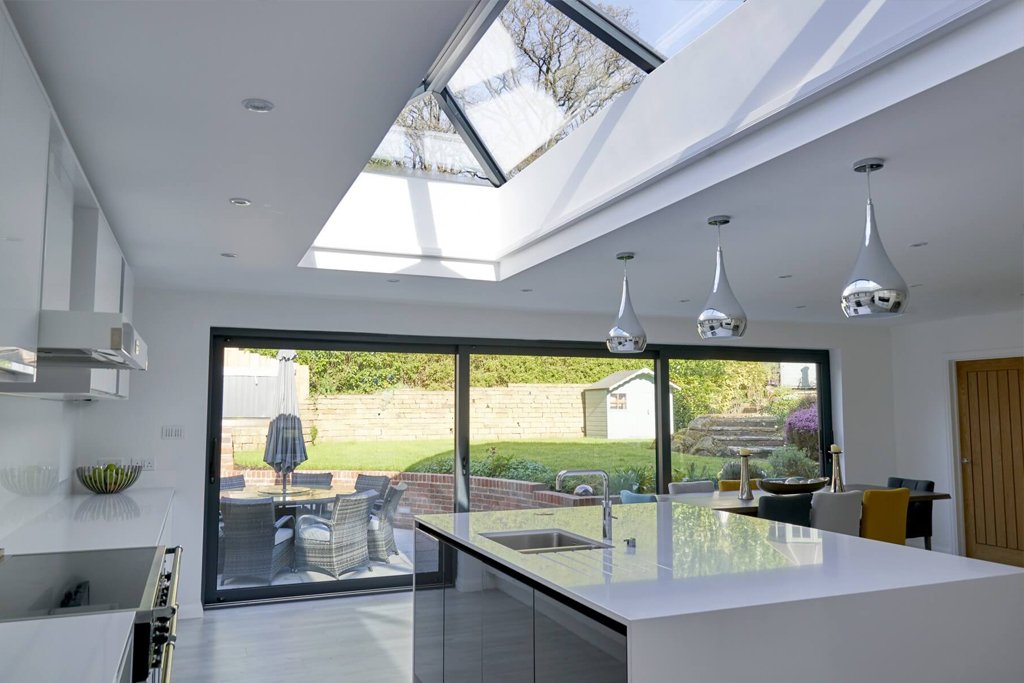
Overhead glazing changes the whole dynamic regarding light. It comes from above, meaning that it penetrates any area sufficiently as opposed to diminishing as it moves from rear windows. In fact, even at the area closest to the house – often the darkest region – gains sufficient access to natural light over time without solely depending on electric lighting.
This is especially true when it comes to quality of overhead natural lighting for kitchen work. Unless one is using a spotlight above their work surfaces, overhead light does not cast shadows on countertops and food-prepping activities. It illuminates colours in addition to shapes – crucial for cooking. It also makes a person feel less cramped as though they’re in a box since there is more perceived openness.
Roof lanterns create that overhead aspect while providing an aesthetic benefit for what would otherwise be a flat roof. The raised roof creates an architectural element that draws one’s attention upward where a rooftop ceiling would otherwise seem lower than it actually is.
The Practical Benefits for Kitchen Work
It’s easy to say that working in a well-lit kitchen is better than working in a poorly-lit kitchen. But when reading recipe cards, assessing if chicken is cooked enough through best use of colour, checking when vegetables are browning – it’s important that natural lighting provides such accessibility for optimal function.
Furthermore, morning natural light matters in terms of how people use this space. Having breakfast in an extension flooded with morning sunshine is vastly different than having breakfast with the lights on in a dark room. The extension becomes an environment where people want to be – the new kitchen-from-the-kitchen extension – as opposed to just a cooking area.
Ventilation also helps – many roof lanterns have opening sections which allow steam and cooking smells to rise and exit the space as opposed to merely settling over one’s head and requiring an extractor fan. Natural ventilation works hand in hand with rising heat and is better than no ventilation through creating a sauna environment.
How It Affects The Room’s Atmosphere
Kitchen extensions can perform multi-functional purposes in today’s modern home – eating, studying, chatting, working from home, etc. The best way for such spaces to operate for all these activities is if they benefit from good natural light.
Naturally lit extensions invite people to spend time therein throughout the day – kids might sit at the table doing homework or adults might use their laptops as they linger over coffee or two. Compare this with a dim lit extension that’s only used for cooking and then left as people gravitate back towards their living rooms. The location’s potential creation suggests how much value increases over time for such an investment.
In addition, there is psychological value when people can see outside above them rather than at the same level as their windows in their living rooms. Overhead glazing which exposes sky and clouds creates a transitional feeling between inside and outside which solid ceilings cannot accommodate. On sunny days, having overhead light and shadows from clouds passing is more visually appealing than a static ceiling.
Design Integration With The Existing House
Extensions can sometimes look tacked-on or they can naturally blend into the existing home design. Roof lanterns facilitate this by adding an architectural detail that extends beyond one big box with a flat roof.
For instance, from inside the house looking into the extension, there will be an obvious focal point as the roof lantern directs the attention upward. This also adds character to what would otherwise be a plain addition when viewed from outside. It’s important for property value as well as for personal satisfaction.
Such raised sections also facilitate proportions better than flat ceilings all over kitchens that tend to get long and wide. Proportions are easier with a central raised section breaking up that monotony.
Positioning and Size Considerations
Where the roof lantern sits within a proposed extension layout helps determine how light is dispersed through said area. Ideally, centring it over the main work area will provide sufficient lighting for areas needing it most; putting it toward the house end will help brighten up what might otherwise be one of the darkest spots in the entire extension.
Size also matters – but bigger isn’t always better; it has to be proportionate to room size – not too big that overheating results but not too small where there’s not enough light or visual impact. Kitchen extensions generally operate well when roof lanterns claim 25-40% of the roof area.
If there are already substantial rear patio doors/lights that help bring in tons of light, then the roof lantern should also be sizable enough to help incorporate them without juxtaposition and vice versa (if there’s no side glazing/little opportunity for side windows).
Long-Term Value
Kitchen extensions are expensive; anywhere from £30,000-60,000 or more depending on size and specification; therefore, making sure they work well long-term justifies investment costs. If people spend £50k on an addition only for it not to work properly, what’s the point?
A successful extension lives up to its potential and provides sufficient use over time; this means that even if more money goes into creating the roof lantern itself – £2-5k typically – it’s worth it compared with all those years using that space comfortably as opposed to inadequately.
Quality roof lanterns make more sense for longevity; aluminum frames don’t rot or warp or need paint touch-ups every year; specification of glazing is often enough for sound performance; minimal maintenance needs include clearing off any dust and grime once in a while or rechecking seals.
Kitchen extensions should celebrate how houses work where they feel good; making sure appropriate lighting through access of proper overhead glazing makes all the difference between an extension that works and one that doesn’t.