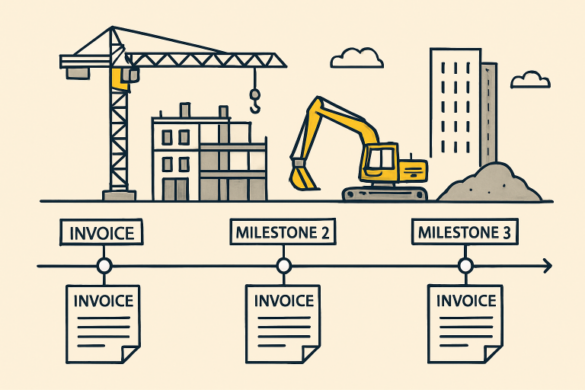
Effective cash flow management is the backbone of every successful business in Australia, particularly for small and medium-sized enterprises (SMEs). However, waiting on customer payments, especially when clients demand extended credit terms, can strain a company’s finances and hinder day-to-day operations. This is where invoice finance becomes invaluable. Businesses can leverage this tool to unlock funds from unpaid invoices, helping them bridge the gap between billing and receiving payment. For business owners researching Does Scotpac offer invoice finance?, the company provides invoice finance solutions tailored to Australian conditions, offering options designed to support smoother cash flow and ongoing operations.
Invoice finance gives business owners more control by converting receivables into ready cash, easing the financial pressure brought by delayed customer payments. This allows business leaders to focus on strategic growth rather than chasing invoices or worrying about working capital. Rapid access to funds, increased payment certainty, and operational flexibility make invoice finance a compelling alternative to more traditional forms of business credit.
While there are several cash flow solutions available, invoice finance stands out for its simplicity and minimal impact on company balance sheets. By receiving an advance based on the value of outstanding invoices, businesses can quickly overcome short-term liquidity issues and invest in upcoming opportunities without incurring new debt.
It is important for businesses to fully understand the mechanics and potential benefits of invoice finance before implementing this solution in their operations. Transparency, provider reputation, and fee structure are critical considerations, all discussed in greater detail below. For further reading on how this financial product works globally, refer to resources from reputed publishers such as Forbes.
Understanding Invoice Finance
Invoice finance, also known as debtor finance, enables companies to release cash tied up in outstanding invoices. Rather than waiting several weeks or months for clients to pay, businesses receive a significant portion of the invoice value from a third-party finance provider. This provides immediate liquidity and allows companies to keep up with short-term financial commitments such as payroll, rent, and supplier agreements.
Two main types of invoice finance are available in the Australian market: factoring and invoice discounting. Factoring involves the finance provider managing customer collections and payments directly. Invoice discounting, in contrast, leaves collection duties with the business itself, making it more suitable for businesses wanting to maintain customer relationships or those with established credit control processes.
Benefits of Invoice Finance
- Improved Cash Flow: Immediate payment against invoices means improved liquidity, reducing the risk of missing regular financial obligations.
- Business Flexibility: Companies can tailor arrangements to suit their situation, whether needing a one-off solution or an ongoing facility.
- Growth Opportunities: Ready access to cash enables businesses to act quickly on investment opportunities, expand into new markets, or handle sudden spikes in demand.
- Reduced Reliance on Debt: Compared to traditional lending, invoice finance keeps additional liabilities off the balance sheet, improving the company’s financial profile.
How Invoice Finance Works
Step-by-Step Process
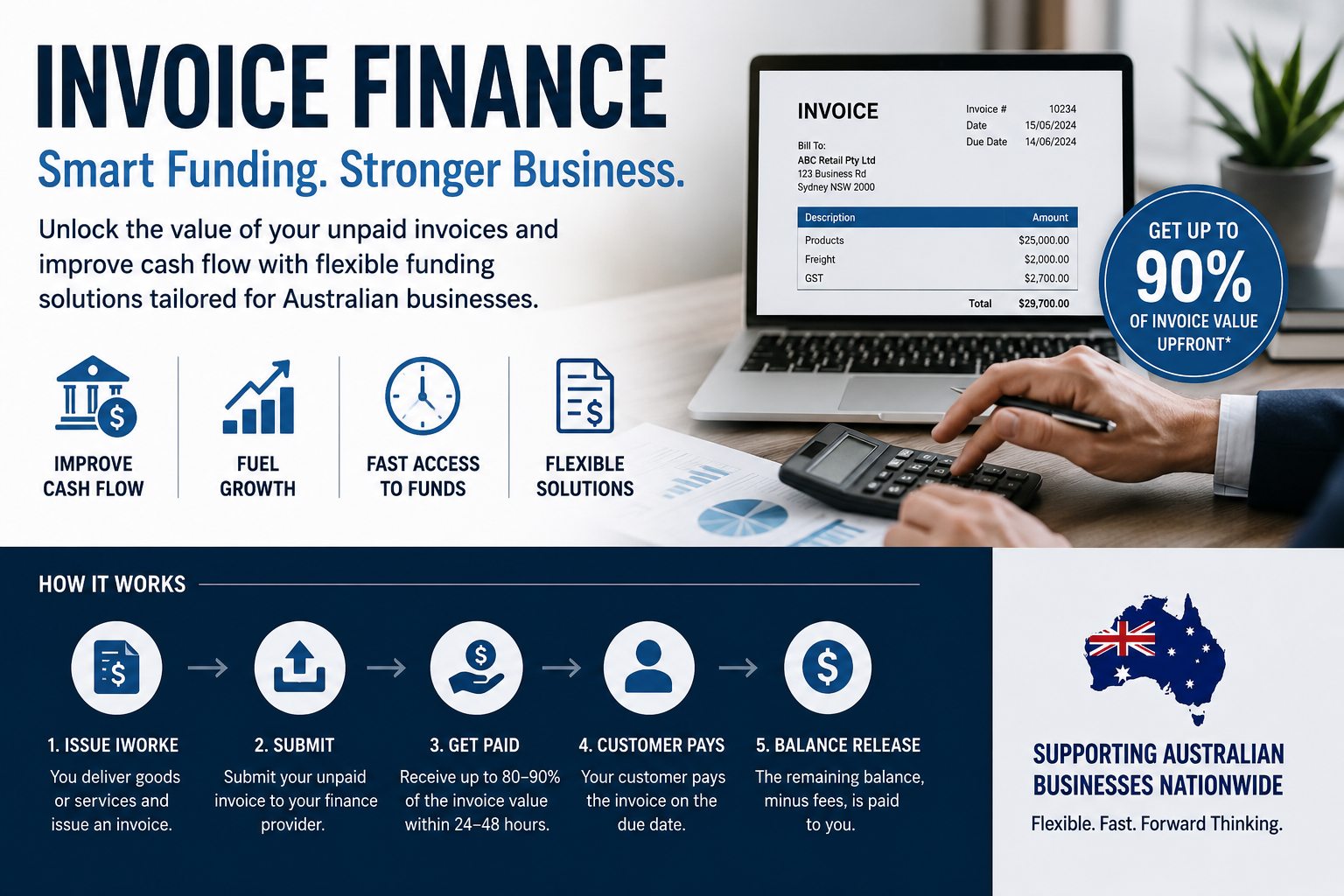
- Issue an Invoice: The business supplies goods or services to its customer and issues an invoice, often on standard 30-, 60-, or 90-day terms.
- Submit for Funding: The business submits the unpaid invoice to a finance provider.
- Advance Payment: The provider advances up to 80-90 percent of the invoice value, typically within 24 to 48 hours.
- Customer Repayment: The client pays the invoice on the due date, typically to a dedicated account managed by the finance provider (in the case of factoring) or the business (in the case of invoice discounting).
- Final Balance Release: Once the customer has settled the invoice, the remaining balance, minus agreed-upon fees, is paid to the business by the finance provider.
Real-Life Example
Imagine a Sydney-based manufacturing company supplying products to major retailers. These retailers may require payment terms of up to 60 days, but the manufacturer must cover costs like payroll, rent, and materials immediately. By utilizing invoice finance, the manufacturer receives a significant portion of the invoice value upfront, bridging the gap between delivering goods and receiving payment. This ensures production remains steady and the company avoids the negative impacts of cash shortages.
Choosing the Right Invoice Finance Provider
When considering invoice finance, it is critical to evaluate providers based on several criteria. Transparent fee structures and advance rates (usually between 80 and 90 percent) are key. Further, it is important to consider the provider’s reputation, customer service quality, industry experience, and technological capabilities.
Many Australian SMEs find value in choosing providers with a robust online portal for tracking payments and accessing funds. Businesses should look for flexible terms that match their cash flow cycles, reviewing not only costs but also support services. Consulting with an independent financial adviser can help leaders make an informed decision about choosing the best solution for their unique needs. More information on selecting financial providers can be found at CBS News.
Conclusion
Invoice finance is a versatile tool that empowers Australian businesses to manage cash flow more efficiently. By exchanging unpaid invoices for immediate advances, companies can operate with peace of mind, seize growth opportunities, and buffer themselves against the challenges of delayed client payments. For many, this approach offers a lifeline, allowing them to thrive even when facing unpredictable payment cycles or capricious market demands.