Your home’s outdoor areas are more than just a backyard; they’re extensions of your living space. When thoughtfully designed, they can be both beautiful and practical, offering a place to relax, entertain, or spend time with family and pets. Achieving the perfect balance between aesthetics, functionality, and privacy requires planning and attention to detail. By carefully considering elements like plantings, pathways, and boundaries, homeowners can create spaces that are visually appealing, comfortable, and secure. For high-quality fencing solutions, visit https://rockfivefence.com/ to explore professional services that enhance both security and curb appeal.
Why Thoughtful Outdoor Design Matters
To bring your vision to life, professional landscaping Leesburg VA services can help design and maintain outdoor spaces that are both beautiful and functional for everyday enjoyment.
The way your outdoor space is arranged affects not only how it looks but also how it functions. Well-planned areas enhance your property in several ways:
- Improved curb appeal: A polished exterior makes a home feel inviting and well-maintained.
- Enhanced usability: Defined spaces for entertaining, dining, or relaxing enhance your yard’s enjoyment.
- Privacy and security: Strategic design can create secluded areas where families and pets feel safe.
- Increased property value: Functional and attractive outdoor spaces are highly desirable to potential buyers.
Investing in these improvements ensures that your outdoor areas are not just decorative but also serve practical purposes for everyday life.
Designing for Beauty
A visually appealing outdoor space begins with thoughtful planning. Consider the following design elements:
- Planting with Purpose: Selecting the right plants is essential for color, texture, and seasonal interest. Layering greenery of varying heights can create depth, while flowering plants add pops of color that draw the eye. Evergreen shrubs provide structure and continuity year-round, ensuring your yard looks attractive even in the off-season.
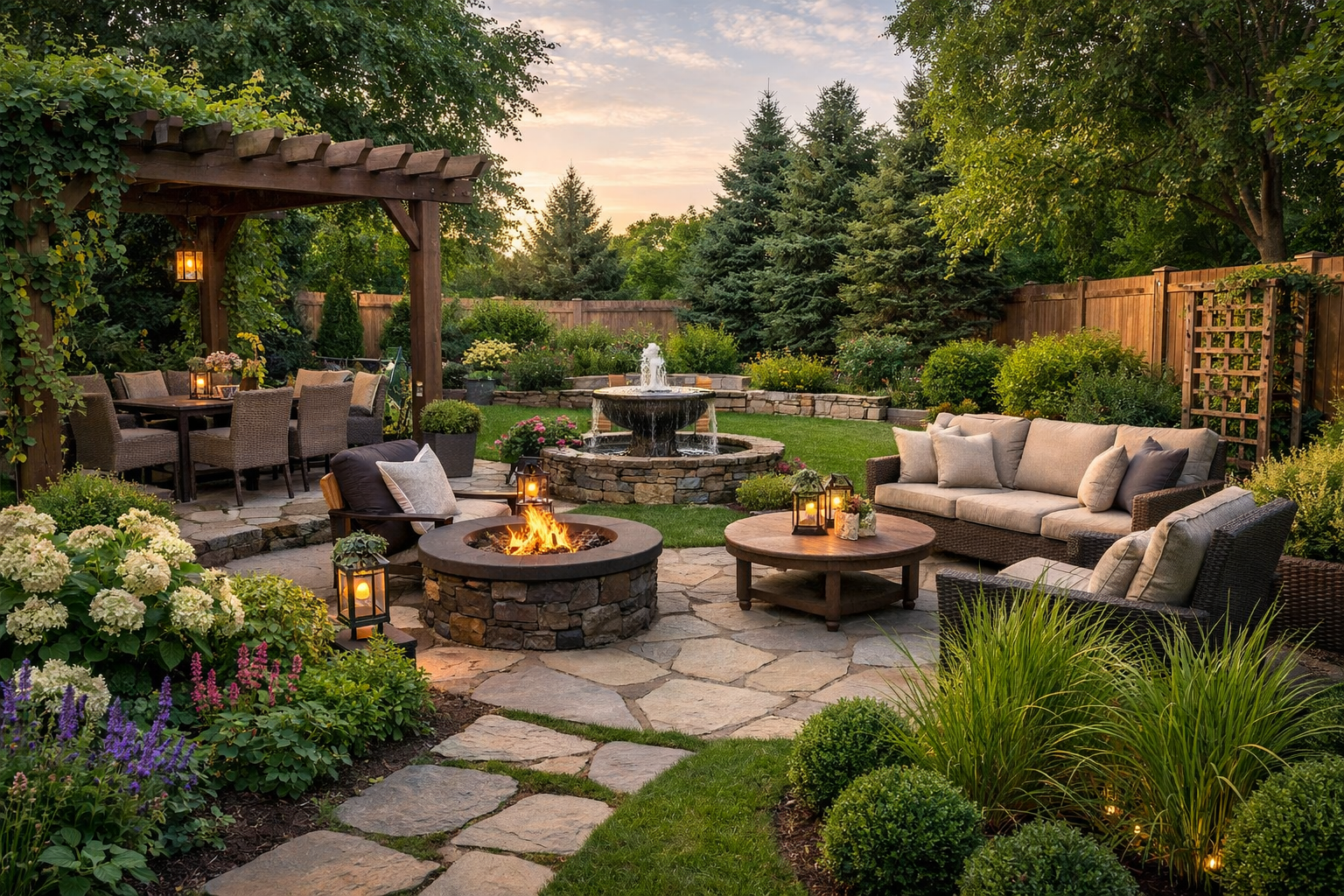
- Defining Spaces: Pathways, patios, and designated seating areas help organize your yard. Clear boundaries make the space feel cohesive and inviting while guiding movement naturally. Materials like stone, brick, or gravel can complement your home’s overall style while adding durability and charm.
- Highlighting Focal Points: Outdoor features like a water fountain, a garden bed, or a seating area can serve as focal points. By arranging plantings and pathways around these elements, you create a sense of flow and intentional design that captures attention and enhances the overall aesthetic.
Designing for Functionality
Beyond looks, outdoor spaces must be practical to enjoy. Functional considerations include:
- Traffic flow: Ensure pathways and open areas allow for easy movement between key zones, such as the patio, garden, or entrance.
- Entertainment: Outdoor dining areas, fire pits, or seating spaces create inviting spots for family gatherings and social events.
- Maintenance: Choose plants and materials suited to your climate and lifestyle. Low-maintenance options save time while keeping the yard looking neat.
- Weather considerations: Shade structures, pergolas, and strategic planting can provide shelter from sun and wind, increasing comfort.
Functionality ensures that your outdoor space is more than just a pretty view; it becomes a practical extension of your home.
Creating Privacy
Privacy is a major factor in enjoying your outdoor areas. Thoughtful design can create secluded retreats without making the space feel closed off:
- Screening with greenery: Tall shrubs, hedges, or trees can serve as natural barriers, blocking unwanted views while adding visual interest.
- Strategic barriers: Structures such as pergolas, trellises, or partitions define areas and enhance seclusion without sacrificing aesthetics.
- Layered design: Combining plantings with structures enhances depth, creates cozy corners, and offers multiple private zones for different activities.
By blending privacy solutions with decorative elements, you create outdoor spaces that feel intimate and protected while still being welcoming.
Tips for Balancing Aesthetics, Function, and Privacy
To create an outdoor space that excels in all three areas:
- Plan early: Sketch layouts and consider how each area will be used. This prevents overcrowding and ensures a cohesive look.
- Use complementary materials: Paths, patios, and borders should harmonize with plantings and your home’s exterior.
- Incorporate multiple layers: Trees, shrubs, and ground cover, combined with hardscaping features, create visual depth and natural boundaries.
- Mix permanent and flexible elements: Consider movable seating, planters, or screens to adjust for events or seasonal changes.
- Maintain balance: Avoid overloading the space with too many focal points. Clear sightlines and open areas maintain flow and functionality.
Even small changes, like adding a border of flowering shrubs along a pathway or placing a seating area in a quiet corner, can dramatically improve the usability and appearance of your yard.
Conclusion
Creating outdoor spaces that are beautiful, functional, and private is all about thoughtful planning and intentional design. By carefully combining plantings, pathways, seating areas, and privacy solutions, homeowners can transform ordinary yards into inviting, well-balanced retreats.
A well-designed exterior doesn’t just look good; it adds value to your home, improves usability, and provides a safe, enjoyable space for family, friends, and pets. Whether your goal is to increase curb appeal, create intimate gathering areas, or enjoy a peaceful outdoor environment, strategic upgrades can make a lasting impact.
With careful consideration of aesthetics, function, and privacy, any homeowner can turn their yard into a space that is both beautiful and practical, enhancing daily life and boosting the overall appeal of their property.