Enjoying your deck should come without worry, but that requires regular care and an understanding of what to look for during inspections. Safety and durability are the twin goals of any well-maintained deck. By following practical advice and periodic checks, homeowners can prevent structural issues and extend the usable life of their outdoor space. To find reliable help or a custom-built outdoor retreat, consult the best deck builder in Northern Virginia for professional service and peace of mind.
Skilled deck upkeep is not only about attractiveness. It is a direct investment in your home’s safety, future value, and your family’s wellbeing. Whether your deck is a quiet place for coffee or the centerpiece of backyard gatherings, performing regular inspections and repairs will minimize risks and maximize enjoyment.
While many homeowners perform their own checks, it is wise to recognize when professional assistance is needed for major repairs or safety issues that are not easily resolved. Keeping up with routine care is also a proactive step that can save you costly repairs later.
Deck maintenance involves monitoring specific areas for common problems, fixing issues early, and applying the right protective measures so your deck weathers the elements year after year. For more general tips on protecting your outdoor structures and property, resources like Consumer Reports’ Guide to Deck Maintenance and Safety offer additional advice.
Inspect the Wood Condition
Begin with a careful visual and physical inspection of every wooden part of your deck. Look specifically for soft areas, splintering, or discoloration, which can indicate rot or insect activity. An easy way to test for rot is to gently press a screwdriver into the wood. If it sinks in without resistance, the integrity of that piece is likely compromised, and replacement is needed. Focus on spots where water may collect or where deck boards meet posts.
Check Fasteners and Hardware
Decks depend on secure connections. Nails, screws, and bolts can become loose or corroded over time, weakening the overall structure. Walk over every part of your deck and listen for squeaks or movement. Tighten fasteners as needed, replace any that are missing, and look for rust or corrosion, especially on metal brackets and connectors. Keeping hardware in excellent condition protects everyone who uses your deck.
Evaluate the Ledger Board
Your deck’s ledger board is usually fastened directly to your house. It is one of the most important structural components. Confirm that it is attached with lag screws or bolts. Never rely on nails alone. Review the area for water stains, soft wood, or separation from the house, as issues here may affect both the deck and your home’s structure. Prompt repairs here are critical for safety.
Assess Railings and Balusters
Give your railings a firm push to be sure they do not sway or feel loose. Railings should be able to hold up to at least 200 pounds of force. Check baluster spacing, which should never exceed four inches apart, protecting children and pets from accidental falls. Replace or reinforce anything that wobbles or appears damaged.
Examine Stairs and Steps
Stairs are a common place for trips and falls. Test each step for firmness and ensure that none are cracked or warped. Handrails along stairways must be securely attached and placed at a comfortable height for all users. Remove leaves and debris that could cause slips, and tighten any loose boards immediately.
Ensure Proper Drainage
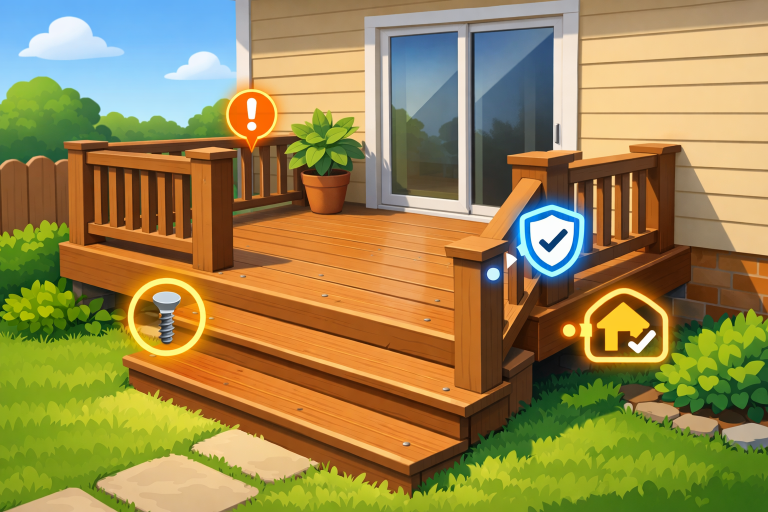
Poor drainage can accelerate wood rot and weaken your deck’s structure. Ensure that water flows away from the deck, and check that gutters and downspouts direct rain away from underneath. Trapped moisture can attract insects and promote mold growth. Learn more about proper deck drainage at the YellaWood’s Deck Safety Checklist.
Maintain Surface Cleanliness
Moss, mildew, and decaying leaves can accumulate quickly. Sweep your deck regularly and power wash if you notice persistent grime or mildew. This not only keeps the space looking fresh but also reduces the chance of slips and wood decay. Be cautious when using cleaning chemicals. Always choose products that are appropriate for your deck material and the surrounding landscaping.
Apply Protective Finishes
Sealing your deck is a wise investment. Use high-quality water-repellent sealants or stains that are made for outdoor wood surfaces. UV rays and rain are relentless, so reseal your deck every two to three years or as recommended by the product manufacturer. For decks built from newer, pressure-treated woods, be sure to follow the waiting period before applying sealant. This helps the finish properly absorb and safeguard your deck for seasons to come.
With these basic safety and maintenance steps, you can create a secure, appealing space for outdoor living. Regular checks and preventative care make it much easier to catch problems early and avoid expensive repairs down the road. Make deck maintenance a routine, and your outdoor space will give you years of safe enjoyment.