
November is an important month for homeowners in Northern Virginia. As temperatures begin to drop, preparing your property for winter becomes more than a seasonal chore. It’s a chance to spot potential problems before freezing weather, heavy rain, and winter storms turn minor maintenance issues into expensive repairs.
Unfortunately, many homeowners overlook essential maintenance tasks during this transition. Dead tree branches remain above rooftops, outdoor faucets are left exposed, and plumbing systems go unchecked until something breaks. These seemingly small oversights can lead to damaged roofs, burst pipes, water leaks, and costly emergency repairs.
Taking time to inspect your property in November can help prevent these problems. Here are some common home maintenance mistakes to avoid before winter arrives.
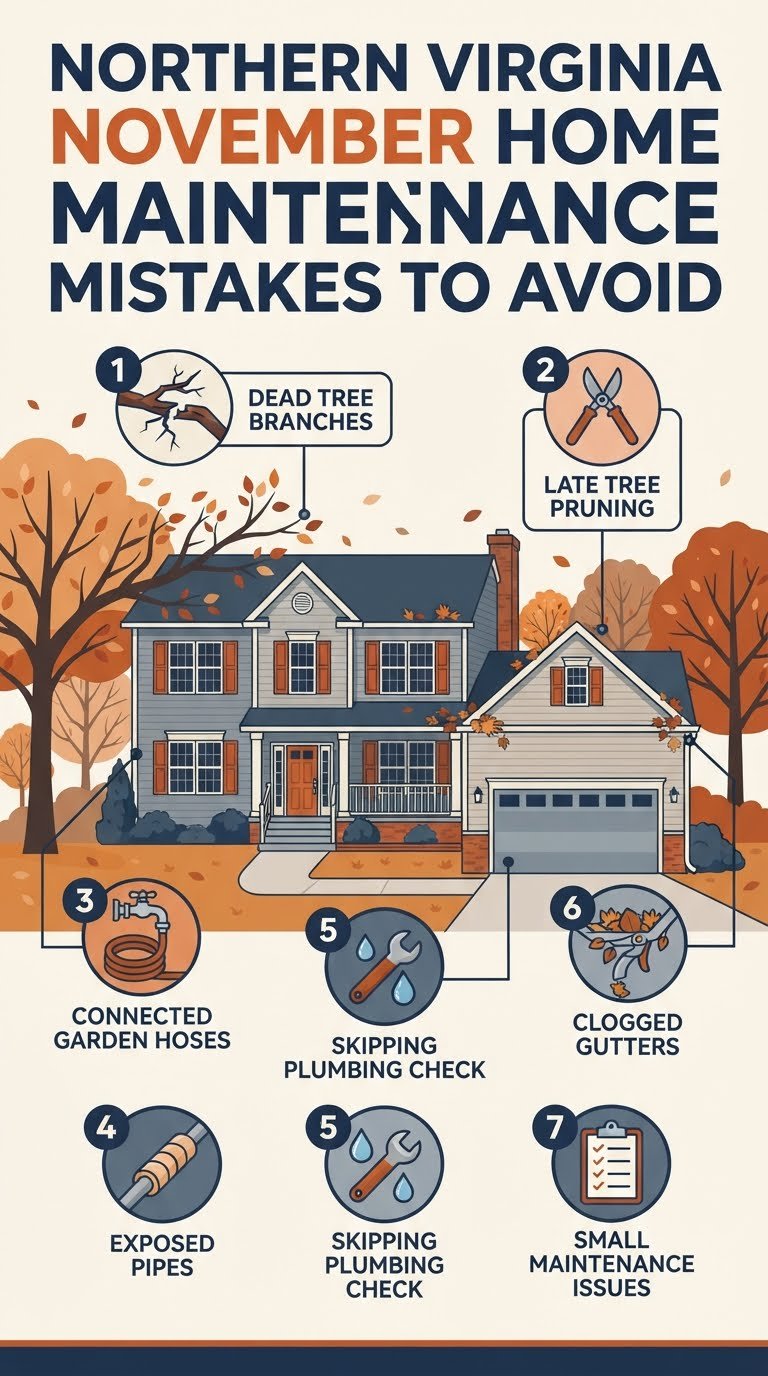
1. Ignoring Dead or Overgrown Tree Branches
One of the most common mistakes homeowners make before winter is overlooking the condition of trees around their properties. During warmer months, dead or weakened branches may not seem like an immediate concern. However, winter weather can make them significantly more dangerous.
Northern Virginia experiences winter storms that can bring strong winds, freezing rain, and occasional heavy snowfall. These conditions add weight and pressure to tree branches, increasing the risk of breakage.
Falling branches can cause several types of property damage, including:
- Broken roof shingles and damaged roofing structures.
- Cracked windows and damaged siding.
- Damaged vehicles, fences, and outdoor structures.
- Blocked driveways and walkways.
- Damage to outdoor plumbing fixtures and utility lines.
Homeowners should inspect trees near their houses, garages, sheds, and other structures. Look for dead limbs, hanging branches, visible cracks, and sections with little or no foliage.
Working with Herndon tree care professionals can help homeowners identify potential hazards and determine which branches need pruning or removal. Professional tree maintenance also helps address structural concerns that may worsen during winter storms.
2. Waiting Too Long to Schedule Tree Pruning
Another mistake is assuming tree maintenance can wait until spring. While spring is a popular season for landscaping projects, waiting until then may leave your property exposed to unnecessary winter risks.
Late fall is a practical time to evaluate tree conditions and address problematic growth. Once leaves have fallen from many deciduous trees, their overall structure and branching patterns become easier to inspect.
Homeowners should pay particular attention to:
- Branches extending over roofs and chimneys.
- Limbs touching or hanging near electrical wires.
- Deadwood within large trees.
- Branches grow too close to gutters and exterior walls.
- Trees showing signs of splitting or leaning.
Not every tree requires aggressive pruning. Removing too much growth can add stress and harm tree health. The goal should be to address specific hazards while maintaining the tree’s natural structure.
Professional assessment is especially important for mature trees and large branches. Attempting to cut heavy limbs without proper equipment can result in serious injuries or additional property damage.
Scheduling necessary work before winter storms become frequent gives homeowners more time to address potential problems without rushing into emergency services.
3. Forgetting to Disconnect Outdoor Hoses
Outdoor faucets and garden hoses are easy to overlook when preparing for colder weather. However, leaving a hose connected throughout winter can create problems inside exterior plumbing lines.
When water remains trapped in a connected hose, freezing temperatures can cause it to expand. This may damage the hose connection, outdoor faucet, or pipes located inside exterior walls.
In some situations, the damage may not become visible until temperatures rise and water begins leaking.
Before freezing weather arrives, homeowners should:
- Disconnect all garden hoses from outdoor faucets.
- Drain remaining water from the hoses.
- Store hoses in a garage or sheltered location.
- Close interior shutoff valves connected to outdoor faucets, if available.
- Open the exterior faucet after shutting off its supply to drain remaining water, following the faucet manufacturer’s instructions.
Homeowners with frost-free outdoor faucets should still disconnect hoses. Leaving them attached can interfere with the faucet’s ability to drain properly.
These simple precautions can help prevent avoidable plumbing problems during the coldest months.
4. Neglecting Exposed Pipes and Unheated Areas
Pipes located in garages, crawl spaces, basements, attics, and exterior walls are particularly vulnerable when temperatures drop.
Many homeowners assume that indoor plumbing is automatically protected from freezing. However, pipes located in poorly insulated or unheated areas can experience dangerously low temperatures during winter.
When water freezes inside a pipe, it expands and increases pressure. This can cause the pipe to crack or burst, resulting in significant water damage once the ice melts.
To reduce the risk, homeowners should take several preventive steps:
Insulate vulnerable pipes: Use appropriate pipe insulation on exposed plumbing, especially in areas that experience cold temperatures.
Seal air leaks: Check around windows, doors, foundations, and utility openings for gaps that let cold air in.
Maintain indoor temperatures: Keep the heating system operating at a consistent temperature, even when nobody is home.
Open cabinet doors: During extremely cold weather, opening cabinets beneath kitchen and bathroom sinks can help warm air circulate to plumbing located against exterior walls.
Inspect unheated spaces: Check garages, basements, and crawl spaces for exposed pipes that may need additional protection.
Taking these precautions in November is much easier than dealing with a burst pipe during a freezing weekend.
5. Skipping a Professional Plumbing Inspection
Another costly mistake is waiting until a plumbing problem becomes noticeable before contacting a professional. Small leaks, worn connections, and deteriorating pipes can go unnoticed for months.
When winter arrives, existing weaknesses may become more problematic. Freezing temperatures can put additional stress on vulnerable plumbing components. At the same time, increased indoor water usage can expose problems that were previously hidden.
A seasonal plumbing inspection can help identify issues such as:
- Minor leaks beneath sinks and around toilets.
- Corroded or damaged pipe connections.
- Water pressure irregularities.
- Worn outdoor faucet connections.
- Poor insulation around exposed plumbing.
- Drainage problems and slow-moving drains.
Homeowners should also watch for warning signs, including unexplained increases in water bills, damp spots, unusual pipe noises, and reduced water pressure.
Scheduling an inspection with Odemz Plumbing can help homeowners identify plumbing concerns and address necessary maintenance before winter conditions complicate repairs.
A qualified plumber can evaluate vulnerable areas, recommend appropriate insulation, and check whether outdoor plumbing fixtures are properly prepared for freezing weather.
6. Overlooking Gutters and Roof Drainage
Tree maintenance and plumbing preparation are important, but homeowners should not overlook another part of their property’s exterior: the drainage system.
Fallen leaves, small branches, and other debris can accumulate inside gutters throughout autumn. When gutters become blocked, rainwater may overflow instead of draining away from the house.
During winter, trapped water can freeze and contribute to ice buildup along roof edges. Poor drainage may also allow water to collect near the foundation, increasing the risk of moisture problems.
Before winter weather arrives, homeowners should:
- Remove leaves and debris from gutters.
- Check downspouts for blockages.
- Make sure water drains away from the foundation.
- Inspect visible roof areas for damaged shingles.
- Check that nearby tree branches are not obstructing drainage.
Cleaning gutters helps manage seasonal rainfall and reduce the likelihood of water-related damage.
Homeowners should also avoid climbing onto slippery roofs or using unstable ladders to complete these tasks. Professional assistance is a safer option for difficult or elevated areas.
7. Treating Small Maintenance Problems as Unimportant
Perhaps the biggest mistake homeowners make is dismissing minor warning signs because everything appears to be functioning normally.
A small crack in a tree branch, a dripping outdoor faucet, or a slightly damp basement corner may not seem urgent. However, winter conditions can worsen existing problems.
Instead of waiting for visible damage, create a simple November maintenance checklist and address concerns as they appear.
Consider prioritizing these tasks:
- Inspect trees for dead, damaged, or overgrown branches.
- Arrange necessary pruning or tree removal.
- Disconnect and store outdoor hoses.
- Insulate exposed plumbing.
- Inspect outdoor faucets and shutoff valves.
- Schedule a plumbing inspection.
- Clean gutters and check downspouts.
- Seal gaps that allow cold air into the home.
- Check heating systems before temperatures drop further.
Keeping a record of completed maintenance tasks can also help homeowners stay organized and avoid overlooking important areas in future seasons.
Prepare Your Northern Virginia Home Before Winter Arrives
Winter home maintenance is not just about keeping a property comfortable. It is about identifying risks early and preventing avoidable damage.
Dead tree branches can threaten roofs, vehicles, and outdoor structures when winter storms arrive. Exposed plumbing can freeze and burst, while neglected leaks and drainage problems can add costs.
The best approach is to treat November as an opportunity to inspect your property from top to bottom. Address tree hazards, prepare outdoor plumbing, protect exposed pipes, and arrange professional inspections where necessary.
A little attention before freezing temperatures arrive can help homeowners avoid stressful emergencies and unnecessary repair costs. By taking these preventive steps now, Northern Virginia homeowners can enter winter with greater confidence that their properties are ready for the colder months ahead.