








Updating your garage floor is a transformative step for both your home’s appearance and its long-term resilience. With the growth of innovative materials and the rising trend of converting garages into functional living spaces, selecting the right coating has become more crucial than ever. Whether you’re seeking added durability, easier maintenance, or a visually stunning finish, various solutions exist to suit your needs. Homeowners considering concrete epoxy flooring in Asheville will find that garage floor coatings can dramatically upgrade both functionality and curb appeal.
Not only do these coatings protect the concrete beneath, but they also provide enhanced traction and a decorative flair, turning what was once a purely utilitarian space into a polished extension of your home. As garage usage diversifies—from workshops to hobby zones and even home gyms—the demand for versatile, attractive flooring options continues to rise. Understanding your coating choices, keeping an eye on emerging trends, and selecting a finish that aligns with your vision can create a garage that stands out for years to come.
The move toward sustainable solutions and advanced application techniques is revolutionizing garage floor coatings nationwide. From water-based products to high-performance polymers, today’s homeowners enjoy an array of options not only for aesthetics but also for environmental impact and durability.
Popular Garage Floor Coating Options
Modern garage floor coatings offer a balance of strength, beauty, and practicality, catering to both DIY enthusiasts and those seeking professional-grade finishes. The primary materials dominating the market include:
- Epoxy Coatings: Renowned for their longevity and chemical resistance, epoxy coatings are a traditional favorite. Technological advances in epoxy formulations now provide faster curing times and self-leveling properties, offering a seamless, polished finish that’s easy to maintain. This makes them especially appealing for households that anticipate frequent or heavy use of the garage space.
- Polyaspartic Coatings: A newer alternative to epoxy, polyaspartic coatings cure rapidly—sometimes within hours—making them an excellent choice for homeowners on tight renovation schedules. Their inherent flexibility and impressive UV resistance help prevent discoloration and cracking, which is ideal in areas with abundant sunlight or rapid temperature fluctuations.
- Polyurea Coatings: Becoming increasingly popular due to their environmental friendliness and limited VOC emissions, polyurea stands out for both extreme durability and the speed of installation. Polyurea coatings are often the go-to for commercial spaces that need minimal downtime, and they readily translate those benefits to residential projects.
Current Trends in Garage Floor Coatings
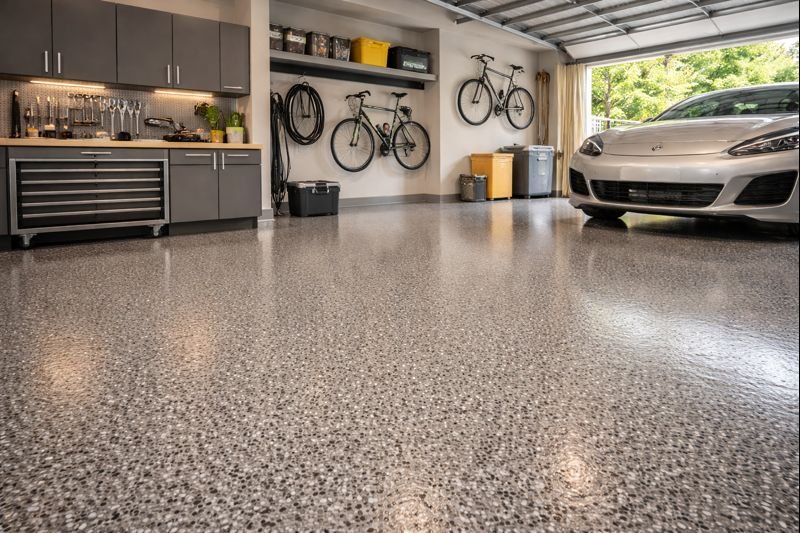
The growing interest in garage makeovers is driving innovative trends in garage flooring. Key developments include the use of eco-friendly materials that prioritize sustainability, featuring low-VOC and water-based options. Decorative finishes offer customization through bold colors and textures, enhancing aesthetics and slip resistance. For homeowners looking for professional expertise, searching for garage floor contractors near me can connect them with local specialists. Additionally, the increasing popularity of heated flooring systems in colder climates enhances comfort and usability throughout the year.
Benefits of Coated Garage Floors
Garage floor coatings offer significant benefits, enhancing both functionality and property value. These coatings increase durability by protecting bare concrete from stains, abrasions, and impacts from dropped tools or vehicles, thus extending the floor’s lifespan. Additionally, many coatings feature slip-resistant additives, improving safety during wet conditions or spills. A visually appealing, well-maintained garage not only attracts buyers but can also substantially increase the home’s resale value, making it a critical aspect for many prospective homeowners.
Choosing the Right Coating for Your Garage
No single coating is suitable for every garage; selecting the right one requires consideration beyond aesthetics. Key factors include: Usage, where epoxy or polyurea coatings are recommended for garages used as workshops or for heavy storage due to their strong impact, abrasion, and chemical resistance. Climate is another factor; locations with significant temperature fluctuations or high sun exposure should opt for UV-resistant and flexible coatings, such as polyaspartic or polyurea. Lastly, budget considerations come into play, as while high-end coatings may have a higher initial cost, their durability and ease of maintenance can provide long-term value by minimizing future repair and re-coating needs.
Maintenance Tips for Coated Garage Floors
To maintain a well-kept garage floor with minimal effort, follow these guidelines: Regularly clean the floor by sweeping or using a dust mop to remove debris and prevent scratches. Mop the surface periodically with mild cleaners to keep it free from stains. Address any spills of oil, chemicals, or paint promptly to avoid etching or damage to the surface. It is essential to avoid harsh chemicals and use gentle, pH-neutral cleaning agents, steering clear of abrasive tools and high-acid substances that can degrade the floor coating over time.
Conclusion
Investing in a garage floor coating delivers both aesthetic and practical benefits—elevating the overall look of your space while protecting your slab for the long haul. With a wide range of options to fit all budgets, climates, and design preferences, today’s coatings are more advanced than ever. By evaluating recent trends, considering your unique household needs, and embracing proper maintenance, you can ensure your garage floor remains a showpiece—and a workhorse—for years to come.