Managing cash flow effectively remains one of the most pressing challenges in the construction sector. Delays in payment can limit a contractor’s ability to buy materials, make payroll, or move projects forward efficiently. One powerful solution construction companies are increasingly leveraging is progress billing, an approach that allows contractors to invoice incrementally as specific milestones are reached rather than waiting until the project concludes. Contractors seeking tailored cash flow solutions can also benefit from working with factoring companies for construction industry which provide financial support by advancing money against invoices.
The structured nature of progress billing not only shields contractors from cash shortages but also enhances transparency between clients and service providers. By closely tying invoices to tangible project achievements, contractors minimize misunderstandings over payment schedules and maintain healthier business relationships. Additionally, this ongoing invoice approach equips businesses with the necessary working capital to keep jobs moving and finish on time.
Understanding Progress Billing
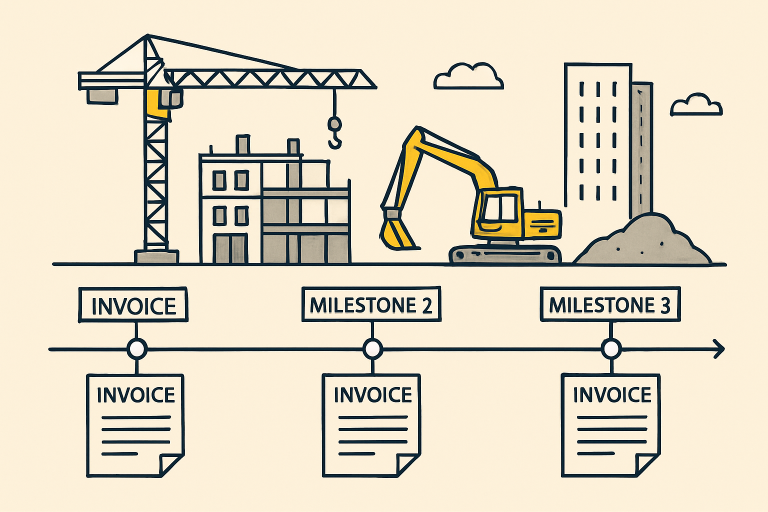
Progress billing refers to a project-based invoicing system in which contractors bill clients at regular intervals based on work completed up to key milestones. Unlike traditional lump-sum billing, which requires contractors to wait until project completion to receive payment, this method promotes a continuous flow of funds. Progress billing involves setting up payment schedules in advance, aligning each invoice with a documented phase of the project and providing clear evidence of work done.
This approach not only improves cash flow but also benefits both contractors and clients. Contractors can meet payroll and pay suppliers on time, while clients benefit from increased transparency as they are billed only for work that has actually been completed, minimizing any risk of overpayment.
Benefits of Progress Billing
Integrating progress billing into construction project management brings multiple advantages:
- Improved Cash Flow: Frequent invoicing correlates with enhanced liquidity. Contractors experience less reliance on credit or personal resources to cover costs throughout the project duration.
- Reduced Financial Strain: By matching payments to project stages and expenses as they arise, contractors are better equipped to maintain consistent resource allocation and labor payments.
- Enhanced Client Relationships: Progress billing decreases the likelihood of invoice disputes, since payments are directly linked to visible progress, thus reinforcing trust.
Recent industry surveys reveal that companies moving from lump-sum to progressive billing have achieved a reduction in their collection period by up to two weeks, translating to increased operational flexibility.
Implementing Progress Billing
Contractors should focus on several crucial elements when adopting progress billing:
- Define Clear Milestones: Carefully outline each step of the project lifecycle. Each milestone should have quantifiable outcomes that can be independently verified and should trigger a corresponding invoice.
- Draft Detailed Contracts: Contracts must stipulate the value associated with each milestone, payment schedules, contingencies, and deliverables required for each billing stage.
- Maintain Accurate Documentation: Keep meticulous records of all work completed and materials used at every phase. Accurate documentation strengthens your position during any client reviews or challenges related to invoices.
The ConstructConnect blog offers further insights into optimizing contract structuring for cash flow purposes in construction.
Overcoming Common Challenges
Despite its many advantages, progress billing may present obstacles for some contractors.
- Client Resistance: Some clients may be unfamiliar or uncomfortable with progress billing terms. Proactively educating clients and presenting the approach’s benefits can foster understanding and cooperation.
- Administrative Burden: Tracking multiple invoices and milestone achievements calls for disciplined project management and reporting. Assigning experienced project administrators or leveraging technology can help simplify this process.
Leveraging Digital Tools
Modern software solutions are transforming how construction companies implement progress billing. Digital invoicing platforms automate much of the invoicing process, reducing manual errors and saving valuable time for contractors. These systems can be integrated with project management tools, ensuring each invoice matches the latest updates in project status.
- Automating Invoice Generation: Many platforms allow contractors to auto-generate invoices based on predefined milestones and percentage completion, minimizing the possibility of human error.
- Real-Time Financial Visibility: Dashboards update in real-time, allowing companies to track outstanding invoices, upcoming payments, and the overall financial health of each project.
- Integration with Project Management Tools: Linking invoices directly to project management data aligns the back office with on-site work in a seamless workflow.
Leveraging digital solutions can cut invoice processing time by more than 70 percent, according to industry estimates from authoritative sources such as Construction Dive.
Conclusion
Progress billing is a proven approach for construction contractors who wish to strengthen their financial resilience and reduce disruptions due to payment lags. By invoicing in alignment with visible project milestones, companies can foster transparency, nurture client trust, and ensure their operations continue smoothly. The adoption of digital billing tools furthers these advantages, enabling faster, more accurate invoicing and greater visibility over project cash flow. As the construction industry grows more competitive, adopting best practices in billing can provide a crucial business edge.