Digital signage is making a significant impact on public spaces, changing how information is communicated and how people interact with their environments. These vivid, dynamic displays are more than just a source of information. They are turning every touchpoint in a city into an opportunity for streamlined, accessible engagement. Whether it is through interactive kiosks in airports, shopping malls, or urban transit hubs, digital signage is modernizing city life. A leading example is digital parking signage for real-time space availability, which guides drivers directly to open spots and reduces traffic congestion in busy areas.
The use of digital signage offers unique advantages for both public administrators and everyday users. For visitors unfamiliar with their surroundings, real-time displays make navigation effortless. For city planners and business owners, these solutions open a direct, adaptive communication channel with their audience. This new standard for public information combines visual appeal and functionality, raising the bar for safety and convenience in modern environments.
As society continues its digital transformation, public spaces are becoming smarter and more responsive. Digital signage now plays a pivotal role in relaying crucial details, such as event schedules, health advisories, weather updates, or emergency alerts. The integration of this technology into traffic systems, retail environments, and healthcare facilities exemplifies how digital displays can drive efficiency and improve public experiences.
Enhancing Navigation with Interactive Wayfinding
Finding your way through expansive or complex public spaces, such as international airports, hospitals, or sprawling shopping districts, can be daunting. Interactive digital signage reduces confusion by offering map-based guidance, instant updates, and user-friendly directions. London’s Legible London system illustrates this shift. It uses more than 1,500 digital and printed displays to help both locals and tourists confidently travel through one of the world’s busiest cities. Interactive screens provide not only directions but also accessibility information, helping people with mobility challenges navigate independently.
Real-Time Public Service Announcements
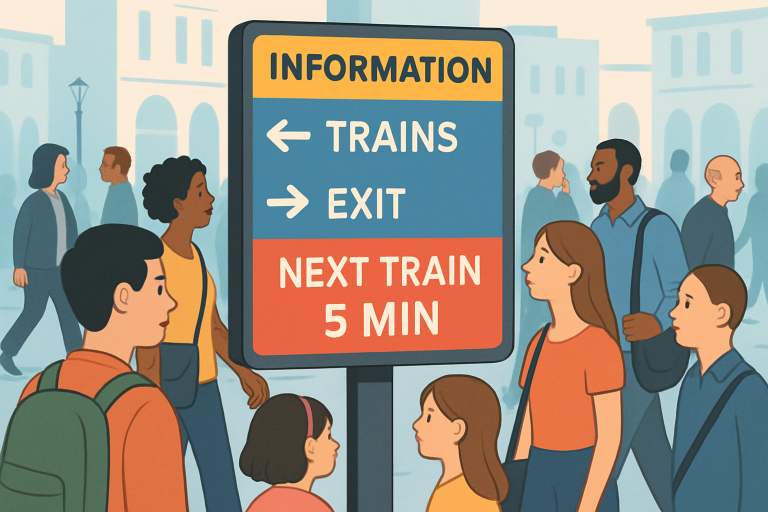
Urban centers are benefiting from digital signage’s ability to deliver timely and targeted public announcements. Emergency alerts, weather warnings, and health messages can be quickly distributed to thousands with just a few clicks. These systems can be programmed to trigger content changes based on location, time, or detected events, ensuring that relevant information reaches those who need it most. The flexibility of digital signage is proving vital in emergencies, minimizing confusion and improving public safety.
Integration with Smart Technologies
The evolution of digital signage is closely tied to the adoption of Internet of Things (IoT) devices. In corporate settings, displays are synchronized with room reservation and occupancy sensors. Signs outside meeting spaces automatically update their content in real time, confirming which rooms are available, reserved, or in use. Additionally, smart HVAC and lighting systems can respond to occupancy data, increasing energy efficiency and user comfort. The technology also supports broader data analytics, allowing facility managers to optimize layouts and plan efficient resource distribution.
Touchless and Interactive Features
The pandemic accelerated the adoption of touchless technologies, especially in high-traffic public venues. Digital signage that previously relied on physical touch has evolved into gesture-controlled, voice-activated, and sensor-driven systems. These features offer a frictionless user experience, allowing individuals to access maps, directories, and services without touching a screen. By 2026, these advancements will be standard practice, safeguarding health while improving process speed and efficiency. This focus on inclusivity extends to multilingual displays and features accessible to people with disabilities, reducing communication barriers across diverse populations.
Promoting Sustainability
Efforts to construct sustainable cities now include digital signage that conserves energy and materials. By adopting solar-powered kiosks, e-ink screens, and intelligent dimming systems, digital signage reduces overall power consumption and operating costs for municipalities. New installations prioritize recycled or recyclable building materials, while software updates can automate power savings during low-traffic periods. These eco-friendly initiatives ensure that technological progress aligns with local and global climate commitments.
Final Thoughts
Digital signage has become a cornerstone of efficient, informed, and sustainable public spaces. Its evolution is transforming how people navigate, interact, and stay informed in cities around the world. By embracing powerful integrations with IoT platforms, touchless interfaces, and energy-saving improvements, digital signage is making urban environments safer, more inclusive, and environmentally responsible. As cities continue to invest in these technologies, public spaces will only become more connected, adaptive, and human-centered.