Missing teeth can make ordinary routines feel more complicated, from chewing steak or apples to speaking clearly and smiling in photographs. People exploring dental implant options Scottsdale, AZ often want a solution that feels secure while also fitting their health needs, treatment timeline, and budget.
There is no universal best choice. A single missing back tooth calls for different planning than a full arch of failing teeth. The condition of the remaining teeth, gums, jawbone, bite, and home-care habits all matter when comparing implants, bridges, and dentures.
Why Replacing Missing Teeth Matters
A gap can affect more than appearance. Nearby teeth may gradually tilt or drift toward the open space, which can change how the upper and lower teeth meet. After a tooth is lost, the area of jawbone that once supported its root may also change over time. For example, someone who loses a molar may begin avoiding firmer foods and chewing mostly on the other side. Replacing the tooth may help restore a more balanced, comfortable bite.
The Main Tooth Replacement Options
The primary categories are implants, traditional bridges, partial dentures, full dentures, and implant-supported restorations. Understanding dental implant basics can be useful because an implant is not simply a replacement tooth. It is a surgically placed post that can support a crown, bridge, or denture.
- Dental implants: Posts placed in the jawbone to support a restoration.
- Traditional bridges: Fixed replacement teeth held by crowns or attachments on adjacent natural teeth.
- Partial dentures: Removable appliances for replacing several teeth, including teeth in separate areas.
- Full dentures: Removable appliances that replace all teeth in an upper or lower arch.
- Implant-supported restorations: Bridges or dentures secured to implants for added retention.
Replacing One Missing Tooth
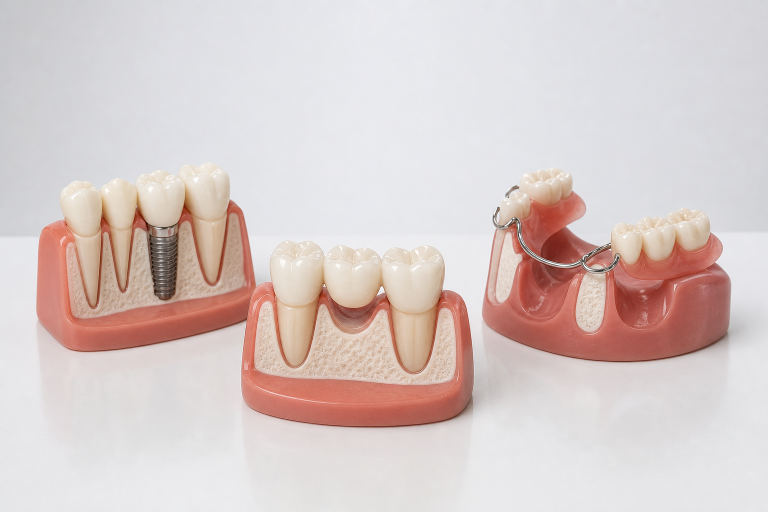
A single implant and crown can replace one tooth without using the neighboring teeth as supports. This may be appealing when the teeth beside the gap are healthy and intact. A traditional bridge can be a practical fixed alternative, especially when the neighboring teeth already need crowns. It generally avoids implant surgery and may be completed sooner, although cleaning beneath the replacement tooth requires special flossing tools or techniques.
A removable partial denture may also replace one tooth, particularly as a temporary solution or when surgery is not preferred. It is usually less invasive, but it may feel less stable than a fixed bridge or implant crown.
Replacing Several Missing Teeth
When several adjacent teeth are missing, an implant-supported bridge may provide a stable fixed option. One implant is not always required for every missing tooth. The number and placement of implants depend on bone availability, bite pressure, the span of the bridge, and the design of the final restoration.
Quick Comparison for Several Missing Teeth
- Implant-supported bridge: High stability, requires surgery, and is commonly used when several teeth are missing in one area.
- Traditional bridge: Moderate to high stability, does not require surgery, and relies on suitable teeth next to the gap.
- Partial denture: Moderate stability, does not require surgery, and can replace teeth in different parts of the mouth.
Cleaning access is important with every option. A restoration should be planned so the patient can brush effectively, clean around the gums, and attend regular professional maintenance visits.
Replacing Most or All Teeth
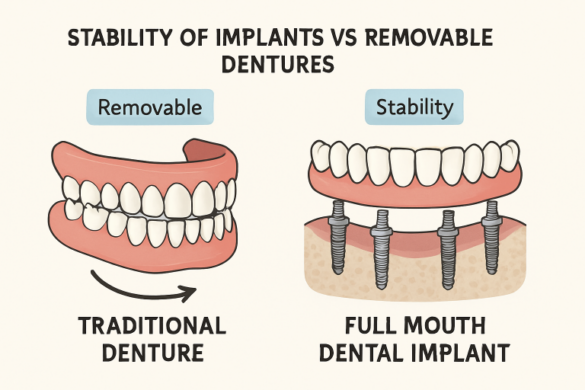
Traditional full dentures rest on the gums and are removable. They can restore appearance and basic function without implant surgery, although lower dentures can sometimes move during eating or speaking. Implant-supported dentures attach to implants and can offer greater retention. Some are removable for cleaning, while fixed full-arch restorations are only removed by a dental professional.
Full-arch treatment may involve extractions, temporary teeth, imaging, implant placement, and a healing period before the final teeth are made. Bone shape, bite forces, and facial support influence how many implants are used and where they are placed.
How Implants, Bridges, and Dentures Compare
A balanced implant-versus-bridge comparison begins with daily function rather than price alone. Implants are fixed and do not depend on neighboring teeth for support, but treatment includes surgery and healing. Bridges are also fixed, often involve a shorter timeline, and may be appropriate when nearby teeth need restoration. Dentures can replace many teeth without surgery, but they are removable and may need adjustments as gum and bone tissues change.
- Function and comfort: Fixed choices may feel more secure, while removable options offer flexibility and easier removal for cleaning.
- Appearance: Tooth shade, shape, gum display, and lip support can all be considered during planning.
- Bone support: Implants differ because they are placed in the jawbone, while bridges rely on teeth, and dentures rest on soft tissue.
- Durability: Every restoration can eventually need maintenance, repair, relining, or replacement.
What Affects Treatment Candidacy?
A dentist evaluates the number and position of missing teeth, gum health, bite, and the condition of remaining teeth. Imaging helps assess jawbone height, width, and density for implant planning. Active gum disease or infection may need treatment first. Medical conditions, medications, tobacco use, healing history, and oral hygiene also affect recommendations. In some cases, bone grafting, gum treatment, or removal of damaged teeth may be part of the treatment sequence.
Cost, Healing Time, and Maintenance
Costs cannot be estimated by tooth count alone. Imaging, extractions, grafting, temporary restorations, surgery, materials, and laboratory work may all affect the total. Implant treatment commonly includes consultation, planning, placement, healing, and the final crown, bridge, or denture. Bridges and dentures may begin sooner, but they can still require future repairs, relines, or replacement.
Daily care protects every option. This includes brushing, cleaning around restorations as instructed, managing gum inflammation promptly, and keeping routine dental visits.
Questions to Ask Before Treatment
- Which options fit the number and location of my missing teeth?
- Are the neighboring teeth healthy enough to support a bridge?
- Is there enough bone for implants, or would grafting be needed?
- How long will each treatment path take?
- Will the final restoration be fixed or removable?
- How should I clean it each day, and what future maintenance should I expect?
Making a Practical Choice
The best tooth replacement plan is one that restores daily function while fitting the patient’s oral health, goals, routine, and financial comfort. Comparing the benefits, limitations, healing requirements, and long-term care needs of implants, bridges, and dentures can help make the final decision more confident and practical.