 Want one little tip that can help you be more productive every day?
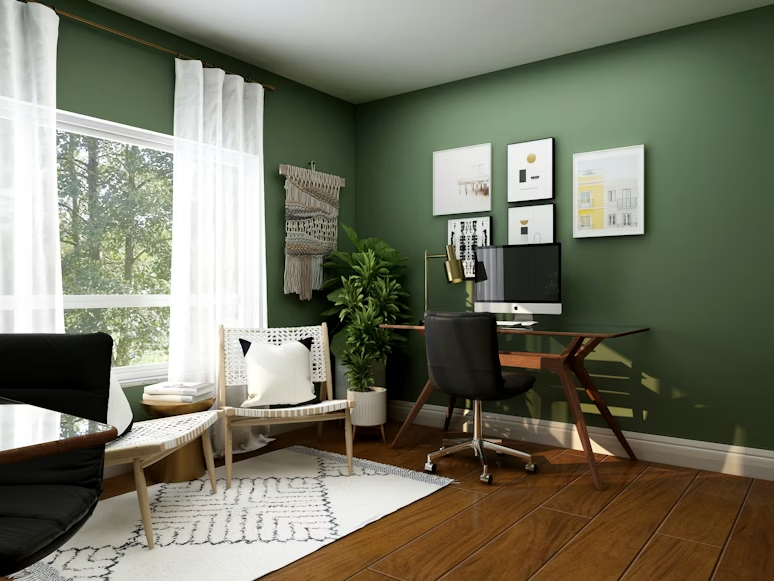
Get the right desk.
Office workers are only productive for 31% of their workday. Less than 3 hours out of an 8-hour work day.
But…
If you have a good desk, that number can increase.
Most people work 40+ hours per week at their desk. They’ll spend weeks picking out a coffee machine but will buy the first desk they see.
That’s not good enough.
Your desk matters. It sets the tone for your entire office and can make you more productive or distracted.
Let’s dive into…
- Why Your Desk Actually Matters
- Types Of Office Desks
- How Big Of A Desk You Need
- Ergonomics
- Materials
…and how to use this info to find the best desk for you.
Why Your Desk Matters
Is your desk just something to hold your computer?
Nope.
Your desk plays a huge role in your posture, concentration, and overall health. 80% of office employees experience discomfort caused by computer workstation injuries. A lot of that is due to poor desk setup.
If your desk is too high, you’ll hunch over to reach your computer.
If your desk is too small, you’ll be constantly crunched up.
If your desk is cluttered, your mind will be too.
But if you have a good desk that fits your needs, you can have proper ergonomic support, more space to work comfortably, better focus and productivity, and less pain.
It’s really that simple. But that doesn’t mean you shouldn’t put any thought into it.
Types Of Office Desks
Okay, so how do you pick the right one?
Let’s talk about your options.
The office furniture industry has expanded massively over the last few years. Seriously. Too many options to cover them all. Let’s focus on the major ones…
Standing Desks
Standing desks allow you to switch between sitting and standing while you work. Wait. What’s the benefit of that?
Simple. Sitting all day is bad for your health (and productivity).
Standing desks reduce back pain, increase energy, improve your mood, and help you burn more calories. All while improving productivity.
There are two types of standing desks: fixed and adjustable. Get an adjustable desk if you can. Nothing is better than being able to switch your desk height at any time.
Traditional Desks
You know what you’re getting with these. Plain ol’ desks that don’t move.
They’re your standard desk. Got a drawer on the left? Perfect.
Not much else to say about these except… they can be good too! If you’ve got the space and budget for a standing desk, go for it. But if all you need is something simple, these desks still rock.
L-Shaped Desks
These babies give you extra room. Literally.
An L-shaped desk gives you two separate surfaces to work with. Ideal for anyone who likes to spread out or needs to use multiple monitors. They can fit nicely into a corner too.
Compact Desks
Got a small apartment you’re working from home in? Consider a compact desk.
These desks don’t take up much room but give you plenty of space to work. They’re great if you like minimalism or have a small space to work with.
How Big Of A Desk Do You Need?
I’ve seen people buy desks that are too small. They feel cramped. I’ve also seen people buy monster desks that take up half their room.
Here’s my rule of thumb…
Measure your space and know what you need before you buy. Don’t just eyeball it. Seriously. Get out a tape measure. Know what desk will fit before you go shopping.
Also, consider what you do at your desk. If you’re just a writer typing away on your laptop, you don’t need a lot of desk space. But if you’re a graphic designer that needs room for monitors, drawing tablets, references, etc. you’ll need a bigger desk.
For most people, desks that are 40-60 inches wide work best. Small desks are 40 inches or less, medium desks are 50-60 inches, and large desks are 60+ inches wide.
Ergonomics
Here’s the number one mistake I see with people and their desks.
They don’t think about ergonomics.
By definition, ergonomics is “the study of people’s efficiency in their working environment.”
Which just means… will your desk keep you comfortable and productive?
When your desk is ergonomic, you’ll be able to work longer without hurting your body.
Here are the biggest things to consider:
Desk Height
If your desk is too high or too low, you’ll be uncomfortable. That can cause pain in your shoulders, neck, and back.
Your desk height should allow your elbows to hit a 90 degree angle when typing. For most desks, that means around 28-30 inches off the ground. But your height plays into this.
If you’re taller, you’ll need a higher desk. Same goes if you’re shorter. You want your desk to fit your body.
Which is why adjustable desks are so popular. You’ll be able to set your desk to exactly what you need.
Monitor Height
Your monitor should be positioned at eye level distantly. About an arm’s length away from you.
You don’t want to be looking down at your monitor all day. That ruins your neck.
Some desks come with monitor stands. Others don’t. Just make sure you have the ability to prop your monitor up.
Leg Space
Ok so what about under your desk?
You should have plenty of room for your legs under your desk as well. Allow at least 24″ of leg depth. And enough height where you can comfortably cross your legs if you need to.
Look out for desks that have drawers or support beams that limit your leg space.
Materials
The material your desk is made out of matters more than you might think.
It can affect the desk’s longevity, style, price, and maintenance.
Here’s the most common materials desks are made out of…
Wood
Wood desks are classic. They’re professional looking and can last you a lifetime with proper care.
The downside? Wood can get pricey. Especially solid wood desks.
Laminate
These are your typical office desks. A particle board core with a laminate finish.
Not as nice as solid wood. But much cheaper.
If you’re on a budget or don’t plan on keeping your desk for more than a few years, go with laminate.
Metal
Metal desks are modern. They have an industrial look to them. And they’re extremely durable.
Not as common as wood desks. But great for anyone who wants that modern style.
Glass
These desks are pretty nice. But you have to keep them clean.
Glass desks are sleek and minimalist. Just don’t expect them to last as long as wood desks.
Final Thoughts
Before you buy a desk, think about…
- Cable management options
- Assembly time
- Storage needs
- Price
Good desks can range anywhere from $200 to $2000+. It all depends on what you’re looking for.
Picking the right desk for your home office doesn’t have to be difficult. Learn about your desk options, measure your space, pay attention to ergonomics, and choose a material that fits your needs.
Don’t rush this purchase. You’ll be spending years at this desk. Literally. Hundreds of days a year, every year, for the next 5+ years.
Make sure you love it.
And don’t just buy the most expensive desk. The right desk is the one that fits your body, workspace, and how you work.