
A low-speed collision can leave behind more than a scratched bumper or small dent. Even when a vehicle appears drivable, damage may affect mounting brackets, sensors, wiring, alignment, lights, or panels behind the visible impact area. Taking a careful, step-by-step approach helps protect your safety, your vehicle’s value, and your repair budget.
For drivers comparing local repair options, check out Premium Automotive. Premium Automotive LLC, an Aurora and Littleton, Colorado auto body and collision repair provider, provides services including collision repair, paint refinishing, paintless dent repair, auto glass replacement, and bodywork for personal and commercial vehicles across the Denver metro area, including Aurora, Denver, Centennial, Littleton, Englewood, Lakewood, and Highlands Ranch. That broad mix of body, paint, dent, and glass services makes it a relevant resource when deciding what type of repair a minor collision requires.
Why a Minor Collision Still Deserves a Full Check
A dented fender, bumper, grille, or door can hide damage behind the surface. A low-speed rear-end impact, for example, may leave the bumper cover intact while dislodging a parking sensor, cracking an absorber, or bending a bracket. Other concerns can include fluid leaks, uneven panel gaps, loose trim, damaged lights, wheel alignment changes, and wiring problems. A vehicle may look fine at first glance, but still needs a professional inspection before regular driving resumes.
Step One: Make the Scene Safe and Record What Happened
- Move to a safe location if the vehicle can be moved safely.
- Check for injuries and call emergency services when necessary.
- Take close and wide photos of every damaged area, both vehicles, license plates, road conditions, signs, and vehicle positions.
- Exchange insurance and contact information with the other driver.
- Write down the date, time, location, weather, and a short factual description of the collision.
Avoid admitting fault or estimating repair costs at the scene. The full extent of damage may not be clear until the vehicle is inspected and, in some cases, partially disassembled.
Step Two: Know When Not to Drive
Towing may be the safer choice if you notice leaking fuel, coolant, or oil; a crooked steering wheel; pulling, shaking, scraping, or unusual tire noise; broken lights; loose body panels; a hood that will not latch; or glass damage that limits visibility. Do not dismiss airbag, brake, traction-control, or driver-assistance warning lights. These signs can indicate an issue that should be assessed before the vehicle returns to the road.
Step Three: Get a Detailed Damage Assessment
A complete inspection should look beyond the damaged exterior panel. Ask whether the review includes frame or unibody areas, suspension, wheels, tires, lights, glass, wiring, sensors, mounts, and panel gaps. Disassembly can uncover hidden damage that was not visible during the initial estimate. If the repair plan changes, request photos or a clear explanation of the supplemental work.
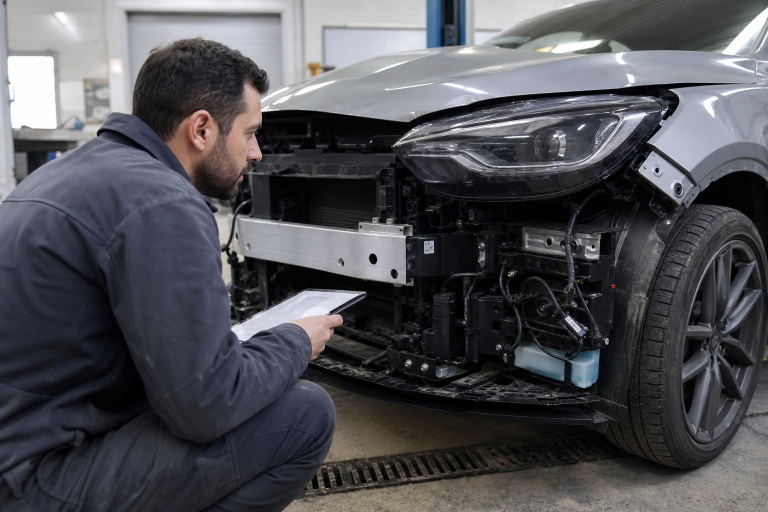
Ask for an itemized estimate that separates parts, labor, paint and materials, diagnostic scans, calibration, and any sublet work. A transparent estimate provides a better basis for comparing repair facilities and for discussing the claim with your insurer.
Paintless Dent Repair or Traditional Body Repair?
Paintless dent repair is often a strong option for shallow dents, small dings, and some hail damage when the original paint is intact, and the technician can access the back of the panel. It can preserve the factory finish and may require less refinishing work.
Traditional body repair is usually more appropriate when paint is chipped or cracked, metal is sharply creased or stretched, a panel is torn, clips are broken, or a bumper needs repair and refinishing. The best choice depends on the dent’s depth and location, the panel material, paint condition, and access behind the damage. The lowest initial price is not always the most durable repair.
Do Not Ignore Driver-Assistance Systems
Cameras, radar, parking sensors, and related technologies may support features such as forward collision warning, automatic emergency braking, blind-spot alerts, and lane assistance. A bumper repair, windshield replacement, grille impact, or alignment issue can affect how those systems function. The NHTSA guide to driver-assistance technologies explains that these features assist the driver but do not replace an attentive driver.
Ask the repair facility whether pre-repair and post-repair scans, sensor checks, aiming, or calibration are required for your vehicle. Warning lights and error messages after repairs should be investigated, not ignored.
How Insurance Fits Into the Repair Plan
- Review your policy, coverage, and deductible.
- Report the collision promptly and keep copies of photos, estimates, messages, and invoices.
- Ask how the insurer handles supplements, parts choices, rental coverage, and approvals.
- Confirm the approved scope before work begins, while recognizing that hidden damage may necessitate legitimate changes.
An insurer may recommend a repair facility, but drivers should still ask about workmanship, warranties, parts, communication, repair methods, and final inspection procedures.
Questions to Ask Before Approving Repairs
- What damage did the inspection find, and what could appear after disassembly?
- Which items will be repaired, replaced, or refinished?
- Will the shop use original, aftermarket, or recycled parts?
- Are scans, sensor checks, and required calibrations included?
- How will additional damage be documented and approved?
- What is the completion timeline and warranty for the labor and parts?
How to Compare Two Repair Estimates
Compare each line item rather than choosing the lowest total. Confirm that both estimates address the same damage and use comparable repair methods. Look for differences in replacement parts, paint matching and blending, corrosion protection, diagnostic scans, calibrations, labor hours, and warranty terms. A lower estimate that omits safety-related work or necessary refinishing may not represent the better value.
What a Strong Repair Process Should Include
A dependable process starts with vehicle documentation and a written estimate, followed by repair planning and approval. The necessary bodywork, dent repair, refinishing, or glass replacement should then be completed before required diagnostic checks and safety-system calibrations. A final quality inspection and customer walkthrough should confirm that the vehicle looks complete, operates normally, and is ready for pickup.
Post-Repair Checks Before Driving Away
- Inspect panel gaps, paint color, trim, lights, glass, doors, and hood operation in good light.
- Confirm that the warning lights are off, and test mirrors, windows, locks, cameras, and parking sensors.
- Request repair records, calibration documentation when applicable, and warranty information.
- Report pulling, vibration, unusual noises, warning messages, water leaks, or other concerns soon after pickup.
Common Questions About Minor Collision Repairs
Can a small dent wait?
A purely cosmetic dent may be less urgent, but exposed metal, damaged paint, loose parts, sensor concerns, or impaired lighting should be addressed promptly to prevent corrosion and safety issues.
Is paintless dent repair always best?
No. It is highly effective for suitable dents, but it cannot correct every crease, paint break, stretched panel, or bumper problem.
Can a car be safe if no warning light appears?
Not necessarily. Dashboard warnings do not identify every hidden issue. The IIHS overview of advanced driver assistance is a useful background for understanding why these systems and their components deserve careful attention after a collision.
How long will a minor collision repair take?
Timing depends on damage severity, parts availability, insurance approval, paint work, calibration needs, and additional findings after disassembly.
Conclusion
Minor collision damage can create bigger questions than a dent or scratch suggests. Document the scene, watch for signs that the vehicle should not be driven, request a detailed estimate, and ask directly about sensors and calibration. A thorough repair plan and final inspection help restore confidence in the vehicle long after the visible damage is gone.