
There is a specific kind of content that no production budget can replicate. It happens in the back of a venue before a show, on a street corner at two in the morning, in the middle of a skate session that was not supposed to be filmed, at a protest, a pop-up, a warehouse party, a community garden that is about to be demolished. Underground creators have always understood something that mainstream content production has been slow to catch up with: the gear that gets out of the way produces better footage than the gear that demands to be operated. In 2026, the toolkit available for real-time documentation has caught up with that philosophy in ways that were not practical even three years ago. The choices these creators are making, and why they are making them, say something worth paying attention to about where honest documentation is heading.
The Gear Philosophy That Actually Holds Up in the Field
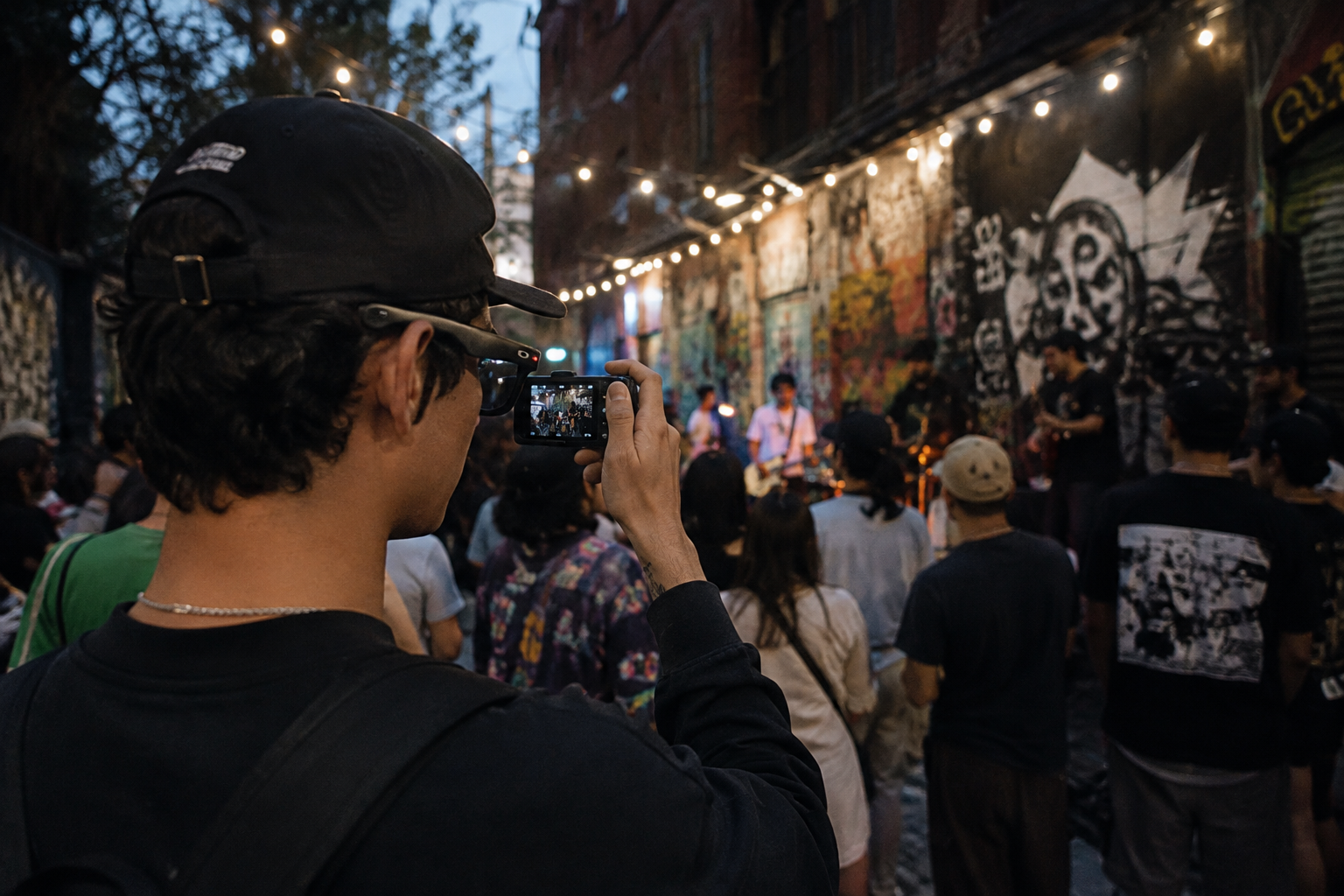
Ask anyone who has been documenting subcultures seriously for more than a year and they will tell you the same thing: the best footage is the footage that happened. Not the footage that was planned, lit, and directed, but the moment that was already in motion when the camera caught it. That philosophy shapes every gear decision a serious documentary creator makes. The camera cannot be something you reach for. It has to be something you are already wearing, already holding, already part of the scene with. This is why the action camera had such a long run in underground documentation: it solved the hands-free problem even if it introduced a helmet-mount aesthetic that eventually started to feel generic. The current generation of wearable cameras built into eyewear solves the same problem at a different level. The camera is at eye level, pointed where the creator is actually looking, and the result is footage that reads as presence rather than observation. The design has come far enough that frames like Oakley recording glasses sit within the normal visual range of everyday eyewear, which means the creator stays visually present in the space rather than physically separated from it by a camera in their hands. That matters less about discretion and more about how the creator moves through a scene: when there is no device to hold, no screen to look at, and no gesture to make, the creator is just another person in the room, and the footage reflects that quality of participation rather than observation.
Audio, Presence, and the Ethics of Real-Time Documentation
Gear decisions for underground documentation are never purely technical. There is always a social and ethical layer to consider. Who knows they are being filmed? What happens to the footage? How does the presence of a camera change the dynamic of the space? These questions matter more in underground and subcultural contexts than in most others because the people and places being documented are often operating outside the mainstream for a reason, and visibility is not always welcome or safe. The shift toward open-ear audio wearables addresses part of this by keeping the creator acoustically present in the space rather than sealed off behind noise cancellation. A creator who can hear the room, respond to it, and stay in conversation with the people in it is a different presence from one managing a camera on a rig. The audio captured through smart glasses is also closer to what the creator was actually hearing rather than what a directional microphone was pointed at, which matters for documentation that is trying to capture atmosphere rather than just visuals. It is worth being direct about the ethics here: wearable cameras are a tool, and like any tool their value depends entirely on how they are used. The best underground creators are transparent with the people they document, ask for consent where it matters, and treat the footage they capture as something held in trust rather than something owned outright. The gear makes certain kinds of honesty easier. It does not replace the need for it.
The Editing Reality and Why Capture Consistency Matters
There is a downstream consequence of how footage is captured that most people do not think about until they are three hours into an edit trying to assemble something coherent from a hundred disconnected clips. Consistent capture produces consistent material. A creator who documents a full day through smart glasses ends up with continuous first-person footage that has a natural narrative arc: the beginning of the day, the movement through spaces, the interactions, the moments that were worth something and the ones that were not. That continuity is considerably easier to edit into something watchable than a collection of clips that were each individually chosen and filmed in isolation. The in-between footage, the walk to a location, the conversation before the main event, the aftermath, is often where the most interesting material lives, and it only gets captured when the camera is running passively rather than being consciously operated. For underground creators whose work is about the texture of a subculture rather than its highlights, that continuity is not a nice-to-have. It is the whole point. The gear that makes consistent capture possible without requiring the creator to think about it every few minutes is the gear worth investing in, and in 2026 that increasingly means wearable cameras that are worn rather than operated.
Conclusion
The underground creator’s gear kit has always been shaped by the same core requirement: stay in the scene, get the footage, do not let the equipment become the story. The cameras that have served that requirement best at different points in time, from small handheld camcorders to action cameras to phone cameras, all shared the quality of being practical enough to disappear into the workflow. Smart eyewear with a built-in camera is the current best answer to that requirement, and the creators picking it up in documentary, street, music, and subculture contexts are doing so for the same reason every previous generation of underground documentarians adopted their tools: because the footage it produces looks like being there, and being there is the only thing that matters.