Understanding Ignition Interlock Devices
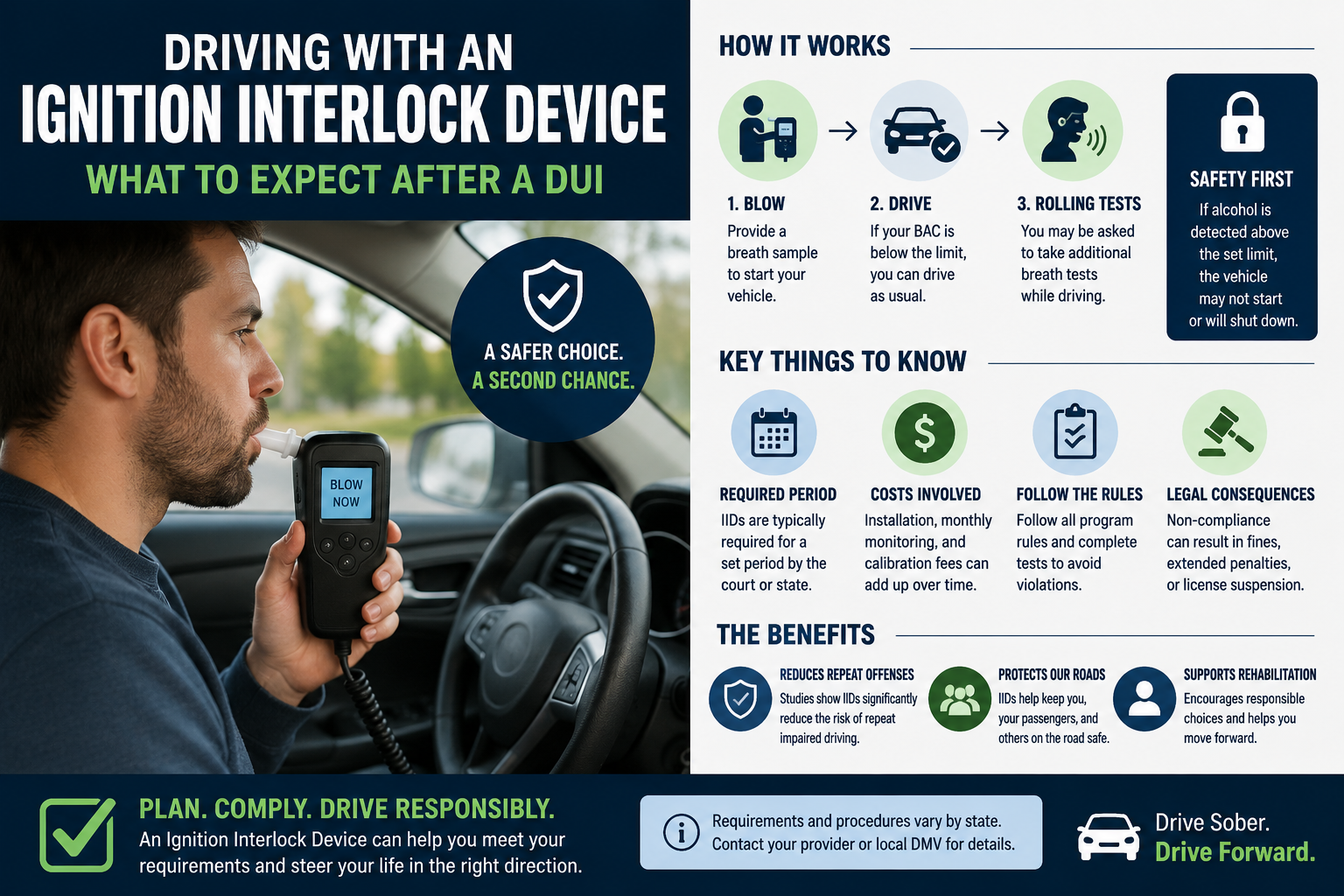
Ignition Interlock Devices (IIDs) are generally breath-based monitoring systems that, depending on the provider and jurisdiction, may be installed in vehicles to help prevent impaired driving. Drivers may be required to provide a breath sample before the vehicle can start. If the device detects a blood alcohol concentration (BAC) above a limit set by the applicable program or regulations, the vehicle may be prevented from operating, depending on configuration. These systems may be commonly used as a preventive measure for individuals convicted of driving under the influence (DUI), adding an extra layer of accountability while allowing eligible drivers to maintain limited driving privileges. The use of an Ignition Interlock Device has become increasingly common as DUI laws and penalties continue to evolve nationwide. IIDs not only help protect others on the road but may also support rehabilitation efforts by encouraging responsible driving habits over time.
In many states, an IID may be required for a specified period following a DUI offense. These requirements often serve as a middle ground between full license suspension and unrestricted driving, balancing public safety concerns with the practical transportation needs of individuals subject to DUI-related penalties. IIDs are part of a broader range of technologies intended to reduce impaired driving incidents. Similar monitoring tools, including personal and commercial car breathalyzers, are also used to promote road safety and support compliance with legal or workplace requirements.
Daily Driving with an IID
The experience of driving with an IID often requires adjustment and planning. Depending on the IID provider and monitoring program, drivers may need to provide an initial breath test before starting the vehicle. While the process is typically straightforward, it can add extra time to a daily commute or routine travel. Some IID providers may also require periodic or random rolling retests while the vehicle is in operation to help confirm continued sobriety after the initial sample. Depending on the device and provider, drivers could receive audio or visual prompts requesting an additional breath sample while driving. Specific retest procedures, timing, and instructions may vary significantly based on state regulations, provider policies, and the type of IID installed. For many users, these routines eventually become part of daily driving habits. However, driving with an IID may still require additional planning, including allowing extra time for testing procedures and following provider instructions carefully to help avoid potential violations, lockouts, or missed tests. Some individuals also report feeling self-conscious when using an IID around passengers, coworkers, or during carpools, although experiences vary widely from person to person.
Challenges and Considerations
Despite their effectiveness in helping reduce repeat DUI incidents, IIDs can present several practical and personal challenges for drivers. One commonly discussed concern involves rolling retests. Depending on the IID provider and program requirements, some systems may request additional breath samples while the vehicle is in operation. Critics and safety advocates have raised concerns that responding to these prompts could distract some drivers if not handled carefully and in accordance with provider guidance. Compliance also remains a significant issue in many states. Studies have shown that a considerable number of individuals required to install IIDs fail to do so. In some cases, non-compliance may be linked to financial hardship, limited access to approved service providers, administrative complications, or personal circumstances that make participation difficult. Increased public education, improved accessibility, and financial assistance programs may help address some of these barriers and encourage broader participation in IID programs.
Financial Implications
The cost of installing and maintaining an IID can be substantial for many individuals. Expenses may include installation fees, monthly monitoring charges, calibration appointments, and other administrative costs. Depending on the provider, state regulations, and length of the monitoring period, these expenses could total thousands of dollars annually. For individuals already facing the financial consequences associated with a DUI conviction, these costs may create additional hardships and potentially affect compliance rates. Some states have introduced sliding-scale fees, indigency programs, or financial assistance initiatives to help make IID participation more accessible to lower-income drivers. However, the availability and scope of these programs vary widely by jurisdiction. Addressing affordability concerns remains an important factor in maximizing the effectiveness of IID programs and improving public safety outcomes.
Legal and Social Impacts
Failure to comply with IID requirements may result in legal consequences depending on state laws and court orders. Potential penalties could include extended license restrictions, additional fines, mandatory court appearances, or other sanctions associated with DUI-related violations. The social impact of IID use can also be significant for some individuals. Drivers may experience embarrassment, stigma, or discomfort when using the device in public settings or while transporting passengers. These experiences can affect personal relationships, workplace interactions, and overall confidence during the monitoring period. At the same time, many advocates argue that the public safety benefits of IIDs outweigh these temporary inconveniences, particularly when compared to the risks associated with impaired driving.
Effectiveness in Reducing Repeat Offenses
Despite these challenges, research consistently shows that IIDs can significantly reduce repeat DUI offenses when installed and properly used. Studies cited by organizations such as the American Bar Association and public safety agencies have found substantial decreases in repeat impaired-driving incidents among individuals participating in IID programs. This reduction benefits drivers, passengers, pedestrians, and communities by lowering the number of alcohol-impaired drivers on the road. Many experts believe that combining IID requirements with education, treatment programs, and ongoing monitoring may further improve long-term outcomes for individuals recovering from DUI-related offenses. As IID technology and state policies continue to evolve, lawmakers and safety advocates continue exploring ways to improve compliance, accessibility, and effectiveness.
Conclusion
Ignition Interlock Devices sit at the intersection of technology, public safety, and legal accountability. While challenges related to cost, accessibility, and daily use remain, IIDs continue to play an important role in efforts to reduce impaired driving and prevent repeat DUI offenses. Because IID requirements and device operations can vary significantly by provider, jurisdiction, and monitoring program, drivers are encouraged to follow the guidance provided by their specific IID provider and applicable state authorities. Continued investment in education, affordability programs, technological improvements, and consistent enforcement may help strengthen the long-term effectiveness of IID programs while making roads safer for everyone.