Understanding Edible Passports: A Tasty Trend with a Deeper Meaning
The concept of edible passports invites participants to embark on a unique sensory journey where every bite tells a deeper story. In a world increasingly defined by global movement, the flavor itself can offer a new path to understanding migration, heritage, and belonging. Unlike a traditional paper passport with stamps at foreign checkpoints, the edible passport operates as a cultural guidebook, linking people through shared meals and experiences. When diners partake in these culinary adventures—sampling dishes from far-flung places—they not only open up to new tastes but also to the rich histories and personal narratives behind those dishes. Innovations like interactive dining experiences and passport-style tasting events highlight how food traditions shaped by migration become a living tapestry at the table. Stories like those linked to Claudette Spinelli invite us to reflect on how crossing physical borders often results in bold, flavorful exchanges that enhance our communities and our understanding of identity.
Immersing oneself in edible passport experiences transforms each meal into a lesson in empathy and cultural exchange. The idea goes beyond novelty—every dish sampled might shed light on a journey of survival, adaptation, or celebration. Food becomes the bridge spanning language and geography, making it possible for people from different backgrounds to connect meaningfully. As edible passport projects grow in popularity—from sophisticated pop-up events to grassroots foodie gatherings—they help to lower barriers and foster a more inclusive, curious world.
The Origins of Edible Passports
The roots of edible passports stretch back to humanity’s earliest migrations. Across generations, people have passed down recipes and culinary customs as both a source of comfort and a symbol of identity. As travelers and traders moved, their recipes absorbed local influences, and their stories blended with those of their new homelands. Festivals and religious holidays, for example, are often marked by traditional foods that tell the stories of exodus, survival, or homecoming. In contemporary times, chefs and cultural organizations have re-envisioned this tradition by introducing edible passports as playful yet educational artifacts—tools for participants to “collect” culinary stamps at global tasting events. This ongoing reinvention is a testament to the enduring power of food to reflect and reshape cultural identity.
Food, Identity, and the Modern Border
While political and legal constructs typically define borders, food has a remarkable ability to transcend these imposed lines. Every time a migrant community establishes new roots, their cuisine blends with local traditions, sometimes giving rise to entirely new dishes. That’s why fusion creations like bulgogi tacos, currywurst, and sushi burritos exist and thrive. For many individuals, preserving family recipes becomes a way to maintain connections with their heritage, even as they adapt to new lands and cultures. Edible passports capture this dynamic, allowing people to celebrate differences and discover common ground, one plate at a time.
Examples in Everyday Life
- Street food vendors in multicultural cities blending flavors—like a Vietnamese banh mi filled with French-inspired ingredients—demonstrate how street corners can become global crossroads.
- Families adapt cherished dishes to incorporate whatever ingredients are locally available, preserving taste memories while creating something entirely new in the process.
- Events with collaborative menus, such as pop-up celebrations for heritage months or community center dinners designed for cultural exchange, make the edible passport concept accessible to everyone.
Edible Passports as Tools for Cultural Exchange
Edible passport initiatives have gained traction in educational, cultural, and community settings due to their capacity to turn tasting into a teaching tool. Museums often organize culinary exhibitions that allow visitors to “travel” through food, learning about the ingredients, history, and personal stories behind each dish. Schools develop programs where children collect stamps on passports for every new cuisine sampled, often guided by storytelling from parents or local chefs. Community food festivals use edible passports as a centerpiece, fostering conversations and dismantling stereotypes over shared meals. These programs are potent reminders that identity isn’t static—it’s layered, evolving, and enriched by encounters across borders.
- Live demonstrations from chefs who share not just recipes but migration stories
- Festival booths that encourage tasting new foods and collecting culinary “passport” stamps
- Classroom curricula connecting geography, culture, and cuisine in hands-on projects
- Interactive museum exhibits with “passport” designs for a multisensory exploration of identity
Why Food Connects Us Across Borders
The act of eating together is fundamental to forming bonds. Psychology and social research suggest that sharing meals is linked to increased empathy and trust. When individuals step outside their culinary comfort zones to sample and celebrate dishes from distant lands, they connect not only with new flavors but with new perspectives and life stories. As highlighted in Yes! Magazine, food serves as a powerful connector, weaving together human experiences across generations and geographies. This makes edible passports especially meaningful—they encourage participants to become explorers, seeking out commonality in diversity. Whether at home, in restaurants, or at neighborhood gatherings, these experiences gently challenge stereotypes and reveal just how much people have in common beneath the surface.
- Family recipe swaps where neighbors from distinct cultures share meals, often leading to newfound friendships and an appreciation for both differences and similarities.
- Cultural celebration nights in local community centers, offering a buffet of world cuisines and a place to tell migration stories.
- International exchange programs encourage one-on-one dinners that foster connections through storytelling and shared experiences.
Edible Passports in Practice: Case Studies and Inspiration
- In Canadian schools, edible passport projects have emerged as vibrant learning tools that go far beyond the kitchen. Teachers partner with immigrant families, inviting them to share beloved recipes that reflect the broader story of Canada as a mosaic of cultures. Students eagerly try new foods, learning to connect migration routes, languages, and values—fostering inclusivity from a young age.
- In cosmopolitan London, food entrepreneurs have hosted progressive dinners where diners participate in “border crossings” from one restaurant to the next, each stop providing both a new course and a new story. The edible passport ties the adventure together, making diners active participants in the city’s ongoing dialogue about diversity.
- Community festivals across the United States have embraced edible passports to highlight the richness of local diversity. Food stations operated by families or individuals represent not just countries but also unique migration stories, uniting people through sampling and storytelling in the heart of their neighborhoods.
The Future of Edible Passports
The edible passport trend is poised for even broader reach as technology, education, and culinary creativity converge. With the rise of digital platforms, future edible passports may incorporate QR codes, apps, or even virtual culinary classrooms that connect cooks and tasters worldwide. Already, some educational institutions pilot app-based passport programs where students earn achievement badges for trying and documenting new recipes. Restaurants create “passport” loyalty programs, encouraging customers to sample their way through global menus while learning about the chefs’ backgrounds and inspirations. As food becomes ever more accessible and interconnected, edible passports will continue to inspire curiosity, celebrate diversity, and unite communities across both visible and invisible borders.
How to Create Your Edible Passport at Home
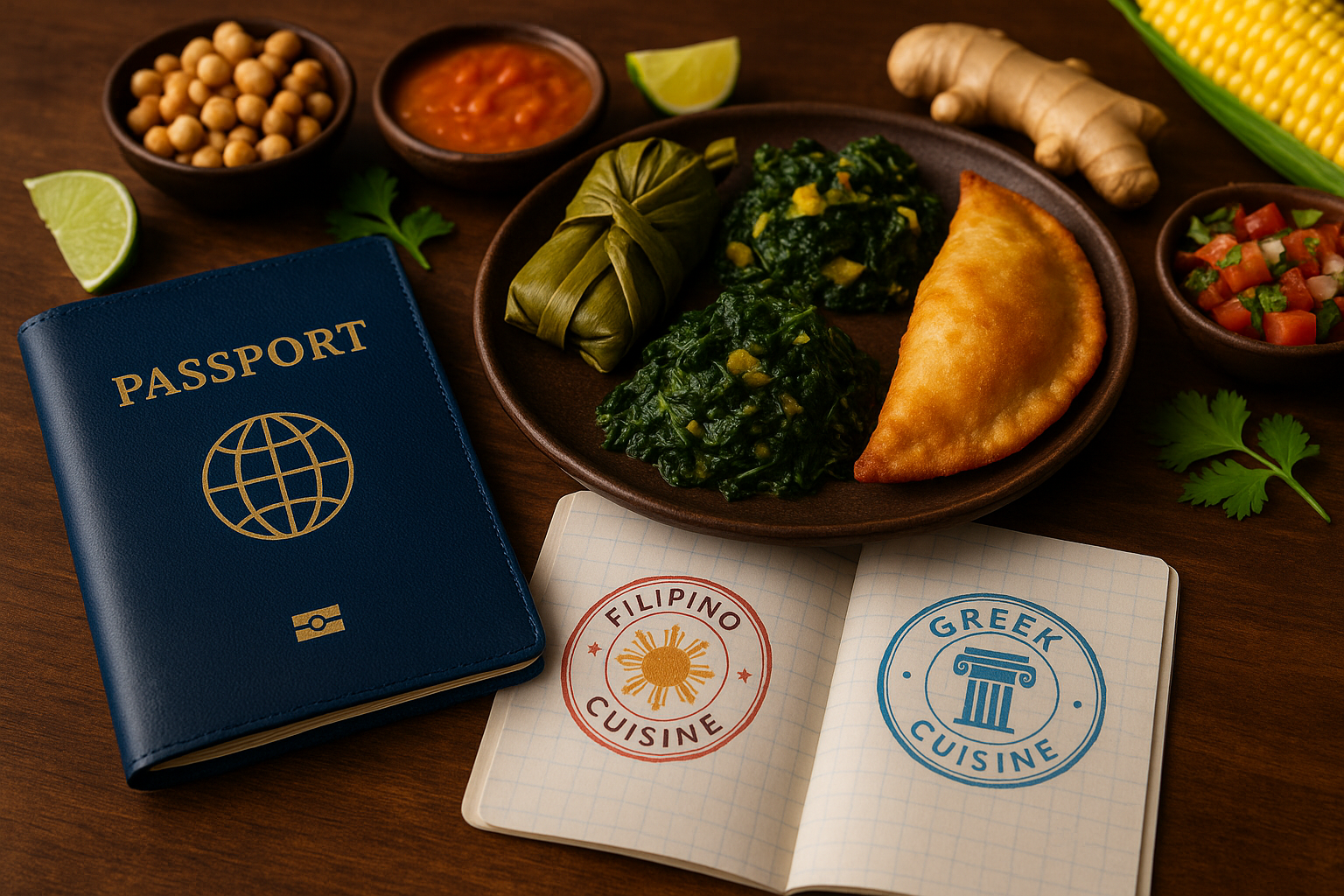
Joining the edible passport adventure doesn’t require a plane ticket—just a willingness to explore. Start with a curated list of world cuisines you’ve always wanted to try, such as Ethiopian, Peruvian, Filipino, or Greek. Design a simple passport booklet or digital journal where you can record tasting notes, family feedback, and “stamps” with photos or stickers. If you’re cooking, search for authentic recipes online or in cookbooks and enlist friends or relatives to join in, making it a collaborative project. Even those separated by distance can connect by hosting a virtual tasting night, where everyone prepares the same dish and discusses their experiences via video call. Documenting each step, from sourcing ingredients to savoring the first bites, deepens the connection to the cultures being celebrated.
- Plan themed nights at home, focusing on two or three new cuisines each month.
- Get children involved by encouraging them to draw flags or write stories about their imaginary “travels.”
- Organize global potlucks for friends or neighbors, where each participant introduces a dish that reflects their roots or journeys.
Bringing It All Together: Savoring New Connections
Edible passports offer a flavorful invitation to embrace the world beyond our everyday plates. Whether celebrated in a bustling market, a classroom, or a family kitchen, this trend transforms meals into opportunities for dialogue, discovery, and connection. At a time when borders both divide and define, savoring identity across cultures through food enriches not just our palates but our communities. By journeying together, one dish at a time, everyone can participate in the ongoing story of shared humanity and cultural exchange—a story best told and experienced at the table.