
The honest answer to does bleach kill lice is a hard yes-and-no: household or hair bleach can kill some adult lice on contact, but it never penetrates the glued-on eggs, and it should never touch a scalp, skin, or hair. Bleach on your head risks chemical burns, eye injury, and even toxic chlorine gas, all for zero reliable payoff against nits. The real killer here is heat, not chemicals, and once you see the temperature math you’ll stop crediting the bleach entirely. A hot wash cycle does the work the bottle claims to.
In reality, does Bleach Kill Lice?
Household bleach and hair bleach can kill some adult lice on direct contact, but neither reliably eliminates an infestation, and neither one kills the eggs. So does bleach kill lice in the way panicked Googlers hope? Partly, and pointlessly. Killing a handful of adults while every nit survives means the infestation comes right back in about a week, when those eggs hatch. Lice Clinics of America, echoing American Academy of Pediatrics and CDC consensus, is blunt: bleach should never be used on the scalp, hair, or body. It is not a treatment. It is a chemical burn waiting for a reason. The reason a fully grown louse dies but its offspring shrug it off comes down to a shell, and that’s where the chemistry gets interesting.
Why Nits Survive Bleach and the Chemistry Behind It
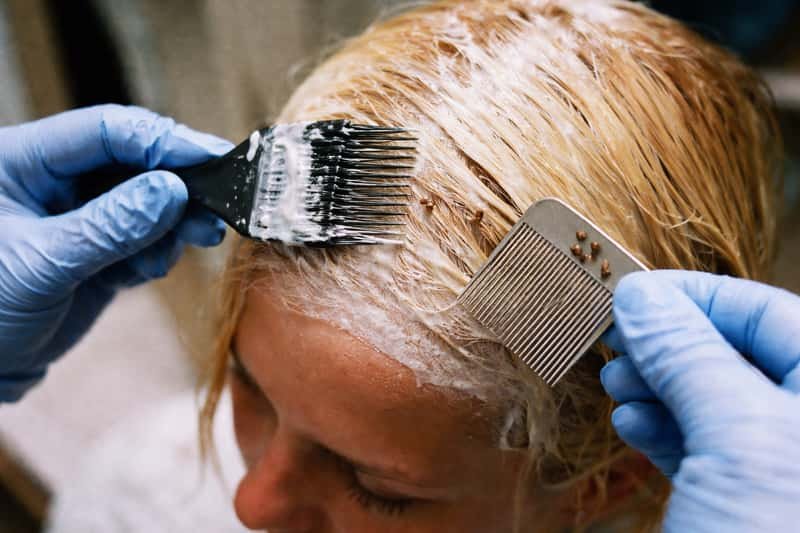
Bleach is an oxidizer. It works by ripping apart the molecules it touches, which is fine when it’s touching a soft-bodied adult louse and useless when it hits a nit built to survive exactly this kind of assault.
The Glue Problem
A nit isn’t just sitting on the hair. The female louse cements each egg to the hair shaft with a proteinaceous adhesive so tough that water, combing, and most chemicals can’t dislodge it. On top of that glue sits a hard, layered outer casing. Oxidizing agents like bleach can’t penetrate that shell fast enough or deep enough to reach the developing louse inside. The egg is, in effect, armored. That armor is why every “kills lice on contact” claim quietly skips the eggs.
Kills the Adults, Misses the Cycle
Say bleach kills every adult and nymph on a head, best case. You’ve still left the nits, which hatch in seven to ten days and restart the whole cycle. Kill the visible bugs, miss the eggs, repeat forever. That’s the trap of any single-shot remedy that can’t reach nits, and it’s why treatment protocols always include a second pass timed to the hatch.
Does Hair Bleach Kill Lice on Your Head?
People assume hair bleach is somehow gentler than the laundry kind. It isn’t, and it isn’t proven either. Healthline notes that hair dye and hair bleach have never been scientifically shown to kill lice, though anecdote suggests they may kill some. What they definitely don’t do is exterminate nits. So you’d be applying a corrosive cosmetic chemical to your scalp, tolerating the burn, and still needing a comb and a medicated treatment afterward. Every household product pitched as a lice cure follows the same pattern: big promise, no nit kill. Hair bleach buys you damaged hair and a scalp that stings, and the eggs hatch anyway.
What Bleach Does to Skin, Eyes, and Lungs
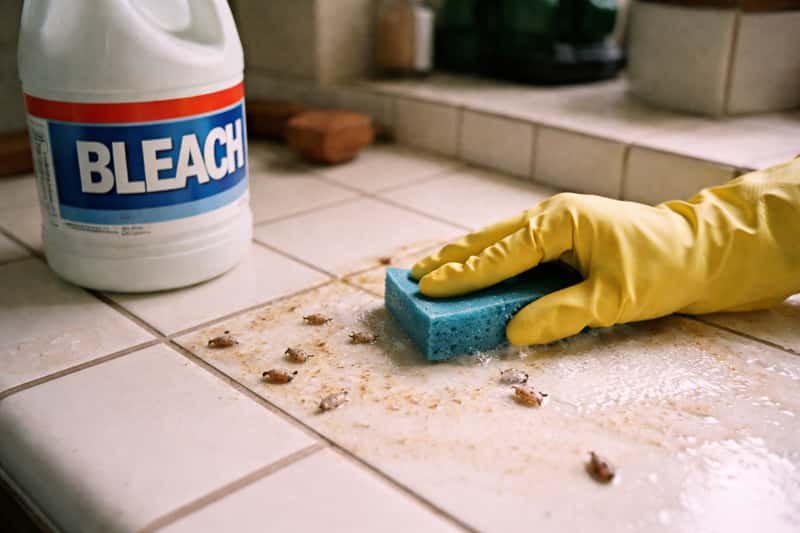
Here’s the part that turns a bad idea into a dangerous one. Household bleach is corrosive to human tissue, and the scalp is thin, vascular, and close to your eyes.
Poison Control Sees the Fallout
Applying bleach to the scalp can cause chemical burns, respiratory irritation, and eye damage, and the American Association of Poison Control Centers logs bleach exposures as one of the most common household poisoning calls, with children most at risk. Mix bleach with another cleaner, ammonia, vinegar, anything, and you can release toxic chlorine gas in a closed bathroom. The CDC’s guidance on approved treatments and environmental cleaning makes the safe path clear, and it lists no role for bleach on the body at any dilution.
Lice Are Annoying, Not Dangerous
Run the risk comparison honestly. Lice don’t spread disease. They itch, they’re a nuisance, and they’re socially miserable, but they are not a medical emergency. Bleach burns, chlorine gas, and eye injuries are medical emergencies. You’d be trading a manageable annoyance for a trip to urgent care. That math never works out.
Heat Is the Actual Active Ingredient
Strip away the chemical theater and one thing does the real killing: heat. Not chlorine, not oxidizers, temperature.
130°F for 5 Minutes
Public health guidance is specific. Exposure to temperatures above 130°F kills both lice and nits in about five minutes. That’s the whole mechanism behind every “wash it hot” instruction. A standard hot wash cycle and a high-heat dryer clear that threshold easily. No additive required, no special detergent, no soak.
The Hidden Insight: Your Bleach Is Getting Credit It Didn’t Earn
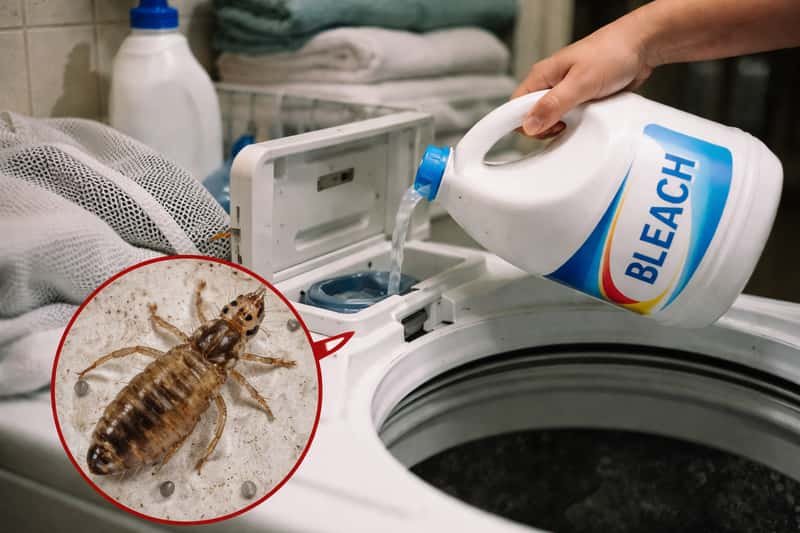
Here’s what nobody tells the family bleaching every sheet in the house. University of Georgia Extension states plainly that laundry additives like bleach and ammonia don’t improve lice removal; regular detergent plus hot water does the job. So the bleach in the wash isn’t the hero. The 130°F water is. The bleach is a passenger taking credit for the driver’s work, and it’s a passenger that fades your fabrics, irritates your lungs, and adds risk for exactly zero extra kill power. The washer would have won without the bottle.
Does Bleach Kill Lice on Surfaces, Combs, and in Laundry?
On non-living surfaces, bleach can technically kill lice, but so can heat, and heat is safer and just as final. Lice also can’t survive long off a human head, usually a day or two, which makes heroic disinfection unnecessary.
| Item | What kills lice | Skip |
|---|---|---|
| Combs and brushes | Soak in hot water above 130°F for 5-10 min | Bleach soak |
| Bedding and clothes | Hot wash plus high-heat dryer | Bleach additive |
| Couches, car seats | Vacuum, or leave unused 48 hours | Fumigant sprays |
| Floors and walls | No treatment needed | Any special cleaning |
Combs and Brushes
Drop combs and brushes into water hotter than 130°F for five to ten minutes. That kills any clinging lice or eggs outright. Bleach adds nothing except the chance of a fumey bathroom and a corroded comb.
Bedding and Clothes
Wash on hot, dry on high. Anything that can’t be washed goes in a sealed bag for two weeks or a hot dryer cycle. The same heat-first logic that public health agencies rely on handles all of it, no additive required.
The Other Doomed Home Remedies (Peroxide, Vinegar, Dawn, Lysol)
Bleach isn’t the only hack circulating. The whole household aisle gets tried, and most of it fails the same way, useless on nits, risky on skin.
Peroxide and Vinegar
Hydrogen peroxide is a milder oxidizer, so it shares bleach’s core flaw: it can’t crack the nit shell, and it lightens hair as a bonus you didn’t want. Vinegar’s acid is sometimes pitched as a way to dissolve nit glue for easier combing. It slightly loosens the cement at best and kills nothing. Neither ends an infestation.
Dawn and Lysol
Dish soap like Dawn can make hair slippery enough to make combing a little easier, but it doesn’t kill lice or eggs on its own. Lysol is a surface disinfectant, not a scalp product, and Lice Clinics of America warns that household disinfectants aren’t reliable standalone lice treatments and don’t belong on the body. Every one of these ends at the same place: you still need a comb and a real treatment.
What Actually Clears an Infestation
Three things, done together, actually end it. An approved medicated shampoo or pediculicide, applied per the label. Wet combing with a fine-toothed lice comb, repeated every three days for two to three weeks to catch newly hatched lice before they lay eggs. And hot-water laundry for bedding and recently worn clothes. That’s the evidence-based trio, and it doesn’t include a single drop of bleach.
The Minimal Cleaning Checklist
Keep it small. Wash bedding, pajamas, and worn clothes on hot, dry on high. Soak combs and brushes in water above 130°F. Vacuum the couch and car seat once. Bag anything unwashable for two weeks. That’s it. No bleach, no fumigation, no scrubbing the walls, no pesticide sprays. Extra cleaning steps add no lice-kill benefit, they just burn your evening.
Odd Culture’s Read
Heat clears lice and bleach adds only risk, so run the hot wash, comb every three days, and leave the bottle under the sink.
FAQs about does bleach kill lice
Does bleach kill lice on your head?
Household or hair bleach may kill some adult lice on contact, but it cannot kill the nits and should never be applied to the scalp. It risks chemical burns, eye injury, and toxic fumes.
Does bleach kill lice eggs?
No. Nits are cemented to the hair shaft and protected by a hard shell that oxidizing chemicals like bleach can’t penetrate, so the eggs survive and hatch about a week later.
Does hair bleach kill lice?
Hair bleach has never been scientifically proven to kill lice, though it may kill some adults. It does not exterminate nits, and it damages hair and scalp in the process.
Does bleach kill lice in laundry?
Bleach adds nothing here. Water above 130°F kills lice and nits in about five minutes on its own, so a hot wash with regular detergent does the full job without the risk.
Does bleach kill lice on surfaces?
On hard surfaces bleach can kill lice, but it’s unnecessary. Lice die within a day or two off a human head, and heat or a simple vacuum handles surfaces more safely.
Does bleach kill lice on combs?
Skip the bleach. Soaking combs and brushes in water hotter than 130°F for five to ten minutes kills any lice or eggs on them without corroding the comb or filling the room with fumes.
What kills lice immediately?
Heat above 130°F kills lice and nits within about five minutes, and approved medicated pediculicides kill lice on the head. No safe household chemical works instantly on both bugs and eggs.
Is it safe to put bleach on your hair to kill lice?
No. Bleach is corrosive and can cause scalp burns, eye damage, and respiratory irritation, and it still won’t kill the eggs. Every major health authority advises against it.
Do I need to bleach my whole house if my kid has lice?
No. A minimal checklist covers it: hot-wash bedding and worn clothes, soak combs in hot water, vacuum the couch once, and bag unwashables. No bleach, fumigation, or deep sanitizing needed.
How many times do I have to comb to get rid of lice?
Wet comb with a fine-toothed lice comb every three days for two to three weeks. That timing catches newly hatched lice before they mature and lay a fresh round of eggs.