Investing in an energy-efficient water heater is a strategic choice that reduces your home’s environmental footprint and lowers monthly utility bills. The right installation and proper use of your system ensure you see both immediate and long-term savings. For Ontario homeowners seeking professional help, consider Enbridge Sustain water heater installation services in Ontario as a trusted solution to ensure safe and optimized installation from the start.
Understanding the available technologies and key steps during the installation process can maximize system performance, minimize energy waste, and extend equipment lifespan. Matching your water heater to your home’s size and hot water needs is essential for reaping the full benefits of energy efficiency. Awareness of ongoing rebates and incentive programs can also help offset upfront costs, making energy-efficient choices more accessible to more households.
Whether you are replacing an aging unit or upgrading for better savings, proper planning, installation, and regular care make a significant difference. By following a few expert tips and exploring efficient technologies, you can create a sustainable, cost-effective hot water system tailored to your home’s needs.
Making informed decisions and maintaining your water heater is essential for reducing unnecessary energy use. For further tips and guidance, consult resources from major organizations, such as Energy.gov’s Water Heating page, to supplement your research.
Types of Energy-Efficient Water Heaters
Selecting the right water heater technology is the foundation of an energy-saving home. Three primary categories are recommended for both performance and efficiency:
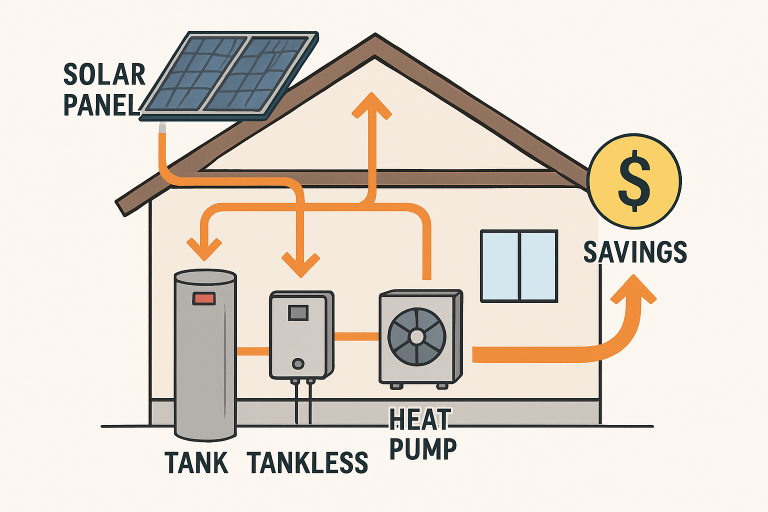
- Heat Pump Water Heaters (HPWHs): Using a refrigeration cycle, these water heaters draw heat from indoor air or outdoor sources. As a result, they are considerably more efficient than traditional electric storage water heaters, cutting energy use by up to 70 percent. These units are best suited for areas like basements and utility rooms where temperatures remain moderate year-round.
- Tankless Water Heaters: These systems heat water directly as needed and do not store hot water, preventing standby losses. Because they only activate when hot water is requested, tankless heaters are ideal for homes that value continuous hot water and wish to free up space.
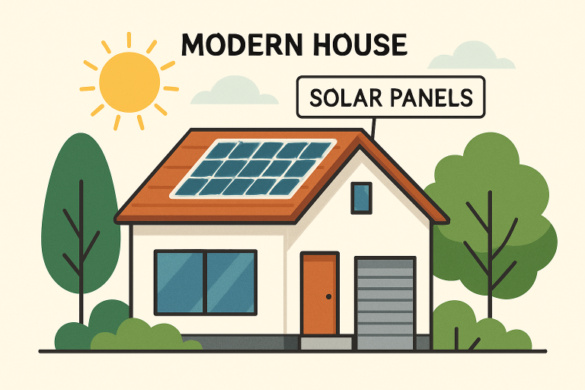
- Solar Water Heaters: Solar collectors preheat water with energy from the sun, passing pre-warmed water into a secondary heater for a consistent supply. Solar systems are most cost-effective when installed in regions with high solar exposure and can deliver significant long-term cost reductions.
More guidance on the differences and benefits of these technologies can be found through independent resources such as Consumer Reports’ water heater buying guide.
Proper Sizing and Installation
Efficiency goes beyond your choice of technology. Ensuring that your system is sized for your household and professionally installed will maximize performance and longevity:
- Assess Household Needs: Sizing matters. For example, a household of four generally requires a 50-gallon tank, while individuals or couples are often well-served by smaller or tankless units. Too small, and you risk running out of hot water. Too large, and energy is wasted maintaining the temperature.
- Professional Installation: To avoid leaks, safety hazards, and decreased performance, installation should always be completed by a certified technician. This ensures compliance with both manufacturer requirements and local building codes, protecting your investment.
- Location Considerations: Place your water heater near points of use when possible and in an area with adequate ventilation to minimize heat loss. Easy access is important for maintenance and future repairs.
Regular Maintenance
Like any appliance, ongoing maintenance is critical to achieving the highest efficiency and ensuring a long service life for your water heater:
- Annual Flushing: Over time, mineral sediment builds up in the tank, reducing efficiency and leading to corrosion. Flushing the tank at least once a year clears out these deposits and keeps your system running smoothly.
- Inspect Anode Rod: The anode rod attracts corrosive elements that would otherwise damage the tank. Inspect the rod every two or three years and replace it if it shows significant wear to prolong tank life.
- Insulate Pipes: Adding pipe insulation to the first several feet of hot water lines reduces heat loss, letting water stay hotter for longer and reducing energy consumption.
Utilizing Incentives and Rebates
Energy-efficient upgrades are more accessible than ever thanks to both government and utility programs, which help lower the upfront investment:
- Federal Tax Credits: Under the Inflation Reduction Act, homeowners may claim a federal tax credit of up to 30 percent of the project cost for certain energy-efficient water heaters, capped at $2,000. This program applies to ENERGY STAR-certified heat pump water heaters installed through December 31, 2025.
- State and Local Rebates: Numerous provinces, states, and municipalities, including California, offer rebates for approved systems. In Ontario, utility companies and provincial programs regularly incentivize upgrades to more environmentally conscious equipment.
- Utility Programs: Some utility providers offer special rates or incentives for participating in their demand management initiatives or for installing equipment during off-peak hours. Check with your local utility for program availability.
Additional Energy-Saving Tips
Your home’s overall hot water use is just as crucial as the efficiency of your water heater. Small upgrades and habits can have a big impact:
- Install Low-Flow Fixtures: Swap out old showerheads or faucets for low-flow models to reduce hot-water volume, lowering energy use without sacrificing comfort.
- Use Cold Water for Laundry: The bulk of laundry-related energy is used to heat water. Running your washing machine on the cold cycle whenever possible is an easy way to cut down utility bills.
- Set the Thermostat to 120°F: Lowering your water heater’s thermostat to 120°F provides comfortable hot water for daily use while limiting standby energy losses and minimizing the risk of scalding injuries.
By making smart decisions during selection, installation, and maintenance, and by taking advantage of available incentives, your household can enjoy consistent hot water and achieve notable energy savings year after year. Leverage reputable resources and local experts to ensure the best results for your property and your budget.