Best Hearing Aid Styles Explained: Finding the Right Fit for You
Choosing the best hearing aid is about much more than selecting the latest technology. Every individual experiences hearing loss differently, and factors such as lifestyle, comfort, appearance, manual dexterity and the severity of hearing impairment all influence which style is most suitable. Modern hearing aids are available in a wide range of designs, each offering its own combination of features and benefits. Understanding the differences between these styles can help people make informed decisions alongside their hearing care professional and find a solution that supports both their hearing needs and their daily routine.
Hearing loss affects millions of people worldwide and can develop gradually over many years. Because the change often happens slowly, some individuals may not immediately recognise that their hearing has declined. They may notice increasing difficulty following conversations, particularly in busy environments, needing to turn the television volume higher than before or asking others to repeat themselves more frequently. Left untreated, hearing loss can affect communication, confidence and overall quality of life.
Fortunately, hearing aid technology has advanced significantly in recent decades. Today’s devices are smaller, more comfortable and considerably more sophisticated than earlier generations. Many models automatically adjust to different listening environments, reduce background noise and connect wirelessly to smartphones, televisions and other electronic devices. While these technological features are important, selecting the right physical style remains one of the most significant decisions during the fitting process.
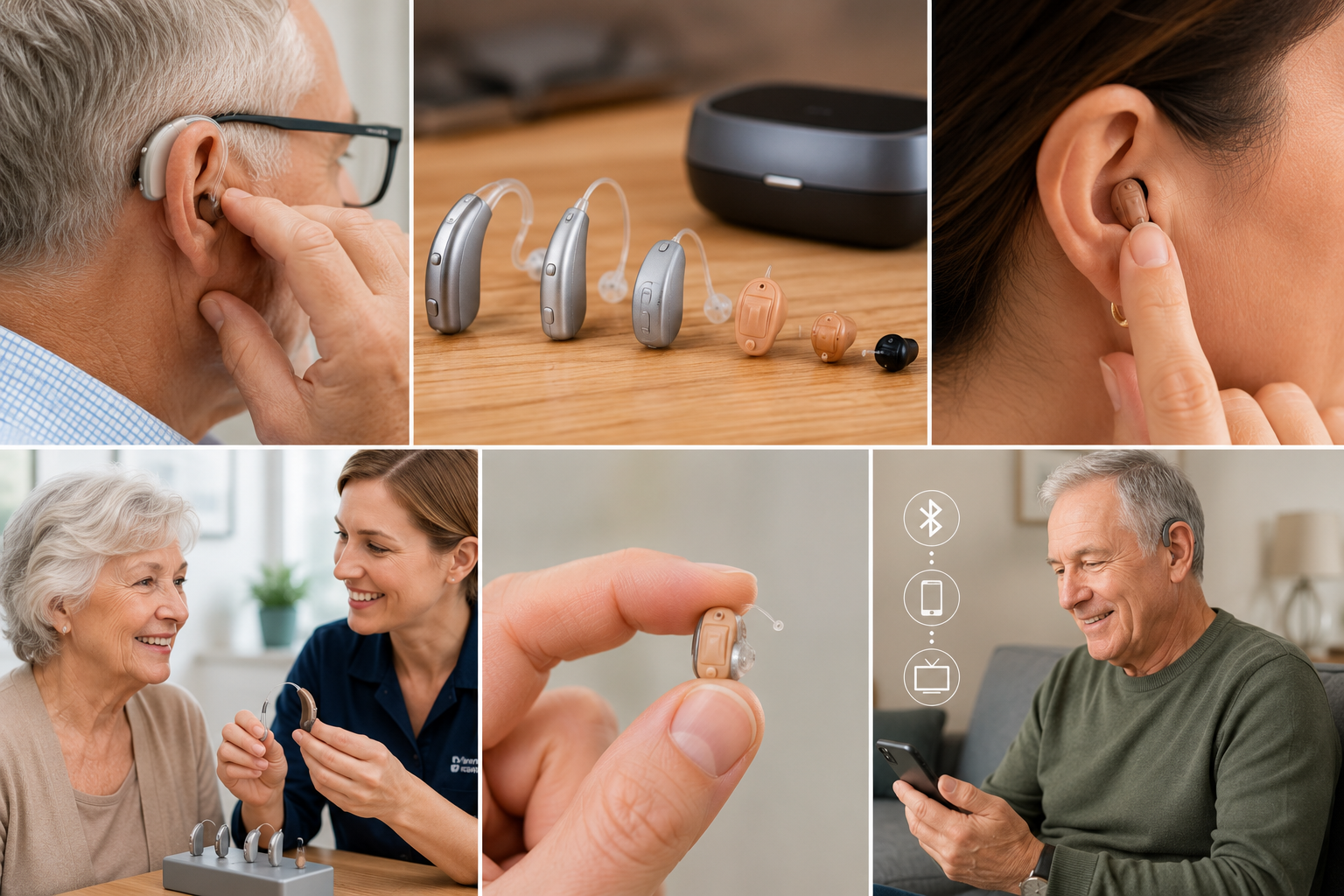
One of the most common styles is the behind-the-ear hearing aid. As the name suggests, the main body of the device sits discreetly behind the ear and is connected by a thin tube or wire to an earpiece positioned inside the ear canal. Behind-the-ear models are suitable for a wide range of hearing losses, from mild to profound, making them one of the most versatile options available.
These devices offer several practical advantages. Their slightly larger size allows space for more powerful components, larger batteries and additional features such as directional microphones and rechargeable technology. They are also generally easier to handle, making them particularly suitable for individuals with reduced finger dexterity or arthritis. Modern behind-the-ear designs are considerably smaller and less noticeable than many people expect, with slim tubing helping them blend naturally with the ear.
Receiver-in-canal hearing aids have become increasingly popular in recent years. These devices are similar to behind-the-ear models but place the speaker directly inside the ear canal rather than within the main body behind the ear. This arrangement often produces a more natural sound quality while allowing the hearing aid itself to remain compact and discreet.
Many people appreciate receiver-in-canal devices because they are lightweight and comfortable to wear throughout the day. They also leave the ear canal more open than some traditional designs, reducing the sensation that the ear is blocked while improving comfort for long-term use. These models are commonly recommended for people with mild to severe hearing loss.
Another option is the in-the-ear hearing aid. These devices are custom-made to fit within the outer portion of the ear, with all electronic components housed in a single moulded shell. Because they are individually manufactured using impressions of the user’s ear, they can provide an excellent fit and remain comfortable during daily activities.
In-the-ear models are generally easier to insert than some of the smaller custom hearing aids while remaining relatively discreet. Their larger size compared with completely-in-canal models also allows room for additional controls, making adjustments easier for some users.
For those seeking greater cosmetic discretion, in-the-canal and completely-in-canal hearing aids may be attractive options. These custom devices fit deeper inside the ear canal, making them significantly less visible during everyday use. Many people choose these styles because they offer a more discreet appearance while still providing excellent hearing support for suitable levels of hearing loss.
However, their smaller size also means certain compromises. Tiny batteries may require more frequent replacement, and there is less room for advanced controls or larger rechargeable components. They may also be more difficult to handle for individuals with reduced dexterity. Additionally, because they sit deeper within the ear canal, they require careful cleaning and maintenance to prevent wax build-up from affecting performance.
Invisible-in-canal hearing aids represent one of the most discreet options currently available. Positioned deep within the ear canal, these devices are almost impossible to see during normal conversation. For individuals who prioritise cosmetic appearance, they can provide an appealing solution.
Despite their discreet design, invisible hearing aids are not suitable for everyone. They are generally recommended only for certain ear shapes and degrees of hearing loss. A comprehensive hearing assessment helps determine whether this style is appropriate for an individual’s specific needs.
Beyond appearance, lifestyle should play a major role when selecting a hearing aid. Someone who regularly attends business meetings, enjoys restaurants or participates in social gatherings may benefit from advanced speech enhancement and background noise reduction features. Individuals who spend considerable time outdoors may require devices designed to withstand moisture, dust and varying environmental conditions.
Technology has become an increasingly important consideration as well. Many modern hearing aids offer Bluetooth connectivity, allowing users to stream telephone calls, music, podcasts and television audio directly into their devices. Smartphone applications can also provide convenient control over volume, programme selection and battery status. Some systems even use artificial intelligence to learn listening preferences and automatically optimise performance in different environments.
Rechargeable batteries have also become increasingly popular. Rather than replacing disposable batteries every few days, users simply place their hearing aids into a charging station overnight. This convenience is particularly valuable for individuals with reduced hand dexterity or those seeking a simpler daily routine.
Comfort should never be overlooked. Even the most technologically advanced hearing aid will not provide maximum benefit if it is uncomfortable to wear. A professional fitting ensures that the device sits correctly within or behind the ear while minimising pressure points and maintaining secure positioning throughout normal daily activities.
Regular follow-up appointments are equally important. Hearing can change over time, and adjustments may be required to optimise performance. Audiologists can fine-tune programming, assess comfort, provide cleaning advice and ensure the hearing aid continues meeting the user’s evolving needs.
Cost is naturally another factor many people consider. Prices vary according to technology level, available features and manufacturer. While premium models may include sophisticated automatic processing and extensive connectivity options, many mid-range devices provide excellent hearing support for everyday situations. A hearing care professional can help balance desired features with available budget to identify the most appropriate solution.
Perhaps the most important point to remember is that there is no universally perfect hearing aid. What works exceptionally well for one person may not be the ideal choice for someone else. Ear anatomy, hearing loss pattern, daily activities, cosmetic preferences and manual dexterity all contribute to determining the most suitable option.
Advances in hearing aid technology mean that individuals have more choice than ever before. From discreet custom devices that sit almost invisibly within the ear canal to powerful behind-the-ear models equipped with cutting-edge wireless features, there are solutions available for almost every type of hearing loss and lifestyle. By understanding the strengths of each hearing aid style and working closely with a qualified hearing care professional, individuals can confidently select the option that offers the best balance of comfort, performance and practicality. Ultimately, the best hearing aid is the one that fits comfortably, supports effective communication and helps users enjoy everyday life with greater confidence and independence.