Many students, writers, and editors now rely on an AI detector free tool to check large documents. Teams in marketing use them too. So do publishers that manage fast content cycles. The rise of machine-written text created a need for fast checks that guide decisions. A scan gives early clues. A score gives you direction. These tools help spot patterns that often show up in automated writing.
Modern scanning systems judge style, pacing, and structure. They also track repetition inside long sections. Some tools read sentence flow closely and others study transitions. A few AI detector free tools mixes both methods. Each system carries strengths and limits, so a full review helps teams pick the right option.
What AI Detectors Try to Catch
Most detection tools search for signals that appear in machine-generated work. These signals form patterns across long pages. Many platforms check token flow, which means they study how each line connects to the next. Machines tend to follow smoother paths. Humans often create uneven pacing.
Strong detectors also read the balance between short and long sentences. Predictable pacing often triggers higher scores. Humans do not write with such perfect order. That difference supports early scoring.
Some detectors add extra layers. A few tools compare the text to older datasets. Others test how likely a model would create similar lines. Each method adds clues.
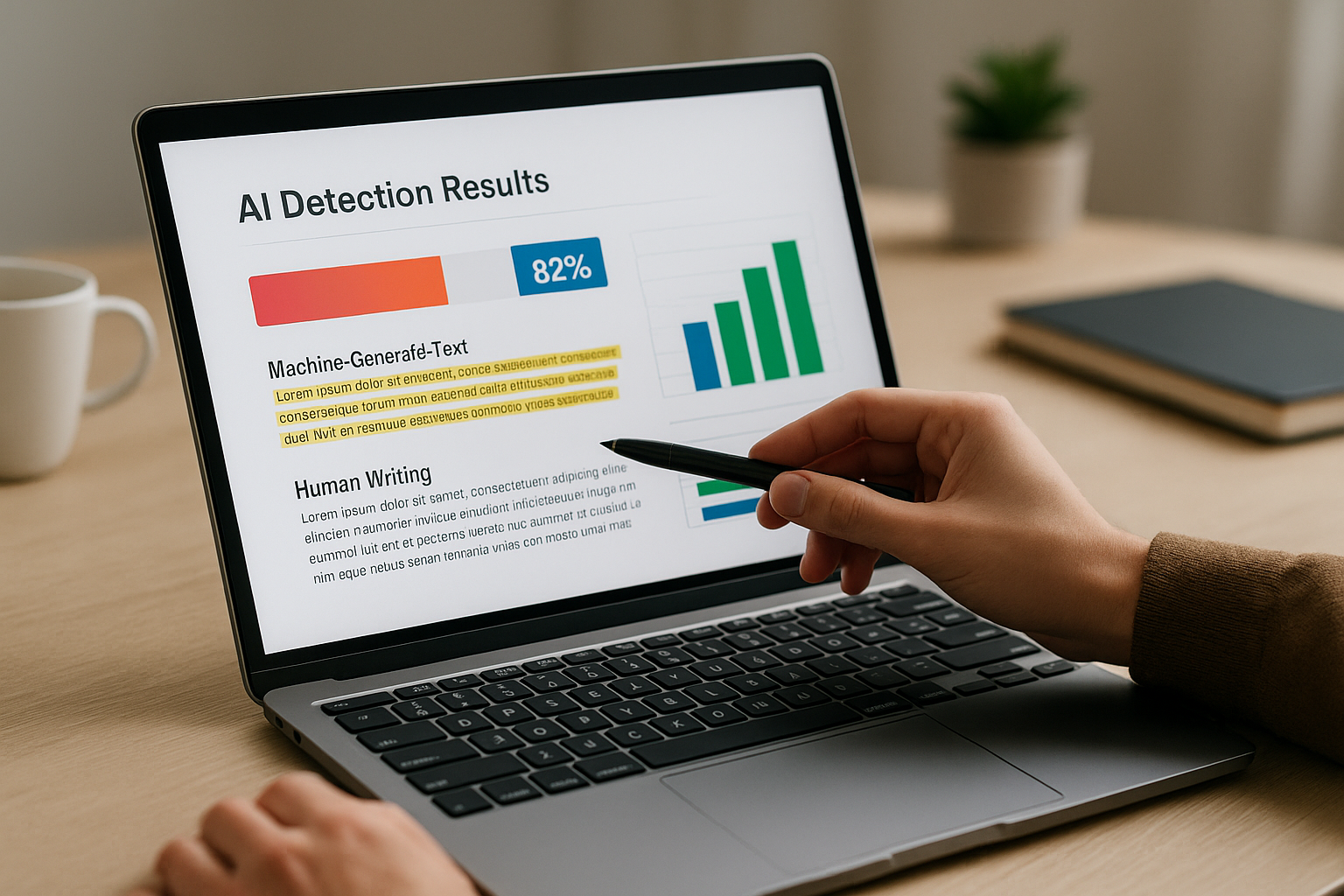
How AI Detector Free Tools Performed in Tests
Tests included long samples, short samples, and mixed samples. Accuracy changed across tools. Free platforms usually work best on long pieces. Short inserts give weaker signals.
1. Long-Form Samples
Long pieces gave detectors solid clues. Repetition increased and pattern flow became clearer. Many free tools marked large generated pages correctly. The accuracy stayed high across different prompts.
2. Medium-Length Samples
Mid-length samples showed mixed results. Some scanners flagged sections. Others passed them. Structure played a large role. Human writing with steady pacing confused a few tools.
3. Short Samples
Short inserts caused problems. Many platforms misread them. A few tools marked everything as uncertain. These results show how length influences accuracy.
Strengths Found Across Free Detection Tools
Various platforms offer helpful features. The following strengths appeared often during review.
Clear Scoring
Most tools present a simple dashboard. The score gives quick insight. It helps users take a first step before a deeper review.
Fast Processing
Free systems usually scan pages quickly. This helps students and editors who need fast checks.
Useful for Early Screening
Teams use detection tools as an early flag. A scan can highlight sections that deserve extra inspection.
Helpful for Training New Writers
Some editors train writers by showing examples of high-risk structure. Detection tools help guide that discussion.
Weaknesses That Showed Up in Testing
Every tool carries limits. Free options tend to show more.
High Rates of False Flags
Some tools mark human writing as machine-generated. This usually happens when the text uses steady pacing.
Weak Results for Short Text
Short blocks rarely give enough signals. Many scanners struggle with small sections, especially creative text.
Model Drift
Models change often. Older detection systems cannot track new patterns. This lowers accuracy over time.
Over-Reliance on Surface Patterns
Some scanners judge style more than meaning. Machine-edited text sometimes passes because the tone appears natural.
How Support Tools Connect to AI Detection
Writers use many digital tools today. Several tools influence the risk score produced by an AI detector. Each one affects structure differently, so understanding the impact helps teams produce cleaner work.
Paraphrasing Tool Use
A paraphrasing tool shifts lines. It changes phrasing but often keeps structure. Detection scores drop when the structure looks more human. Careful editing still matters.
Summarizer Use
A summarizer compresses pages. It removes detail, which increases pattern density. Scans often score these blocks higher.
Grammar Checker Use
A grammar checker fixes errors. The repair process sometimes smooths sentences too much. This may raise the risk score.
Word Counter Use
A word counter supports planning. Length plays a large part in detection accuracy. Long pages help the system judge correctly.
How Each Free AI Detector Compared
The following review outlines broad patterns seen across common platforms. Names stay general because tests covered many options and scored them on common behavior.
Tool A
This platform worked best on long samples. The dashboard stayed simple. Weakness appeared in short blocks. Creative sections often confuse it.
Tool B
The second platform scored mid-length pages well. The system used token flow checks. Accuracy dropped when text contained heavy editing.
Tool C
This tool used structured scoring. Long samples revealed strong signals. Short text caused problems. The scan passed a few machine-generated segments.
Tool D
This platform uses density checks. Medium pages scored well. Long samples created mixed results. Human pieces with smooth pacing produced false flags.
Tool E
This system blended several methods. It performed best on varied samples. The scan time was slow. The system worked well for research teams.
When Free Tools Make Sense
Free scanners help when budgets stay low. They support early checks. They guide teams that handle large batches of text. These tools also work well when users add a human review afterward. A second layer improves accuracy.
Free platforms also help students. They use scanners to study pacing. They learn how structure changes detection scores. Testing different drafts teaches strong habits.
When Paid Tools Offer a Better Path
Paid tools support high-volume work. They also update faster. Many include advanced scoring layers. These additions help teams that publish daily. Paid platforms often support large file sizes, too.
Projects that involve legal or medical text need stronger accuracy. Paid systems usually perform better in these fields.
Final Thoughts
AI detection sits in a fast-changing space. Free platforms give a solid first look. Paid systems add deeper layers. The choice depends on the work, the volume, and the stakes. Users should combine scanning tools with strong editing skills and clear review steps. A balanced approach builds trust and supports consistent quality.