Introduction
Juggling a family’s transportation needs can feel like a daily marathon. Between early school drop-offs, last-minute appointments, and after-school activities scattered across the city, it’s easy for parents to feel stretched thin. Finding a more reliable way to manage these logistics not only brings peace of mind but also creates a more harmonious household. That’s why more families are turning to scheduled ride services, which take the guesswork out of daily commutes and special outings—especially in areas with growing gig work Pittsburgh for drivers and families alike.
With tailored ride scheduling, families can pre-plan transportation for each member, ensuring no one is left waiting or scrambling for a last-minute ride. This proactive approach leads to calmer mornings and evenings, reduces the need for hurried calls and texts, and allows everyone to focus on what matters, rather than how they will get there. As families and communities adapt, scheduled ride services not only support organizations but can spark new routines that boost overall quality of life.
Benefits of Scheduled Rides
- Time Management: Pre-scheduling rides lets families organize their days with precision, eliminating the chaos of last-minute arrangements and freeing up time for shared meals or relaxation.
- Reduced Stress: The knowledge that transportation is reliably in place takes a huge weight off parents’ shoulders, making each transition smoother for both adults and kids.
- Cost Efficiency: By grouping rides through carpools or shared journeys, families reduce the expenses associated with gas and wear and tear from single-commuter drop-offs.
Parents who regularly schedule rides find that the predictable nature of prearranged commutes also helps alleviate emotional stress for young children, fostering a sense of stability. According to a report by The New York Times, daily routines are important for children’s mental well-being, and transportation is a key piece of that structure.
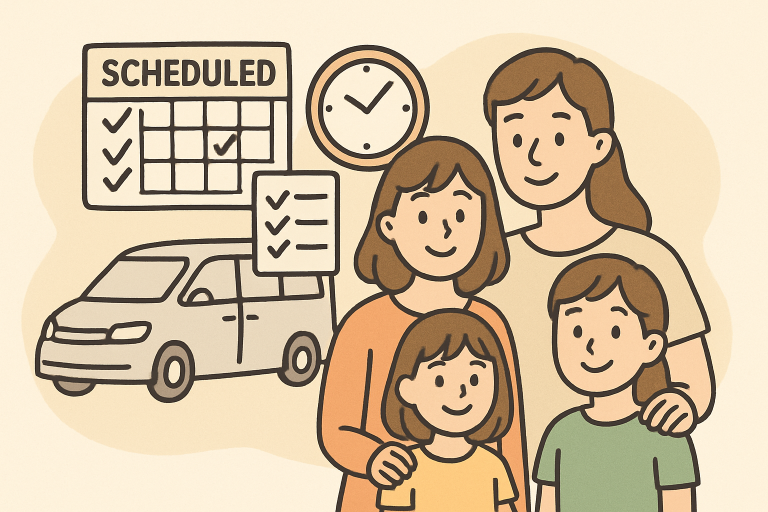
Implementing Scheduled Rides
Effective implementation begins with assessing each family member’s recurring travel needs. These often include daily activities such as school, daycare, sports practices, and lessons. Meet as a family to map out everyone’s schedules, identifying which trips could be handled with a regularly scheduled ride.
- Assess Your Needs: Detail all weekly and monthly obligations that require transportation. This could mean creating a shared calendar or using a digital planner for the whole family.
- Choose Reliable Services: Research local ride-schedule providers and trusted apps in your area, focusing on reliability, reputation, and safety features.
- Communicate Clearly: Ensure every family member knows the plan. Daily confirmed schedules (via text or app notifications) reduce confusion and missed rides.
Utilizing Technology for Ride Scheduling
Technology now plays a vital role in coordinating family logistics. Apps make it easy for parents to organize carpools with other trusted parents, while also tracking rides in real-time. These platforms offer features such as driver background checks, built-in communication tools, and live route updates, providing added peace of mind.
In areas where gig work is prevalent, services are expanding to connect families with trusted local drivers, making scheduling even more flexible and community-driven.
Safety Considerations
- Driver Vetting: Always select companies that require strict driver background checks and regular vehicle inspections.
- Platform Features: Popular apps now enable you to monitor trips in real-time and view driver ratings left by other parents.
- Family Education: Teach children how to identify their scheduled driver and to always verify before getting into a vehicle.
Parents should frequently revisit ride safety conversations with their children, especially as they become more independent and may rely on scheduled rides for extracurricular activities or appointments.
Environmental Impact
Opting for carpooling or shared scheduled rides not only benefits family budgets but also the environment. By reducing the number of cars on the road, families help decrease traffic congestion and air pollution—an especially crucial factor in urban centers with high traffic volumes. According to the U.S. Environmental Protection Agency, carpooling can substantially reduce greenhouse gas emissions and dependence on fossil fuels.
As more families embrace these solutions, entire communities can make a positive impact on climate change.
Overcoming Common Challenges
Coordinating rides and schedules with multiple family members or other families can present challenges. Unforeseen changes—such as canceled activities, illness, or traffic—require ongoing communication and adaptability. Group chat apps or ride-scheduling platforms with instant alerts can help everyone stay updated and maintain flexibility when plans inevitably shift. Transparency and a willingness to work together are essential for making scheduled rides a lasting and effective part of family life.
Final Thoughts
Scheduled rides are changing the way busy families approach transportation, transforming chaos into calm. By embracing technology, prioritizing safety, and maximizing efficiency, parents can ensure their children arrive at their destinations with minimal stress. This forward-thinking approach not only enhances daily routines but also fosters stronger communities and a healthier planet for future generations.