
A burst pipe during a Twin Cities cold snap, an overflowing toilet before guests arrive, or water spreading across a basement floor can feel overwhelming. The first goal is not a perfect repair. It is protecting people, limiting water damage, and avoiding a second hazard while you decide whether to contact an emergency plumber in the Twin Cities.
Homes across Minneapolis, St. Paul, and surrounding Minnesota communities can face plumbing trouble in every season, from frozen pipes in winter to sump, drain, and sewer concerns during heavy rain. A calm, ordered response in the first few minutes can make the next steps much easier.
1. Decide Whether the Problem Is an Emergency
A slow faucet drip or one sluggish sink drain can often wait for a scheduled repair. An emergency involves active flooding, contaminated wastewater, a major loss of water service, or a condition that could harm people or damage the home quickly.
Call for urgent help when you see:
- Water spraying from a pipe, supply line, or appliance connection.
- Water entering through a ceiling, wall, or floor.
- Several drains, tubs, or toilets backing up at once.
- A water heater leaking heavily or releasing hot water.
- Water near outlets, appliances, or the electrical panel.
- A sulfur-like gas odor near a water heater or other gas appliance.
2. Get People and Pets to a Safe Area
Keep children and pets away from standing water, slippery flooring, sagging ceilings, and any area with exposed wiring or electrical equipment. Do not walk through water if electricity may be involved. If water is close to the electrical panel, outlets, or plugged-in equipment, stay clear and seek qualified help from a safe location.
A gas odor, smoke, sparking, or immediate threat to life requires a different response than a standard plumbing call. Leave the building, avoid flames and electrical switches, and contact emergency responders or the gas utility from outside. Do not re-enter until it is safe to do so.
3. Stop the Water if It Is Safe
For a sink, toilet, washing machine, or similar fixture, look first for the nearby shutoff valve. Closing that valve may isolate the problem without shutting down water to the entire house. If water is flowing from an unknown source, a burst pipe, or multiple fixtures, the main water shutoff may be the better option.
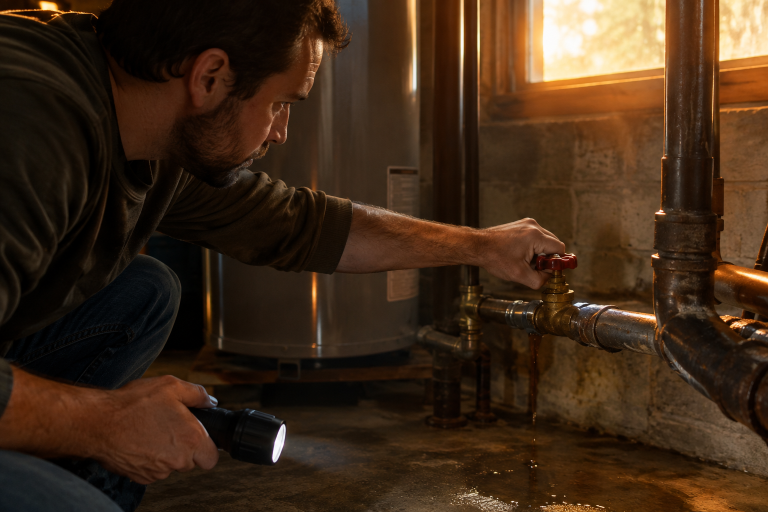
- Find the valve closest to the leaking fixture.
- Turn a round valve clockwise, or move a lever so it sits crosswise to the pipe.
- Watch briefly to confirm the flow has slowed or stopped.
- Close the main water valve if the leak continues and the valve is safely accessible.
- Open a low faucet after shutting off the main valve to relieve pressure in the lines.
Most main shutoffs are near where the water service enters the home, around a utility area, or close to the meter. In older Twin Cities homes, locating and labeling this valve before winter is a practical part of emergency preparation.
4. Handle a Sewer Backup Differently
Wastewater rising through a floor drain, gurgling fixtures, or a toilet backing up when another fixture runs can indicate a main drain or sewer problem. Do not attempt to solve this by running more water or using chemical drain cleaner.
- Stop using sinks, toilets, showers, dishwashers, and washing machines.
- Keep people and pets away from contaminated water.
- Do not use a plunger on a fixture if wastewater is already overflowing elsewhere.
- Wear appropriate protective equipment before touching affected materials.
- Make a note of the fixtures involved and when the backup began.
Basic household emergency safety guidance can also help homeowners think through water heater concerns, leaks, and other hazards before a stressful situation occurs.
5. Limit Damage Without Creating New Risks
Once the flow is controlled and the area is safe, move electronics, furniture, documents, and valuables away from the affected space. Use buckets beneath small drips and towels to keep clean water from spreading. Do not begin cleanup if the water may contain sewage or if electrical danger remains.
Keep a small emergency kit with towels, buckets, a flashlight, rubber gloves, plastic bags, an adjustable wrench, and a notepad. A flashlight is especially useful during a late-night leak because it avoids relying on lights in a questionable wet area.
6. Document Before Major Cleanup
Take photos and short videos from a dry, safe position. Capture the apparent source, standing water, affected rooms, damaged belongings, and any visible ceiling or wall damage. Then write down when the issue began, which fixtures were being used, whether the water appeared clean or contaminated, and which valves were shut off.
These details can help a repair professional understand the event and may be useful when discussing a claim with an insurer. Keep invoices, estimates, and notes about temporary measures such as water extraction or protective covering.
7. Make a Clear Call for Help
Instead of saying only that the plumbing is broken, explain where the problem is, whether water is still moving, how many rooms or fixtures are affected, and whether electricity, gas, or sewage is involved. Mention whether the main valve has been closed and whether the home has a basement, crawl space, or shared plumbing connections.
For background on how water damage develops inside a building, the reference article explains that sudden events like burst pipes and flooding can cause losses quickly, and that insurance coverage for those losses may or may not apply.
8. Ask Practical Repair and Insurance Questions
When the immediate danger is under control, ask what caused the issue, whether the proposed work is temporary or permanent, and whether hidden moisture may be present behind walls, under flooring, or in insulation. Ask whether cleanup or restoration services may be needed, what warning signs to watch for, and whether permits or inspections could apply.
Insurance coverage depends on the policy and the cause of the damage. Contact the insurer after handling immediate safety concerns, and avoid discarding damaged materials until you understand what documentation may be needed.
Frequently Asked Questions
Should a water heater be turned off during a leak?
Close its water supply if it can be done safely. Avoid touching electrical controls or gas equipment when water, gas odor, or electrical risk is present. A leaking water heater may require professional assessment, particularly if hot water is escaping or the tank is visibly damaged.
Can drain cleaner fix a sewer backup?
No. Chemical cleaners may not clear a main-line blockage and can create a chemical exposure hazard for anyone who later opens or services the drain.
How can homeowners prevent the next emergency?
Find and label the main shutoff, test accessible fixture valves periodically, replace worn appliance hoses, insulate exposed pipes, disconnect outdoor hoses before freezing weather, and consider leak sensors near water heaters, washing machines, and sinks.
Conclusion
In a Twin Cities plumbing emergency, the first 10 minutes should focus on safety, shutting off water when possible, avoiding contaminated or energized areas, and recording what happened. Those actions can reduce preventable damage and give the right repair professional a clearer picture of the problem.