
Being placed under arrest can be an intimidating experience, but it is important to remember that every individual in Canada has constitutional rights during this process. These rights, entrenched in the Canadian Charter of Rights and Freedoms, exist to ensure fair treatment, to protect against self-incrimination, and to maintain access to legal assistance. Keeping informed of these protections is the first step in protecting yourself during any police encounter, and trusted legal resources such as mailletcriminallaw can provide valuable guidance on understanding your rights and navigating the criminal justice system.
Many people are not fully aware of their legal entitlements when approached by law enforcement, leading to confusion or even unintentional self-incrimination. Whether you are a Canadian citizen, permanent resident, or visitor, your rights remain a critical safeguard against possible misuse of police powers. Understanding what you can and cannot be compelled to do during an arrest goes a long way toward protecting your freedoms in these high-stress situations.
The Constitution guarantees that nobody, regardless of the accusation, is above or beneath the law. Importantly, these rights exist not just to shield the innocent, but to ensure that the process leading to a finding of guilt or innocence is fair, evidence-based, and free from coercion.
Failing to exercise your constitutional rights could have serious consequences, including the risk of wrongful conviction or the loss of valuable legal defenses. Being proactive and knowledgeable when facing police action is a practical way to assert your civil liberties. For further foundational reading, see this overview by the CBC on your Charter rights and police powers.
The Charter and Legal Foundations
The legal bedrock for rights during an arrest in Canada is the Canadian Charter of Rights and Freedoms. It provides essential protections under Sections 7 through 11, ensuring that the principles of justice are upheld from the moment a person is detained or arrested. These sections guarantee rights such as life, liberty, and security, the right to be free from arbitrary detention, and the right to be informed promptly of the reasons for arrest or detention.
Your Rights During an Arrest
If you are placed under arrest or detention, you have specific rights that must be observed by police. Officers must clearly inform you that you are under arrest or detention. You are entitled to know why, in clear and understandable language. At this stage, you do not have to provide any further information beyond your name and basic identification details. Exercising your rights from the outset can affect the outcome of your case, especially in complex legal matters.
Right to Silence and Self-Incrimination
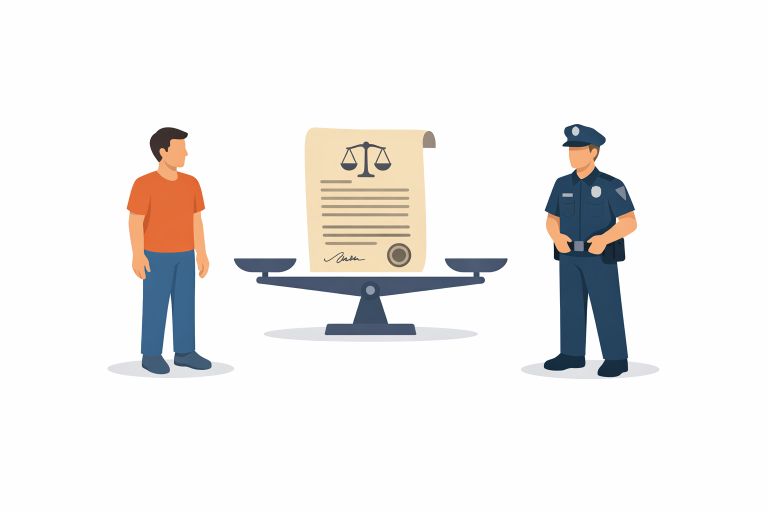
One of your key constitutional rights is the right to remain silent. Police officers should caution you by stating, “You have the right to remain silent.” You are not under any obligation to answer questions about the incident, your involvement, or your surroundings. It is important to remember that anything you say can be used as evidence in court.
Police may try to persuade you to speak or suggest that cooperating will help your situation. However, declining to answer further questions until you consult with legal counsel is protected under the law. The Supreme Court of Canada has repeatedly affirmed that individuals cannot be penalized for exercising this right. For additional details, see Justice Canada’s Charter explanations.
Right to Legal Counsel
Section 10(b) of the Charter guarantees your right to retain and instruct counsel without delay. This right includes being informed by police that you may speak to a lawyer and having a reasonable opportunity to do so. Legal representation ensures your best interests are protected, prevents police overreach, and can facilitate release at the earliest possible opportunity. Importantly, police must stop questioning you once you indicate a wish to consult a lawyer until you have had that opportunity.
Right to Be Informed of Charges
If you are arrested, police must tell you of the reason “promptly and in language you understand.” This is fundamental in helping you make informed decisions about your legal defense. If a language barrier exists, the police must make reasonable efforts to address it, which may include providing a translator.
What Happens If Your Rights Are Violated?
If police officers violate your constitutional rights, any evidence they obtain may be excluded from court proceedings by a judge. Unlawful searches, coerced confessions, or failure to uphold your rights to silence or counsel can significantly impact the prosecution’s case. Judges take these violations seriously and may even dismiss charges in some circumstances if the breach is severe.
Practical Tips If You Are Arrested
- Remain calm and polite with officers and do not resist physically or verbally.
- Ask if you are free to go, or if you are being detained or arrested.
- Clearly state you wish to exercise your right to remain silent and ask to speak with a lawyer as soon as possible.
- Remember that you do not have to consent to a search unless required by law or a warrant is present.
Conclusion
Your constitutional rights during an arrest serve as powerful protections to ensure fairness, dignity, and legal accountability. Whether innocent or accused of a crime, it is essential to remain aware of these rights and to exercise them confidently. Keeping informed, reaching out to experienced professionals, and demanding proper legal process not only protects your interests but also helps uphold justice within Canadian society.