
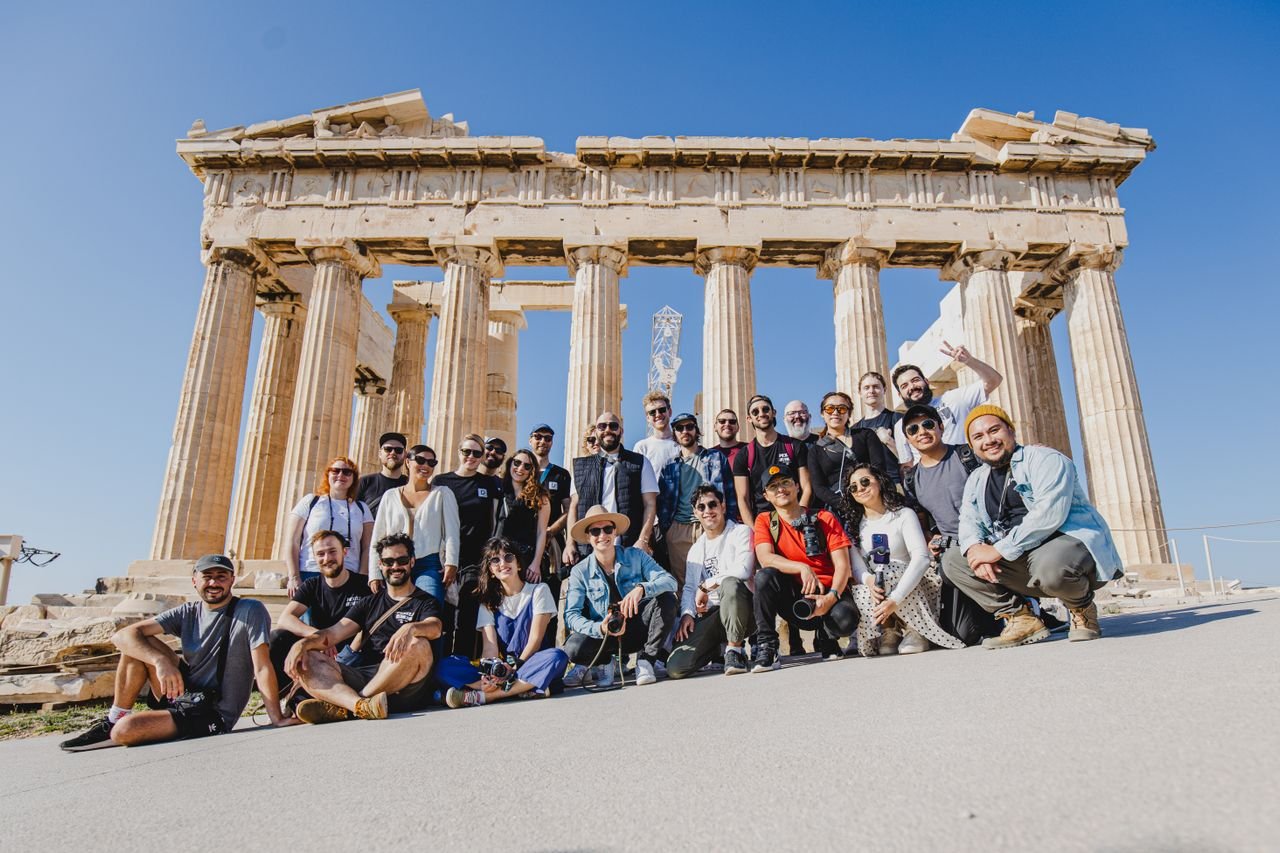
 Planning a group trip is a nightmare that quickly becomes a reality. That said, we all know the joy of traveling with friends, family, colleagues, and complete strangers who share the exact same hobbies but totally different political views. The trick is making sure it ends with that “still humming the Toto theme while climbing into bed” vibe, rather than the feeling you get when the rental van finally turns left and you realize three blocks too late it needed to take a right.
So we’re going to make this easy, or at least easier. Below is an honest guide to planning, booking, and surviving large group travel along with the myriad costs you’re going to encounter along the way. One quick note: We’re setting this up so it can apply to any group around ten-20 people and/or a budget of around $500 per person or less. But if your group contains only two people, or 200, most of this advice will hold true.
Get Everyone’s Budget on the Table Before You Book Anything
The most common mistake group planners make is assuming everyone is in the same financial position. One person assumes that this is going to be a luxury weekend, another is really stretching it to be there at all. When those expectations clash after you’ve put down a deposit, there’s no itinerary on earth that can brush the resulting awkwardness under the rug.
Before you put money down on anything, run an anonymous poll, Google Forms works fine, and have each participant select the per-capita cost that they could realistically swing for the entire trip. It has to be anonymous. People are surprisingly honest when they don’t have to worry about looking cheap or getting judged. Once you have a spread, you can design a weekend that works for the majority and the outliers.
This will let you have one clean conversation early: “This is what the weekend costs per person. This is when I need the money. Are you in?” Lo and behold; simple, late-game conversations are magically taken off the table when everyone knows where they stand.
Ground Transportation is Where Budgets Quietly Collapse
Ask most group planners where they think the money goes and they’ll say flights or lodging. They’re usually wrong. Ground transportation, getting the group around once everyone arrives, is the budget item that fragments silently and adds up fast.
The typical approach is some combination of rental cars, personal vehicles, and rideshare apps. On paper, it looks manageable. In practice, you’re paying for multiple rental vehicles, multiple parking fees at every stop, surge-priced rideshares when the group is running late, and a convoy of cars that somehow never arrives at the same time. The coordination overhead alone is exhausting.
The more cost-effective approach is consolidating everyone into a single vehicle. According to data from the American Bus Association, utilizing a single motorcoach or charter bus for group transportation can reduce per-person travel costs by up to 50% compared to flying or driving individual personal vehicles. That’s not a marginal improvement, it’s a structural one.
Traveling within the Midwest can be an enjoyable experience, and a regional provider such as a grand rapids charter bus operator can make the entire ground transit process practically stress-free. Your group leaves together, arrives together, and you’re not wasting the first 60 minutes of the day arranging rides. The charter vehicle’s daily rate translates to flat-rate pricing, so the per capita cost lowers as your numbers increase, a 20-passenger bus is much less expensive per person than the aggregate of four rental cars and parking.
The busier your schedule, the more precious your time becomes. A hidden-in-plain-sight benefit of this is removing the chaos of movement itself from the day. With no transportation overhead, you don’t lose travel time to parking go-arounds, someone momentarily getting lost, or the beginning of an event while ridesharing is delayed. The day becomes tighter, and you really have a chance to relax and enjoy your time with the group.
Accommodation: What You Book Matters More Than Where You Stay
For groups of eight or more, you’re probably assuming that you should be booking a hotel room block. And hotel room blocks do work, most hotels have a group sales department that negotiates special low rates for a minimum number of rooms, though you’ll often get those rates if you just call and ask and announce that you need seven rooms. Groups of ten or more almost always qualify for discounts that aren’t published, generally 15% to 25% off the standard rate.
Again, call the group sales line, not the main reservation number, you want to speak with someone who can authorize a discount and maybe throw in a room for free for every ten paid, which is standard. Let them know you are still in the “considering our options” phase, and you are thinking about both a rental house and a block of rooms, some places offer pretty enticing “considering our options” rates and perks.
But before you lock yourself into seven or more expensive 250-square-foot boxes stacked on top of each other, do some math on the total price of a larger vacation home rental. A five-bedroom house that sleeps sixteen will often rent for less per night than six or seven hotel rooms, and it comes with something a hotel doesn’t: a kitchen.
Build the Itinerary With Opt-Out Windows
A subtle but common source of tension in group travel is the natural gap in what different people are prepared to spend on specific activities. Someone in the group is dying to do the private wine tour, while someone else is perfectly content to wander along a walking trail that costs nothing. If all activities are presented as mandatory line items, you’re either leaning on the lower-budget folks to fork out for something they’d rather not, or you’re forcing the whole group to miss out on an experience that many of them would genuinely like.
The solution is to create 2-3 hour “choose-your-own-adventure” windows in the itinerary. These can’t be afternoons where nobody knows what to do. You have to specifically plan for a morning or afternoon where the group is going to intentionally split up based on interest, energy level, and budget. If the private hike is $200, the museum visit $40, and the tasting tour $30, those who really want the expensive activity usually self-select, book it, and do it together while everyone else drifts naturally to things that are more in their price range. Then you reconvene for dinner or an evening activity and no one feels cheated.
Negotiate Everything, Especially Attractions
Many travelers are unaware that the majority of museums, tours, parks, and attractions offer unpublished group rates that take effect at 10 to 15 people. They come in 15% to 30% off the individual ticket price, but you have to explicitly request them, and you have to go through group sales instead of just purchasing tickets on the website.
More things than most people think operate this way. Private walking tours, boat rentals, cooking classes, escape rooms, most of these work off flat rate price sheets where your cost covers a set group size. If your group meets that minimum count, you’re just dividing a fixed cost that’s often lower per person than retail tickets. Always ask how the group pricing shakes out and what the minimum headcount is.
The math here is worth doing carefully. A 20% discount x ten activity tickets, over a three-day trip, adds up to enough money to turn that savings into a truly memorable group dinner or experience.
Manage the Money With Structure, Not Trust
The organizer should never be in the position of floating trip costs while waiting for everyone to pay them back. That’s how resentment builds and friendships get strained. The solution is payment milestones, structured deadlines with real consequences.
At the time of booking: collect a non-refundable deposit from every participant. This deposit should cover the first tranche of the actual booking costs – accommodation deposit, transportation hold, whatever requires a commitment to the vendor. The non-refundable piece matters. It protects the group from someone canceling late and leaving everyone else to cover their share.
Use a split-billing app like Splitwise or Tricount throughout the trip to log any shared incidentals. It removes the awkward math from group moments and gives everyone visibility into what’s been spent and what’s owed.
Also build a 10% buffer fund into the per-capita cost from the start, not as an optional add-on, but as a line item. Groups inevitably generate costs that nobody predicted: driver tips, a last-minute venue change, a national park entrance fee nobody budgeted for, a bag of ice and some sunscreen someone bought for the group. When the buffer is pre-collected, these things get absorbed without anyone needing to pass a hat around.
Timing the Trip Changes Everything
If you’re on a tight budget, deciding when to travel is the most important cost-saving decision you can make. Generally, shoulder season, the period between peak and off-peak, typically gives you the best trade-off between cost and weather. Hotel room blocks and vacation rental rates drop 30% to 40% compared to peak season pricing, and popular attractions are less crowded.
When shoulder season falls depends on the location, but here are a few general tips: travel the week after a major holiday rather than during it; beach destinations are often crowded and expensive the last two weeks of June and the first two weeks of July; and common shoulder season months September and/or October work for many destinations that peak in summer. If you can hit a shoulder season date, the lodging savings alone will often let you afford something much nicer.
The Organizer’s Job is to Protect the Experience, Not Just the Budget
Planning and organizing a successful group trip involves effective decision-making long before the trip begins. If everything is pre-arranged, and your group doesn’t have to waste time on those negotiations during the actual trip, you’ve done your job right. That’s the essence of it. The experience will come together on its own when the transport is comfortable, the accommodation is adequate, the funds are in, and the itinerary is flexible enough for everyone to have their adventure.
Save money where it doesn’t affect the group’s experience. Spend it where it does. That’s the principle, and there’s no number too small for it to apply.