Stem cells are honestly fascinating. You look at them and think, “Oh, just another cell.” But they can turn into almost any cell in your body. It’s kind of like they’re tiny shape-shifters. But working with them isn’t just poking around in a lab. It takes care. It takes patience. And tools like cell sorting machines make it possible to pick the right ones. Without them, studying stem cells would be slow, messy, and frustrating.
What Are Stem Cells?
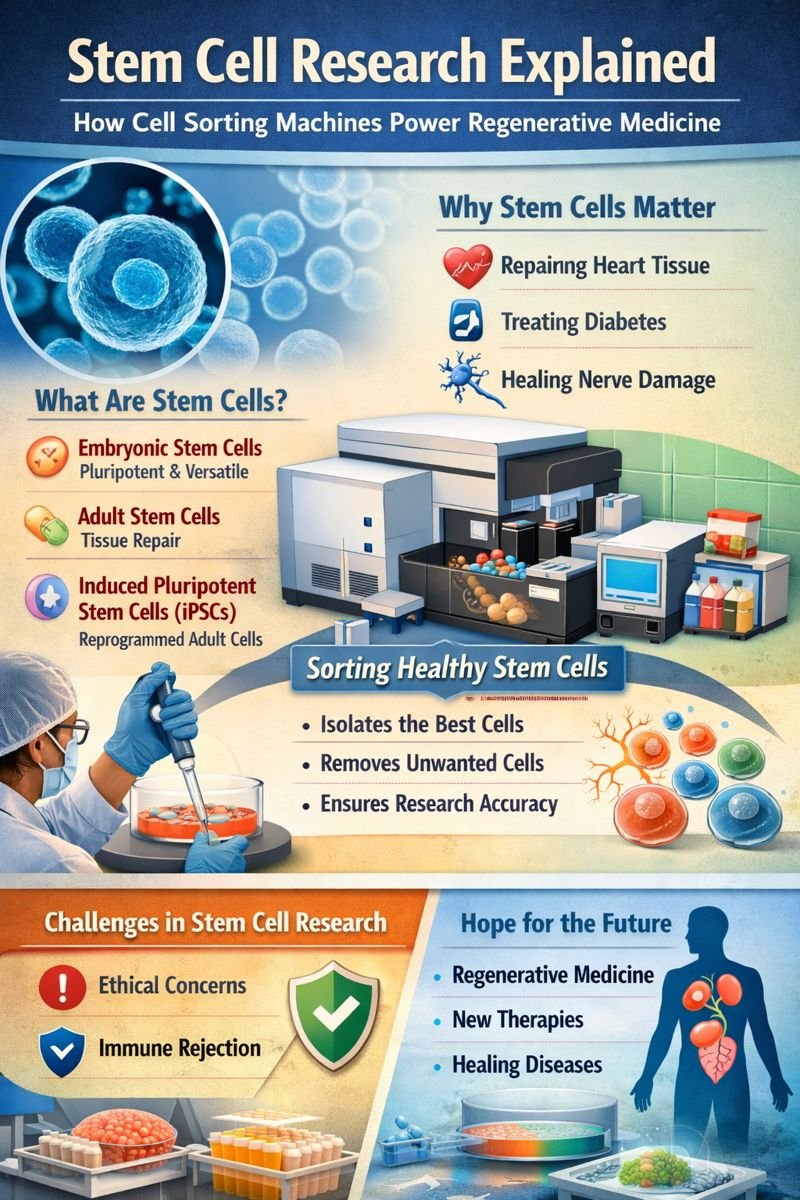
So, stem cells. What are they? Simply put, they’re unspecialized. Most cells in your body already have a job—heart cells beat, skin cells protect, liver cells clean. Stem cells? They’re blank slates. They can become whatever your body needs.
There are a few types. Embryonic stem cells come from very early embryos. They can become almost any cell type. Adult stem cells live in tissues like bone marrow. They’re more limited but still important. Then there are iPSCs—induced pluripotent stem cells. Adult cells, reprogrammed to behave like embryonic ones.
Each type is powerful. But each has challenges. That’s why researchers have to be careful. Every step matters. Even small mistakes can ruin days of work. Handling them isn’t just science. It’s almost an art.
Why Stem Cells Matter in Regenerative Medicine
Regenerative medicine is basically helping your body heal itself. Stem cells are the stars here. They can repair damaged tissue. Replace cells you’ve lost. Maybe even help organs grow back someday.
Think about heart problems, diabetes, and neurological conditions. Stem cells could change the way we treat them. But here’s the thing—you can’t just toss in some cells and hope for the best. They have to be healthy. Functional.
That’s why cell sorting machines are so important. They separate the right stem cells from the rest. The right cells make experiments and therapies work. Without them, scientists would be guessing. And guessing isn’t great when it comes to medicine.
Even after sorting, cells need constant monitoring. Researchers guide them, watch them grow, make sure they’re developing right. It’s a long, careful process. But the payoff? Incredible.
Tools and Techniques Behind Stem Cell Research
Working with stem cells is step-by-step work. Labs grow them in controlled environments. Researchers guide them into specific cell types—maybe nerve cells, maybe heart cells. Growing them isn’t enough. You also need to know which ones will survive.
Precision tools matter. And cell sorting machines play a big role. They let scientists sort cells by size, type, or health. Focus only on the ones likely to thrive.
It sounds technical. But really, it’s about making research reliable. Proper sorting reduces mistakes. Gives accurate results. Saves time. Combine this with genetic testing or imaging, and you get a clear picture of how stem cells behave.
And it’s not just picking cells. The environment matters too. Nutrients, temperature, conditions—all of it affects how cells grow. Small details make a huge difference.
Challenges in Stem Cell Research
Stem cell research is exciting. But tricky. You can’t just let cells grow on their own. Controlling what they become is hard. One wrong signal, and you get the wrong type of cell. Ethics matter too. Especially with embryonic cells. Scientists must follow strict rules.
Handling cells needs care. Even small mistakes ruin results. Cell sorting machines help by making sure the right cells are chosen. Immune rejection is another problem. Sometimes the body sees transplanted cells as foreign. Researchers work around this. It’s delicate work. Every step counts.
Progress can feel slow. But tiny steps build breakthroughs. That’s the beauty of stem cell research—it’s patient work with huge rewards.
Conclusion
Stem cell research is opening doors we only dreamed about decades ago. Healing damaged organs. Treating chronic illnesses. Regenerative medicine could change everything. But progress doesn’t happen by chance. Patience, precision, the right tools—they all matter. Machines like cell sorting machines aren’t just gadgets. They help researchers separate, study, and understand cells properly. Stem cells might become central to medicine soon. And with careful study and innovation, the future of healing looks brighter than ever. You might not notice it every day. But these tiny cells could change how we recover from injuries or disease. And that’s pretty amazing.