Private Christian schools stand out in the education landscape due to their unwavering commitment to developing the whole child—academically, spiritually, and morally. Through a blend of faith-based instruction and academic excellence, these institutions provide K-12 students with a supportive environment that nurtures not only their minds but also their character and sense of community. This approach helps students grow into well-rounded individuals equipped to meet life’s challenges with courage and conviction. To see a powerful example of this kind of education in action, consider the Christian worldview academy Waynesville, which exemplifies the harmonious integration of faith and learning that defines private Christian schooling.
Students in these environments gain a clear vision of how their faith and values intersect with their studies and everyday lives. This supportive foundation allows young learners not just to excel in the classroom but also to develop integrity, empathy, and a sense of purpose. As more families seek educational environments that promote holistic development and strong values, private Christian schools continue to shine as beacons of hope and excellence in education.
Whether by emphasizing a Christ-centered curriculum, fostering close-knit communities, or encouraging students to serve others, these schools are dedicated to forming students who are both intellectually accomplished and spiritually rooted. This educational model recognizes the importance of nurturing each child’s talents and character as a cornerstone of lifelong success.
For families interested in reinforcing faith at home, exploring resources such as the Best Bible verses for kids can offer daily inspiration and spiritual guidance, making faith a living part of children’s everyday experiences.
Integrating Faith and Academics
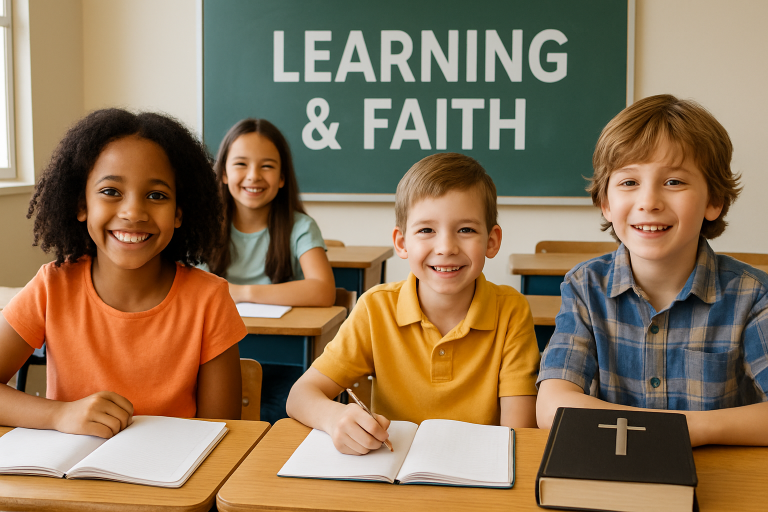
The defining characteristic of private Christian schools is the seamless integration of biblical truth with academic subjects. Each topic—from science to literature—is approached through a Christian worldview, helping students see the connection between faith and knowledge. This approach not only strengthens students’ convictions but also encourages critical thinking as learners are taught to consider how their beliefs inform their understanding of the world. According to Christianity Today, this melding of faith and learning leads to a more meaningful and holistic educational experience that resonates throughout a student’s life.
Emphasis on Character Development
Character education stands at the heart of private Christian schooling. Teachers and administrators intentionally weave values such as integrity, respect, and compassion into their curricula and daily interactions. By creating an environment where ethical behavior is modeled and expected, these schools equip students with the moral compass needed to navigate a complex world. Daily lessons, chapel services, and service projects provide students with practical ways to embody virtues alongside academic achievement.
Personalized Learning Environments
Smaller class sizes are a hallmark of private Christian schools, enabling teachers to provide individualized attention and support for every student. Educators work closely with students to identify learning strengths and challenges, adapting their teaching strategies to meet diverse needs. This personalized approach not only improves academic outcomes but also builds students’ confidence and motivation for lifelong learning. The cohesive, nurturing atmosphere fostered in these schools helps young people reach their full potential both inside and outside the classroom. For an overview of the benefits of small class sizes, see this resource from Education Week.
Community Engagement and Service
Private Christian schools make service an integral part of their mission. Students are often encouraged—and sometimes required—to participate in community service projects, both locally and internationally. These experiences help students develop empathy and a deeper understanding of their role as global citizens. Through direct engagement with those in need, children learn humility, gratitude, and a sense of responsibility to contribute positively to the world around them.
Preparing Students for Higher Education
Academic rigor in private Christian schools is designed to prepare students for higher education and beyond. A challenging curriculum, often complemented by Advanced Placement (AP) and dual enrollment options, lays a strong foundation for college success. Graduates enter higher education with high academic achievement and a sense of direction, empowered by the values and skills instilled during their formative years. Schools offer college counseling, SAT/ACT preparation, and mentorship programs, ensuring that each student has the guidance they need to pursue their goals with confidence.
Embracing Technological Advancements
Recognizing the critical role of technology in education, many private Christian schools are integrating cutting-edge instructional tools into their classrooms. From interactive whiteboards to e-learning platforms and AI-enabled programs, educators harness technology to make learning engaging and accessible. Some schools have adopted innovative hybrid models that blend technology-based core instruction with hands-on life skills development. Balancing digital advancements with mentorship and personal interaction ensures a well-rounded, digitally literate student body that is ready for the rapidly changing world.
Parental Involvement and Partnership
Active parental participation is a distinctive feature of private Christian education. Families are viewed as vital partners, working closely with teachers and school leaders to reinforce classroom lessons at home. Schools often facilitate workshops, family events, and volunteer opportunities to strengthen these bonds, building a community that supports and uplifts every child. This partnership ensures that students feel supported not only academically but also in their personal and spiritual growth.
Conclusion
Private Christian schools offer a unique blend of academic rigor, faith integration, and character development that shapes students for success in every area of life. By fostering a holistic approach to education—equipping students intellectually, morally, and spiritually—these institutions prepare young people to navigate the complexities of the modern world with skill, integrity, and a strong sense of purpose.