Introduction
Industrial productivity hinges on the longevity of critical machinery and equipment. Frequent breakdowns not only drain budgets but also disrupt production schedules, making equipment durability a top priority in the industry. Surprisingly, a game-changing solution is often found in the strategic application of chemical adhesives.
These specialized compounds do more than just bond parts; they reinforce structural integrity, reduce vibration, prevent leaks, and protect against corrosion. Companies seeking to minimize downtime and maintenance costs are increasingly turning to major industrial suppliers in North Carolina and across the nation for advanced adhesive solutions, recognizing them as essential components in modern maintenance strategies.
Extended equipment life, reduced labor hours, and fewer emergency repairs are just some of the measurable benefits. While traditional mechanical fasteners remain relevant, the right adhesive can outperform or even replace them in specific applications, supporting both operational efficiency and workplace safety.
Strategic reliance on chemical adhesives is especially relevant as the complexity of manufacturing systems grows, with multiple material types and challenging operating environments demanding innovative and adaptive bonding solutions.
The Role of Chemical Adhesives in Equipment Maintenance
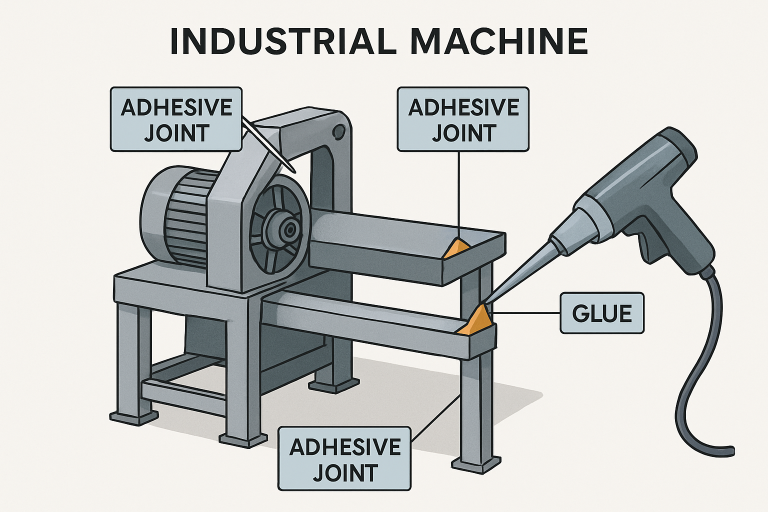
In plant maintenance programs, chemical adhesives serve as critical tools for both assembly and repair. They firmly secure fasteners, seal flanges, and patch cracks, helping equipment withstand harsh operational stresses such as vibration, heat, and chemical exposure. By eliminating micro-movements between joined surfaces, adhesives significantly decrease the likelihood of joint fatigue and mechanical failure—a leading cause of industrial downtime. Modern adhesives can mitigate wear at vulnerable junctions, prevent intrusion of moisture and contaminants, and reduce the formation of rust—all of which can severely affect long-term equipment performance. In many sectors, adhesives have become irreplaceable in extending service intervals and reducing costly unplanned outages.
Types of Chemical Adhesives Used in Industry
- Epoxy Adhesives: These deliver exceptional bonding strength, chemical resistance, and high-temperature performance. They are ideal for securing heavy machinery parts and structural frames.
- Polyurethane Adhesives: Offering versatility, resilience, and impact resistance, they are suitable for dynamic components and assemblies experiencing vibration or thermal cycling.
- Anaerobic Adhesives: Curing only in the absence of air, these adhesives are especially prized for thread-locking and forming robust seals in metal pipe joints and fasteners.
- Silicone Adhesives: Known for flexibility and resistance to extreme temperatures, silicone adhesives are widely used for gaskets, electrical enclosures, and high-heat environments.
Benefits of Integrating Chemical Adhesives into Maintenance Plans
The strategic use of chemical adhesives brings multiple tangible advantages to industrial maintenance routines:
- Enhanced Equipment Reliability: Strong adhesive bonds minimize the risk of failure at joints and contact surfaces, resulting in greater overall machine reliability.
- Cost Effectiveness: Preventing failures and extending part lifespans leads directly to reduced total maintenance expenditures and operational savings.
- Improved Workplace Safety: By preventing detachment or leaks, adhesives play a subtle yet vital role in preventing accidents and ensuring compliance with safety regulations.
- Continuous Operations: With fewer stoppages, companies meet production quotas more reliably, gaining a competitive advantage through improved uptime.
Modern adhesives offer performance benefits across industries—from heavy manufacturing to electronics—allowing facilities to tailor solutions for virtually any application.
Recent Innovations in Adhesive Technology
The landscape of adhesive technology is shifting rapidly, driven by a focus on environmental performance and advanced materials science. Bio-derived adhesives, such as hot-melt compounds sourced from renewable industrial byproducts, are setting new benchmarks in bond strength while supporting sustainability initiatives. Developments in nanotechnology have also enabled adhesives with superior thermal, electrical, and chemical properties, thereby enhancing their reliability in mission-critical settings.
These innovations enable manufacturers to strengthen equipment while reducing their carbon footprint, making modern adhesives not only practical but also ethical choices in line with industry best practices.
Implementing Adhesive Solutions: A Step-by-Step Guide
- Assessment: Systematically inspect equipment to identify where adhesive applications can address known wear points, leaks, or fastener loosening.
- Selection: Match the adhesive’s chemical and mechanical properties to the materials, anticipated stresses, and environmental conditions.
- Application: Adhere strictly to the manufacturer’s surface preparation and curing guidelines, as process errors can impair bond strength and longevity.
- Inspection: Establish a regular inspection schedule for all bonded joints to detect fatigue, delamination, and other signs of deterioration early.
Conclusion
The practical and intelligent use of chemical adhesives is becoming a cornerstone of sustainable industrial operations. Facilities investing in advanced adhesives gain durability, drive cost savings, and support safer working conditions. Staying informed about the latest in adhesive technology and evolving your maintenance approach is the surest way to maximize both equipment longevity and business profitability in today’s demanding industrial landscape.