
In Pennsylvania, where heavy winter snowfall and liberal use of road salt are facts of life, rust isn’t just a cosmetic nuisance. It is a serious issue that endangers your car’s safety and longevity. For Pennsylvania drivers, understanding how corrosion develops and learning ways to guard your vehicle against it is crucial. Proactively rust proofing car components is a preventative strategy that can save money and, more importantly, protect lives on tricky Northeast roads.
The state’s fluctuating climate, with wet springs and icy winters, creates ideal conditions for rust to form and silently damage vital components. Ignoring the early signs of corrosion can lead to costly repairs or worse, compromised driving safety. Local vehicle owners must not only prioritize rust prevention but also schedule routine inspections to identify threats before they escalate. Pennsylvania’s hilly terrain and scenic drives are beautiful, but they can exacerbate rust risk as vehicles are exposed to muddy conditions and frequent stop-and-go driving. For year-round cars, especially those not garaged, constant exposure to salt, moisture, and debris increases the likelihood of rust-related failures. Using advanced rust protection solutions tailored for Pennsylvania’s conditions, drivers can extend the life of their cars and avoid the region’s notorious corrosion pitfalls. Proper maintenance routines and informed decision-making are key to keeping vehicles both visually appealing and structurally sound.
The Silent Progression of Rust in Pennsylvania
Rust occurs when iron or steel comes into contact with oxygen and water, initiating a chemical process known as oxidation. In Pennsylvania, the issue is intensified by winter road treatments, salt and other deicing agents accelerate the reaction, rapidly breaking down unprotected metal. Many local vehicles develop rust beneath the surface, often unnoticed until significant damage has already occurred. According to the Consumer Reports guide on rust prevention, states like Pennsylvania experience higher corrosion rates due to these conditions. This progression is especially dangerous for year-round vehicles, as even brief exposure to salt or water between washes can lead to persistent corrosion. When rust penetrates the undercarriage or critical supports, the structural integrity and overall safety of your vehicle are compromised.
Structural Components at Risk in Pennsylvania Vehicles
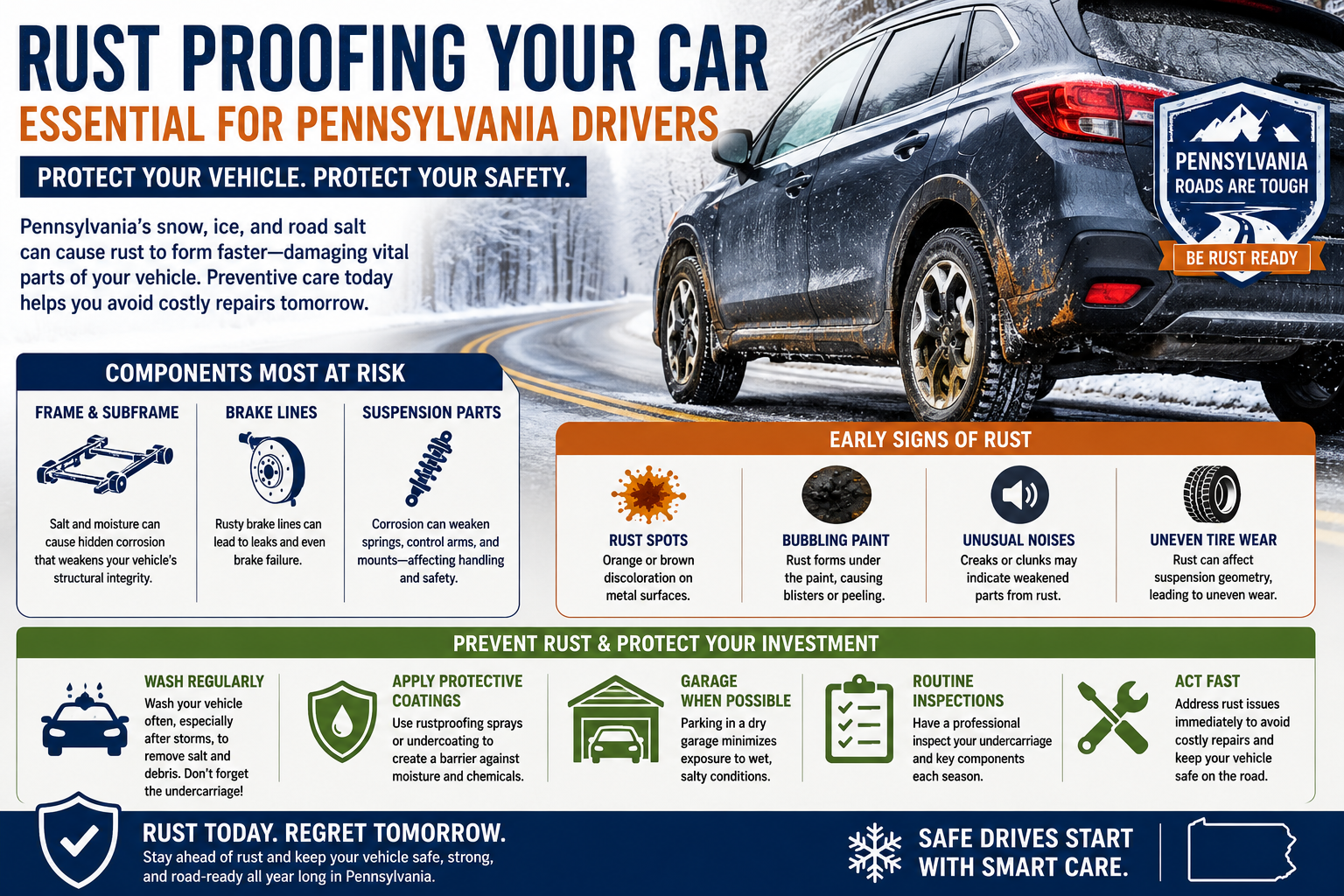
Certain vehicle components are more vulnerable to rust in our region:
- Frame and Subframe: These are vital to keeping your car safe in an accident. In Pennsylvania, salt-laden slush accumulates and lingers on the frame, increasing the risk of hidden corrosion.
- Brake Lines: Local mechanics frequently find corroded brake lines on Pennsylvania vehicles, a scenario that can cause sudden brake loss during our stop-and-go commutes or hilly travels.
- Suspension Components: Springs, control arms, and shock mounts that are exposed or untreated often succumb to rust. A weakened suspension can lead to loss of control, especially on slick or icy roads.
Recognizing Early Signs of Rust
Finding rust early is vital for Pennsylvania drivers. Key warning signs include:
- Visible Rust Spots: Look for orange or brownish discoloration, especially on the wheel wells, rocker panels, and undercarriage.
- Bubbling Paint: Subsurface rust can push up beneath the paint, leading to peeling or blisters.
- Unusual Noises: Listen for new creaks or clunks; these may indicate weakened structural parts as a result of rust.
- Uneven Tire Wear: Rust can distort suspension geometry, showing up as irregular tire wear patterns.
Preventive Measures for Pennsylvania Drivers
- Frequent Washing: Especially after storms, washing your car helps remove corrosive salt residue. Pay extra attention to the undercarriage.
- Apply Protective Coatings: Treating susceptible areas with sealants or specialized sprays can shield your vehicle from moisture and chemicals.
- Opt for Garage Parking: Whenever possible, store your car in a dry place to minimize prolonged exposure to Pennsylvania’s damp weather.
- Routine Professional Inspections: Schedule thorough undercarriage and frame checks each season. Certified mechanics understand local rust patterns and can spot early damage.
When You Need Professional Help
If you spot major rust or notice a sudden change in how your car handles, it’s vital to visit a trusted Pennsylvania mechanic right away. Significant corrosion, particularly on supports, brake lines, or suspension parts, requires expert evaluation. Ignoring the issue could result in much steeper repair costs, not to mention the potential risk of sudden equipment failure on the road. The National Highway Traffic Safety Administration also stresses the importance of addressing rust before it leads to critical safety failures.
Conclusion
For Pennsylvania drivers, rust is not merely an unsightly nuisance but a genuine threat to road safety, especially given the state’s challenging weather and road conditions. By using effective protection methods, staying vigilant for early signs, and addressing corrosion promptly, you can safeguard your vehicle’s integrity and your peace of mind. Regular care, preventive action, and smart maintenance routines are the best ways to fight off the state’s persistent rust challenges and enjoy safer, trouble-free driving in every season.