
Buying kratom involves more than choosing a familiar product name. The most useful comparison looks at who is responsible for the product, whether its label is easy to understand, and whether documentation can be connected to the exact item being sold.
Online shops for adults 21 and older that organize their catalogs around identifiable makers and product formats, including powders, capsules, extracts, shots, gummies, drinks, and kava, can make this comparison easier. Listings that emphasize maker identity, labeled amounts, package details, and available lab information are more useful for research than listings that present everything as one unbranded house line.
What Counts as a Named Maker?
A named maker, such as Old World Leaf, is a company whose identity appears on the package or product page. That company may manufacture the product, own the brand, distribute it, or perform more than one of those roles. The retailer may be separate from the maker.
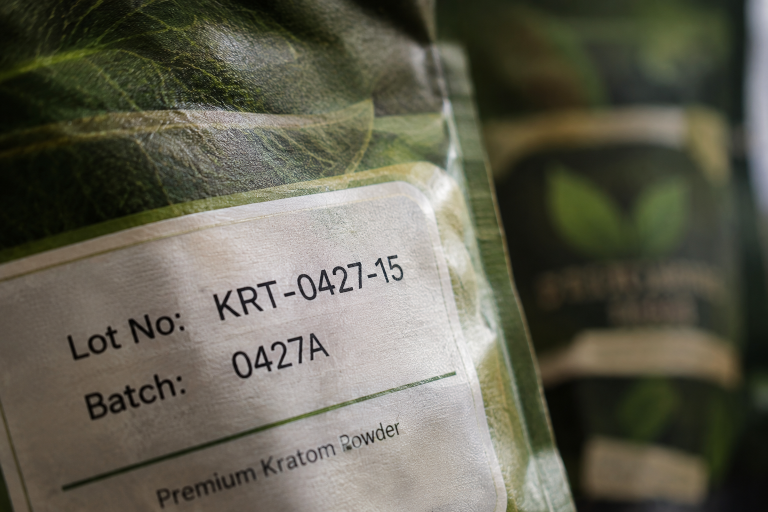
Before buying, identify who made the product, who packaged it, who is selling it, and whether the package includes a lot or batch number. Those details create a trail that can help a buyer compare listings and ask more useful questions.
What Is an Unbranded House Line?
A house line is sold under a retailer’s own label. The retailer may work with a contract manufacturer, processor, or importer, but the supplier may not be visible to the shopper. That arrangement does not establish quality by itself. A well-documented house product can be easier to evaluate than a poorly documented product from a recognizable name.
The central question is not whether the package has a famous logo. It is whether the seller can clearly explain the product’s identity, labeling, batch handling, and available testing.
Named Makers and House Lines: The Main Differences
- Traceability: A named maker often gives the buyer a company to research. With a house line, traceability depends on the retailer’s disclosure.
- Comparison shopping: Products from a named maker may be available through more than one retailer. A house line may only be available from its own seller.
- Customer support: Named products may involve both the retailer and maker. For a house line, the retailer is usually the primary contact.
- Pricing: A lower price can be attractive, but it does not replace clear information about package size, format, and labeled amount.
- Lab access: In either category, a report is most useful when it can be matched to the actual lot being shipped.
Why the Maker’s Name Matters
A visible maker provides consumers with a starting point for reviewing product ranges, labeling practices, contact information, and published documentation. Still, recognition alone does not prove that a particular batch is consistent or appropriate. The strongest comparison combines the maker’s identity with current, product-specific details.
How to Review a Certificate of Analysis
A certificate of analysis, often called a COA, is a laboratory document for a tested sample. It is most useful when the report is clearly connected to the product in hand.
- Find the laboratory name and report date.
- Match the product name, format, and lot number to the package.
- Review the whole test panel, not only a highlighted result.
- Check whether the report applies to the finished format, rather than a vague product category.
- Prefer specific results over a general “lab tested” statement.
The FDA has published heavy-metal testing of kratom products, which is a useful reminder that product identity and contaminant screening deserve attention when reviewing available documentation.
Read the Label Before Comparing Prices
Powder bags, capsules, and liquid shots use different labeling. Compare package size, servings, amount per piece, format, shipping, and return terms. Powder is sold by weight and may need measuring; capsules by count. Concentrated extracts and shots require careful label checks. Gummies, tablets, and drinks may list amounts per piece, serving, bottle, or volume. Compare equivalent quantities, not just package prices.
What to Ask About a House Line
- Who manufactures or supplies the product?
- Does the seller retain lot records?
- Is testing performed by batch, and can the buyer review it before purchase?
- Does the report match the lot being shipped?
- Are storage, shipping, age, and return policies easy to find?
- Do product descriptions stay limited to clear, supportable information?
Red Flags in Either Category
- No contact details for the maker, importer, or seller.
- Missing lot numbers or unclear product identity.
- Old, generic, or unmatched lab reports.
- Labels that hide the per-serving amount.
- Broad promises or claims that sound certain.
- Pressure to purchase large quantities before evaluating the format.
- No clear age gate or shipping restrictions.
A Simple 2026 Scorecard
Rate each product from zero to two points in five areas: maker clarity, batch tracking, testing access, label quality, and seller transparency. A total score can help organize a comparison, but it is not a guarantee. A lower-priced house line can score well when its documentation is clear, while a familiar maker can score poorly when a listing lacks current details.
Named Maker or House Line: Which Is Better?
Neither category wins automatically. Named makers may appeal to buyers who want a visible company identity and the ability to compare products across retailers. House lines may appeal to buyers who value direct retailer support and pricing, provided the supply chain and records are clear.
Labels also matter because federal agencies have focused on distinguishing ordinary botanical material from more concentrated or altered products. The current discussion around enhanced kratom products reinforces the need to read format and ingredient information closely.
A Five-Minute Buying Process
- Confirm that the product can legally be purchased and delivered in your location.
- Identify the maker, retailer, and product format.
- Read the complete label, including amount and serving information.
- Locate the lot number and any related COA.
- Compare cost only with similar formats and labeled amounts.
- Save the receipt, product page, and batch details for future reference.
Final Checklist
- Named maker or clearly disclosed manufacturer.
- Readable format, package size, and labeled amount.
- Matching lot or batch information.
- Current documentation when available.
- Transparent contact, age, shipping, and return policies.
- No exaggerated or misleading claims.
Choosing between a named maker and a house line does not need to be a guess. The stronger option is the one with the clearest identity, most readable label, and most useful batch documentation. Brand recognition can make research easier, but careful comparison remains more important.