
Introduction
Investment management has entered a new era where sophisticated analytics and automation are reshaping the landscape. Modern investors are increasingly relying on data-driven strategies to gain a crucial competitive advantage, enhancing decision-making, proactively managing risks, and accelerating value creation. For private equity firms and fund managers, insights from vast datasets unlock new opportunities from identifying untapped markets to driving revenue growth for portfolio companies through smart digital initiatives. As technology evolves, these techniques are becoming essential tools for optimizing returns and scaling impact across portfolios.
Investors are moving beyond traditional due diligence and performance assessment, embracing a proactive, forward-looking approach powered by artificial intelligence (AI), machine learning (ML), real-time analytics, and cloud technologies. Adopting these innovations enables them to spot emerging risks earlier, seize fleeting opportunities more quickly, and create sustainable value for stakeholders. The momentum behind data-driven strategies is only accelerating as global markets grow more complex and interconnected.
Investment firms are navigating an ever-evolving landscape in which integrating advanced data analytics has shifted from a differentiator to a necessity. Data-driven strategies are now fundamental for extracting actionable insights, enabling investors to adapt more fluidly to market fluctuations. Enhancing portfolio value requires algorithmic precision and the effective use of both structured and unstructured data.
The Rise of Data-Driven Investing
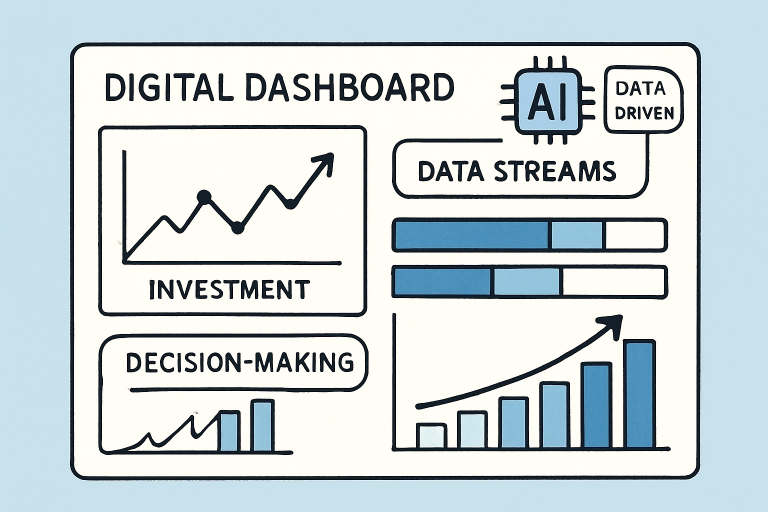
Leveraging voluminous, diverse data streams is rapidly becoming a hallmark of high-performing investment managers. Data-driven investing empowers investors to detect patterns, forecast trends, and deploy capital more wisely than traditional approaches. According to Bloomberg, the widespread adoption of real-time analytics is streamlining front-office operations and equipping managers to respond swiftly across different asset classes. These insights separate high-performing portfolios from those that lag the benchmark.
With vast pools of alternative data now available, ranging from global supply chain analytics to satellite imagery, ESG scores, and digital footprint analysis, investors are increasingly adept at gaining unique viewpoints on market movements. Interpreting these signals with cutting-edge tools leads to outperformance, as quantitative and systematic approaches eclipse legacy manual analysis.
Artificial Intelligence in Portfolio Management
Artificial intelligence stands at the core of the new investment paradigm. Industry leaders such as BlackRock deploy AI-powered algorithms to process a wide range of financial and non-financial indicators, seeking actionable alpha in real time. According to BlackRock’s insights on AI in investing, AI-driven systems can rapidly process market signals, news events, and transactional data, thereby optimizing returns, improving diversification, and reducing volatility.
AI models offer more than speed they deliver nuance, adapting to changing market regimes and automatically calibrating portfolio exposures as new risks and opportunities emerge. This capability gives investors an enduring strategic advantage as global markets become more dynamic and unpredictable.
Real-Time Data Feeds and Cloud Technology
Harnessing real-time data feeds has enabled investment operations to deploy an unprecedented level of agility. Decision-makers no longer operate in a world of lagging indicators live data streams now serve up market conditions, liquidity shifts, and even chatter from alternative sources as they happen. Combined with the scalability and flexibility of cloud platforms, organizations process, store, and secure immense amounts of information while maximizing operational resilience.
As highlighted by The Wall Street Journal, real-time data analytics and cloud adoption are now foundational for asset managers eager to streamline workflows, automate compliance, and enhance cross-team collaboration.
Machine Learning for Risk Assessment
Advanced machine learning models are enhancing how investment teams analyze and quantify risk. ML algorithms digest historical pricing, peer benchmarks, sentiment data, and macroeconomic indicators to generate high-precision risk models. JPMorgan Chase, for instance, has pioneered machine learning systems able to scan thousands of analyst reports and forecast changes in a firm’s risk profile or industry outlook.
By continually retraining these models, investors can capture emerging risk factors, such as evolving consumer preferences or geopolitical disruptions, far earlier than previously possible. This forward-looking approach establishes a strategic shield for long-term capital preservation, offering critical foresight amid volatile conditions.
Natural Language Processing for Market Insights
The ability to process vast troves of textual data is transforming investment research. Natural Language Processing (NLP) tools now sift through news, earnings calls, regulatory filings, and social media to capture market sentiment and surface new trading signals. Goldman Sachs’ implementation of NLP, for example, allows analysts to extract key themes from ongoing developments, strengthening the credibility and timeliness of investment recommendations.
NLP brings an added layer of context, enabling the detection of sentiment-driven inflection points and early warnings of risks that would escape purely quantitative systems. As unstructured data grows in prominence, NLP’s role is set to expand across the investment management value chain.
Case Studies of Successful Implementation
Forward-thinking firms have demonstrated dramatic gains by embracing data-driven approaches. BlackRock’s systematic investing, driven by AI and quantitative analysis, is a high-profile example of harnessing technology to generate “alpha” in volatile markets consistently. Another example can be seen in smaller boutique funds that leverage custom data feeds and machine learning algorithms to outperform traditional managers in niche markets, underscoring the accessibility of these innovations as cloud costs decline and AI tools democratize.
These real-world successes highlight the value of a robust, integrated data strategy in navigating the complexities of the global financial landscape. Firms with flexible, data-centric cultures are outperforming hesitant peers and delivering superior value to investors and portfolio companies alike.
Conclusion
Data-driven investing is reshaping the future of portfolio management and value creation. Incorporating advanced analytics, AI, and real-time insights empowers investors to uncover new opportunities, manage risk intelligently, and build resilient portfolios. As the finance industry continues to innovate, firms that adopt these strategies will remain at the vanguard of delivering meaningful performance and sustainable growth in an increasingly data-rich world.