The global real estate market has always been a reflection of broader economic forces — shaped by interest rates, demographic shifts, geopolitical events, and evolving lifestyle preferences. In recent years, however, the pace of change has accelerated dramatically. From post-pandemic migration patterns to the rise of sustainable development, the industry is undergoing a transformation that touches every segment, from affordable housing to ultra-premium properties. Understanding these trends is not just useful for investors and developers — it is essential for anyone looking to buy, sell, or navigate property in today’s complex landscape.
The Shifting Landscape of Global Property Demand
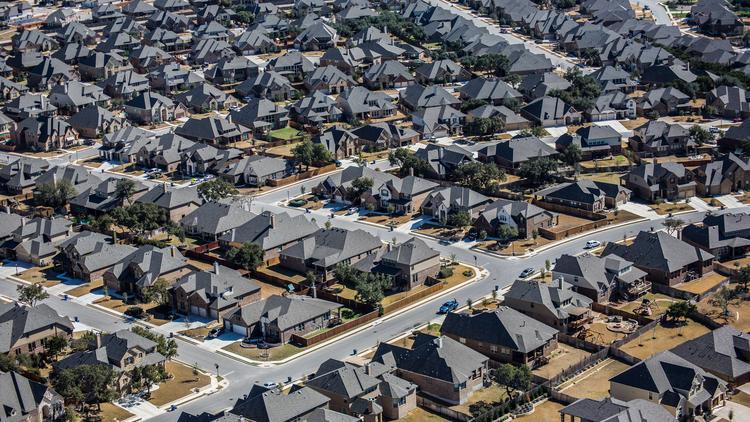
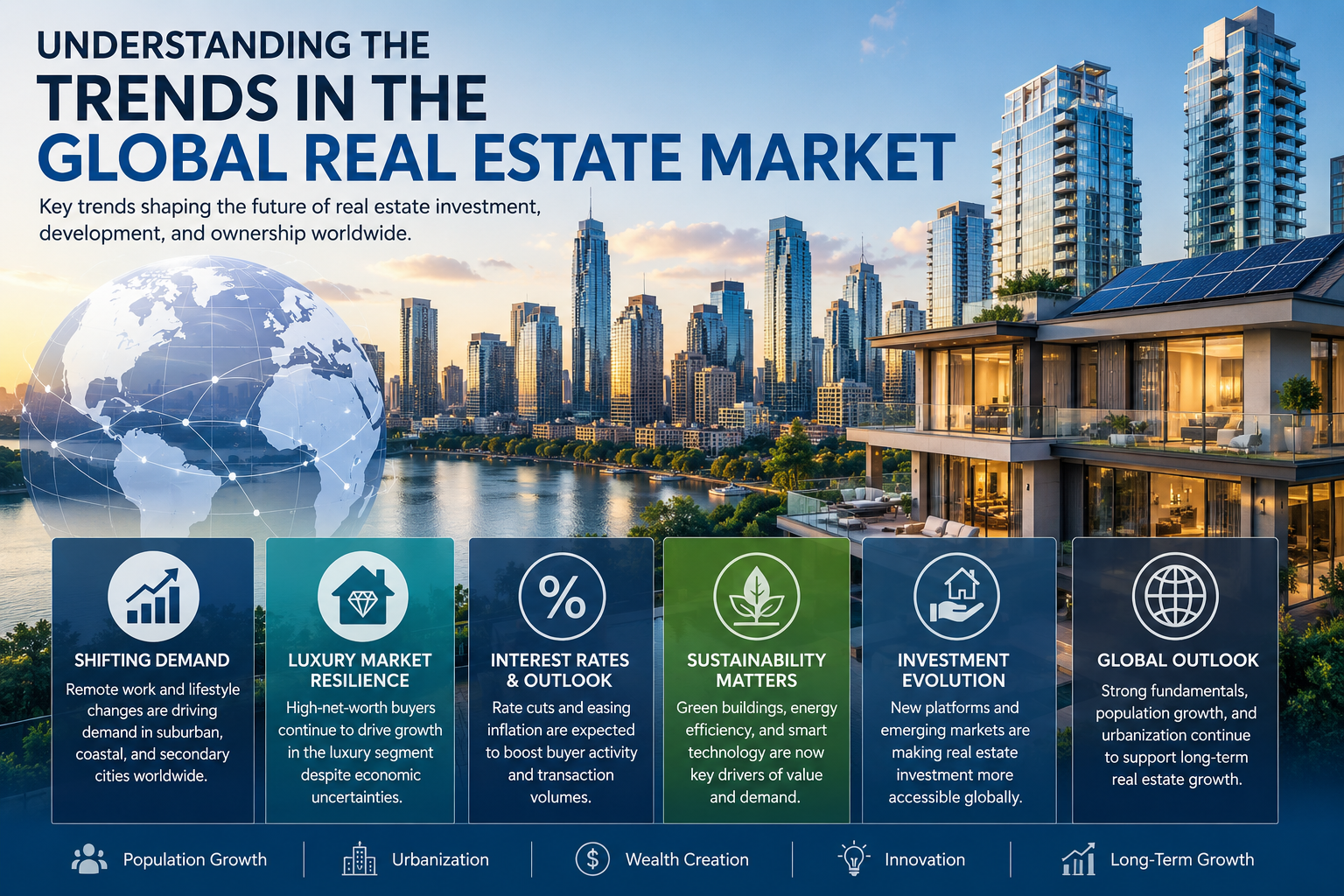
One of the most significant developments in recent years has been the geographic redistribution of property demand. Remote work, which became normalized during the pandemic, permanently altered where people choose to live. Urban centers that once commanded steep premiums began losing residents to suburban and semi-rural markets, while smaller cities and coastal towns saw unprecedented demand. In the United States, markets like Austin, Nashville, and Boise experienced price surges of over 40% between 2020 and 2023 before cooling slightly as interest rates rose.
Internationally, the picture is similarly dynamic. According to Knight Frank’s Global House Price Index, residential property prices rose in 87% of tracked markets in the years immediately following the pandemic. While the rate of growth has since moderated in many regions, demand remains structurally strong in markets with supply constraints, strong employment bases, and desirable quality of life metrics. Countries like Portugal, the UAE, and Canada continue to attract significant foreign buyer interest.
The Luxury Segment: Resilience Amid Uncertainty
While mainstream housing markets have wrestled with affordability challenges and rate-driven slowdowns, the luxury segment has demonstrated remarkable resilience. High-net-worth individuals tend to be less sensitive to mortgage rate fluctuations, as many luxury transactions are conducted in cash or with favorable financing arrangements. This insulates the top tier of the market from the rate volatility that has dampened activity in the mid-range segment.
The Pacific Northwest is a compelling example of this dynamic. Buyers seeking elevated lifestyles, scenic surroundings, and proximity to world-class amenities have kept demand for premium properties strong, making the guidance of a Luxury Real Estate listing agent near Woodinville, Washington, increasingly valuable for sellers navigating a discerning buyer pool. Markets like Woodinville, with its wine country appeal, waterfront access, and connection to major tech employment hubs, exemplify the type of lifestyle-driven enclave that continues to command premium valuations even as broader market conditions fluctuate.
Globally, the luxury market is projected to grow at a compound annual growth rate of approximately 4.5% through 2028, according to industry analysts. Super-prime properties — those priced above $10 million — saw record transaction volumes in cities such as Dubai, New York, London, and Singapore in 2023 and 2024, reflecting continued wealth concentration among the world’s top earners.
Interest Rates, Inflation, and the Road to Stabilization
Perhaps no force has shaped the real estate market more profoundly in recent years than central bank monetary policy. In response to surging post-pandemic inflation, the U.S. Federal Reserve raised its benchmark interest rate from near zero in early 2022 to over 5% by 2023. Similar tightening cycles occurred in the Eurozone, the United Kingdom, Canada, and Australia. The effect on housing was swift and significant — mortgage rates in the U.S. climbed above 7% for the first time in over two decades, dramatically reducing purchasing power and cooling transaction volumes.
However, with inflation gradually retreating toward central bank targets, a new phase appears to be unfolding. Rate cuts began in several major economies in 2024 and 2025, and the expectation of continued easing is already influencing buyer sentiment. Pent-up demand, which built throughout the high-rate period, is poised to re-enter the market as borrowing becomes more accessible. This creates a potentially significant uptick in transaction activity across both residential and commercial segments in the years ahead.
Sustainability and Smart Development as Market Drivers
A growing trend reshaping real estate at every price point is the increasing emphasis on sustainability and energy efficiency. Buildings account for approximately 40% of global energy consumption and nearly 30% of carbon dioxide emissions, according to the International Energy Agency. Regulatory pressure, combined with rising energy costs and evolving buyer preferences, is pushing developers toward greener construction standards at an accelerating pace.
Green-certified buildings now command measurable rent and price premiums in many markets. In Europe, energy performance certificates have become central to property valuations, and similar frameworks are gaining traction in North America and Asia. Smart home technology — from automated climate systems to solar integration and EV charging infrastructure — is increasingly a standard expectation in new developments rather than an optional upgrade.
Emerging Markets and the Democratization of Real Estate Investment
Technology is also transforming who can participate in real estate investment. Fractional ownership platforms, real estate investment trusts, and tokenized property assets are opening access to markets that were once the exclusive domain of institutional players. Emerging markets in Southeast Asia, sub-Saharan Africa, and Latin America are drawing attention from global investors seeking higher yields and growth potential compared to saturated Western markets.
The global real estate market, in its complexity and scale, remains one of the most consequential arenas in the world economy. For buyers, sellers, and investors alike, staying attuned to these evolving trends is not a luxury — it is a strategic necessity.