
A DUI arrest can be disorienting. There may be paperwork, a court date, vehicle-release issues, and questions about whether you can still drive. The first 10 days often matter because important deadlines may arrive before you have had time to understand the process. Speaking with a San Bernardino DUI attorney can help someone identify immediate obligations and avoid decisions based on assumptions.
This guide provides a practical overview of what may happen after a California DUI arrest. Every case has different facts, and local procedures can vary, particularly where an accident, injury, prior allegation, commercial license, probation status, or suspected drug impairment is involved. An arrest starts a legal process. It does not itself establish guilt or guarantee a conviction.
What Happens in the First Few Hours
After an arrest, a person may be transported for booking, photographed, fingerprinted, searched, and held until release. Release can occur through a citation, bail, or another approved process. The timing depends on the allegation, local procedures, outstanding warrants, injuries, prior history, and other circumstances.
It is usually unproductive to argue over every detail of the case during a traffic stop or booking. A calmer approach is to provide required identification, follow lawful instructions, keep track of personal property, and avoid volunteering explanations about drinking, medication, travel plans, or conversations that may later be misunderstood.
Which Documents Should Be Saved
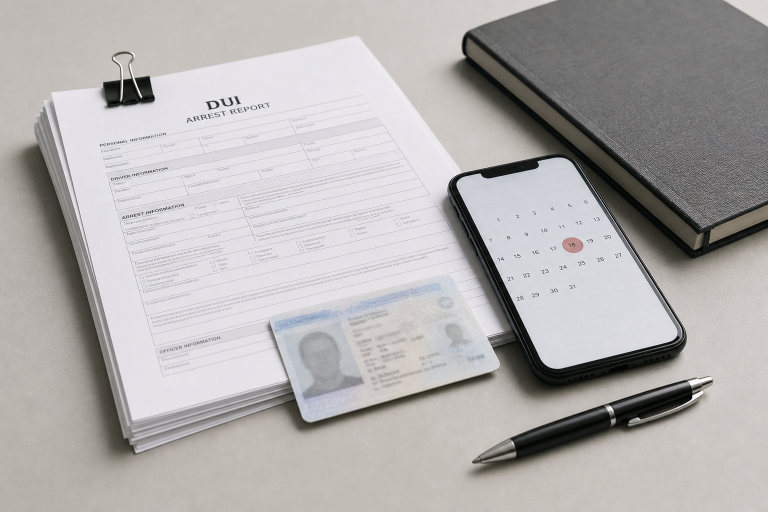
Paperwork from an arrest should be treated seriously. Put every document in one location, photograph each page clearly, and create secure digital backups. Useful records commonly include:
- The citation or notice to appear.
- A temporary driver’s license or suspension notice.
- Booking and release paperwork.
- Tow, impound, and vehicle-storage records.
- Property receipts and test-related paperwork.
- Instructions about court, release conditions, or required programs.
Write down the dates shown on each form and place reminders on multiple calendars. Stress can make even a clearly printed deadline easy to overlook.
Why the DMV Deadline Matters
The DMV process is separate from the criminal case. While the criminal court addresses the charges, the DMV may take administrative action involving driving privileges. California law requires that a person who receives a notice of action request a hearing within 10 days, so promptly reviewing the notice of action regarding driving privileges is critical.
Take these steps as soon as possible:
- Read the temporary license and suspension-related documents from beginning to end.
- Identify the exact date the notice was served.
- Calculate and calendar any stated deadline.
- Keep proof of a hearing request, including confirmation numbers or emails.
- Do not assume that a pending court case automatically pauses DMV action.
How the Criminal Court Process Begins
The first court appearance is often an arraignment. At that hearing, the court may identify charges, advise the accused of rights, address release conditions, and set future dates. Bring all paperwork, arrive early, and comply with instructions listed on the citation or release documents.
A first appearance is generally not the point to provide a detailed personal account to the judge. Later stages may include review of police reports and discovery, examination of breath or blood-test records, pretrial conferences, evidence motions, negotiations, and trial preparation. Cases move at different speeds depending on court calendars, witnesses, laboratory work, and disputed issues.
How to Preserve Useful Evidence
As soon as it is practical, create a private, factual timeline. Record the stop location, approximate times, weather, road conditions, lighting, officer statements, field tests, food or medication consumed, medical conditions, and names of possible witnesses. Focus on what you remember, not guesses about what a detail might mean legally.
Also, identify businesses, residences, or intersections that may have security footage. Video can be overwritten quickly, so potential footage should be identified without delay. Do not delete or edit texts, photos, location records, videos, social-media content, or call logs. Changing records can cause additional complications.
What to Know About Alcohol and Chemical Testing
Roadside screening and post-arrest chemical testing are not necessarily the same thing. Legal obligations can depend on the test, the timing, the person’s age, probation status, license class, and the circumstances of the arrest. Individualized advice matters before concluding what a particular result means.
Test evidence may involve more than a final number. A thorough review can examine timing, device records, collection procedures, sample handling, officer instructions, medical factors, and laboratory practices. Alcohol can affect judgment, coordination, and reaction time, which are skills needed for safe driving, as explained in federal information about alcohol-impaired driving.
Common Mistakes to Avoid
- Ignoring a DMV notice or deadline.
- Missing a scheduled court appearance.
- Posting details, photos, or opinions about the arrest online.
- Deleting messages or digital records.
- Guessing about whether driving is currently permitted.
- Discussing case details with witnesses before getting advice.
- Assuming that an arrest automatically means a conviction.
Many people focus only on the criminal court. At the same time, they may need to address DMV issues, insurance questions, employment concerns, vehicle-storage fees, and transportation arrangements.
When to Seek Legal Guidance
Early legal guidance can clarify deadlines, distinguish the DMV matter from the criminal case, and help identify records that should be preserved. Prompt assistance may be particularly important when the matter involves a prior DUI allegation, collision or injury, commercial driver license, refusal allegation, prescription medication, suspected drug impairment, underage driver, probation, immigration issue, or professional-license concern.
Frequently Asked Questions
Does a DUI arrest mean there will be a conviction?
No. An arrest begins the process, but the charge must still be addressed through the applicable legal proceedings.
Is the DMV case the same as the court case?
No. The DMV matter concerns driving privileges, while the criminal court addresses the criminal charges. They can proceed separately.
What if the court date is unclear?
Review every document and contact the court identified on the paperwork. Do not rely on memory or informal messages.
Can someone discuss the arrest on social media?
It is generally wiser not to post about an active case. Online comments and private messages can be copied, shared, or taken out of context.
Conclusion
The first days after a DUI arrest can feel chaotic, but a careful checklist creates order. Save every document and calendar, note all deadlines, attend court as directed, preserve potential evidence, and avoid public discussion of the incident. Those steps do not determine the outcome, but they can help protect options while the legal process moves forward.