When a family member dies, practical tasks often arrive before anyone has had time to process the loss. A will may be in a desk drawer, bank statements may be scattered across several accounts, and relatives may have different ideas about what should happen next. A family-ready plan creates a clear starting point without assuming that every estate follows the same path. Families who want a fuller overview of court-supervised administration can review this step-by-step California probate process for attorneys, then use the information below to prepare records, protect property, and identify questions that may require professional guidance. Good preparation is not legal advice, but it can make later decisions more informed.
Why Early Organization Matters
Estate matters become more difficult when important information is missing. For example, a family may find an older will but not the account statements needed to determine whether the listed assets still exist, have beneficiaries, or have been transferred into a trust. Missing documents can lead to duplicate work, missed bills, and disputes over what the deceased owned. A simple estate file, whether physical or secure digital, helps everyone work from the same information. Include a task list, a calendar for deadlines, copies of communications, and a record of every expense paid for the estate. This does not replace advice from an attorney, accountant, or financial professional. It gives those professionals and family members a more organized foundation.
Build An Estate Information File
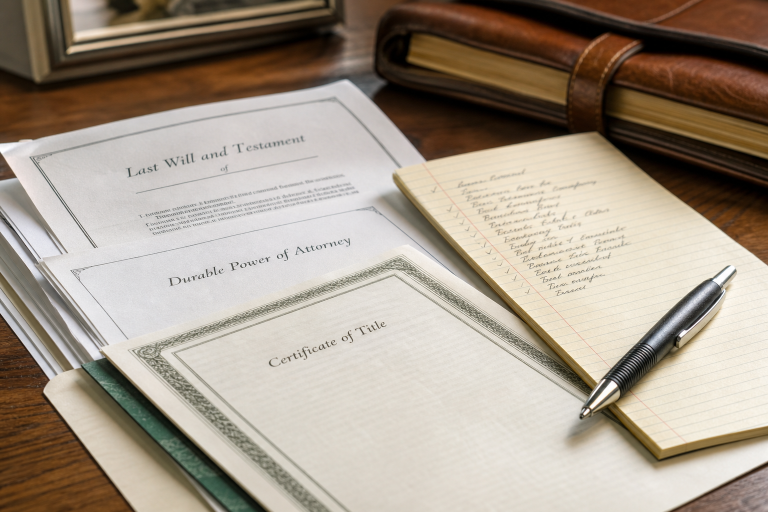
Before making major decisions, locate and copy the records most likely to affect ownership, debts, and authority to act. Useful items include:
- The original will, trust, and any amendments or restatements.
- Recent bank, brokerage, retirement, and life insurance statements.
- Real estate deeds, mortgage records, vehicle titles, and business documents.
- Recent tax returns, recurring bills, loan information, and known creditor notices.
- Marriage, divorce, birth, adoption, and death records that may affect inheritance.
- Digital account details, device access instructions, and contacts for legal, tax, and financial advisers.
Separate Assets By Transfer Method
The first question is not always, “How does probate work?” It is often, “How is this particular asset owned or transferred?” A useful inventory separates property into categories:
- Assets with named beneficiaries. Life insurance, retirement accounts, and payable-on-death accounts may have beneficiary instructions.
- Jointly owned assets. Review the deed or account agreement because ownership language matters.
- Trust-owned assets. Confirm that the asset was actually transferred into the trust.
- Individually owned assets. List property held solely in the deceased person’s name.
- Personal items. Photograph and record vehicles, jewelry, tools, collections, and other valuables before anyone takes possession.
Families can use the California probate guide to understand the basic process for identifying property and debts, as well as potential court steps. The inventory should be as complete as possible, including assets that may pass outside a formal probate case.
Check Whether Formal Probate May Apply
Some estates may qualify for a simplified transfer procedure, while others require a court case. The available options can depend on the estate’s value, the type of property, ownership records, beneficiary designations, and whether a trust controls specific assets. A small estate does not automatically mean that court involvement can be skipped. Before assuming a specific path, compare the asset list with the state’s simple-transfer options for certain property. Keep a separate list of assets that appear to pass by beneficiary designation, joint ownership, or trust, and assets that may need a court order or additional documentation.
Choose The Right Person To Handle The Estate
The person named in a will may be called an executor, while a court-appointed representative in an estate without a will may be an administrator. Titles aside, the role requires time, accuracy, discretion, and steady communication. A suitable person should be able to keep records, handle sensitive financial information, communicate with beneficiaries, and remain calm during disagreements. The named person may be unwilling or unable to serve. Co-representatives, relatives who live outside California, and family conflicts can add complexity. Written updates, copies of receipts, and documented decisions can help preserve trust and reduce misunderstandings.
Create A First-30-Days Checklist
- Obtain certified copies of the death certificate.
- Secure the home, vehicles, valuables, mail, and important papers.
- Locate the original will, trust, and related documents.
- Notify appropriate financial institutions and insurance companies.
- List recurring bills, taxes, loans, assets, and debts.
- Avoid selling, transferring, or distributing valuable property before authority is clear.
- Identify deadlines or disputes that may require legal or tax advice.
Common Mistakes That Create Delays
- Giving away personal items before completing an inventory.
- Mixing estate funds with personal money.
- Ignoring bills, creditor communications, or tax obligations.
- Relying on an unsigned document when an original may exist.
- Assuming beneficiary designations are current after marriage, divorce, or remarriage.
- Using outdated forms or overlooking county-specific filing requirements.
- Posting estate details, account information, or family disputes on social media.
When Professional Help May Be Wise
Legal, tax, financial, or property advice may be especially important when an estate includes real estate, a business, property in another state, cryptocurrency, unclear debts, a minor beneficiary, or a challenged will. Help may also be appropriate when relatives disagree about who should serve or how to divide personal property.
Frequently Asked Questions
Does Every California Estate Go Through Probate?
No. The answer depends on ownership, trust funding, beneficiary instructions, estate value, and the transfer procedures available for the particular property involved.
What Should Be Found First?
Start with the original will or trust, financial statements, property records, insurance information, tax returns, and contact information for relevant advisers.
Can Family Members Divide Personal Items Right Away?
It is generally wiser to inventory items and confirm authority before distributing property, particularly when objects have significant financial or sentimental value.
Final Planning Checklist
- Find controlling estate documents and secure important property.
- List assets, debts, expenses, titles, and beneficiary designations.
- Identify who has authority to act and keep communications in writing.
- Check current court forms and local rules before taking formal action.
- Seek appropriate help for disputes, real estate, business interests, or tax concerns.
Careful preparation cannot eliminate every legal or family challenge. Still, it can prevent unnecessary confusion. By collecting records, sorting assets by transfer method, protecting property, and confirming the appropriate process, California families can approach estate administration with better information and fewer surprises.
Conclusion
Losing a loved one can make even simple administrative tasks feel overwhelming. A well-organized estate plan and clear records can give families a practical starting point during an emotional period. By securing important documents, creating a complete asset and debt inventory, identifying how each property should transfer, and confirming who has authority to act, families can reduce avoidable confusion and delays. It is also important to avoid relying on outdated forms or assumptions, since probate requirements and procedures can vary. When an estate involves disputes, significant property, businesses, taxes, or complicated ownership, consulting an appropriate professional can help clarify the next steps. The goal is not to predict every challenge, but to create an organized foundation that allows the family to handle responsibilities carefully, protect the estate, and move forward with greater confidence.