A serious collision can make even simple decisions feel overwhelming. In the minutes that follow, focus first on preventing further harm, getting medical help, and creating a clear record of what happened. For people dealing with a Nevada crash involving injuries or disputed responsibility, Dimopoulos Injury Law in Nevada may be an option for addressing the legal questions that can arise after immediate safety needs are met.
You do not need to solve every insurance or legal issue at the roadside. A calm approach can protect your health and preserve the details you may need later. Motor vehicle crashes remain a significant public-health concern, with millions of injury-related emergency department visits in the United States each year.
The First Few Minutes: Put Safety First
Before discussing fault, vehicle damage, or insurance, check yourself, your passengers, and others for injuries. Call emergency services if anyone has bleeding, pain, confusion, trouble breathing, weakness, or loss of consciousness. Turn on hazard lights, and move away from traffic if you can do so safely.
Do not move an injured person unless an immediate danger, such as fire, oncoming traffic, or a fuel leak, makes staying put unsafe. If no one appears seriously hurt and the vehicles are operable, move them out of active lanes when local rules permit. Preventing a second collision is often the most urgent concern.
When to Call 911 and Report the Crash
Call 911 when there are injuries, blocked lanes, significant property damage, suspected impairment, a hit-and-run, or an unsafe roadway condition. A responding officer or emergency team can document conditions at the scene and create an official report that may be useful later.
Details to Share With Responders
- Your exact location, nearby cross streets, and direction of travel.
- The number of vehicles and people involved.
- Visible injuries, fire, debris, fuel leaks, or blocked traffic lanes.
- Whether a driver left the scene or appears impaired.
Keep your statements factual. Describe what you saw and felt, but do not guess about speed, fault, or the full extent of an injury before medical professionals have evaluated you.
How to Document the Scene
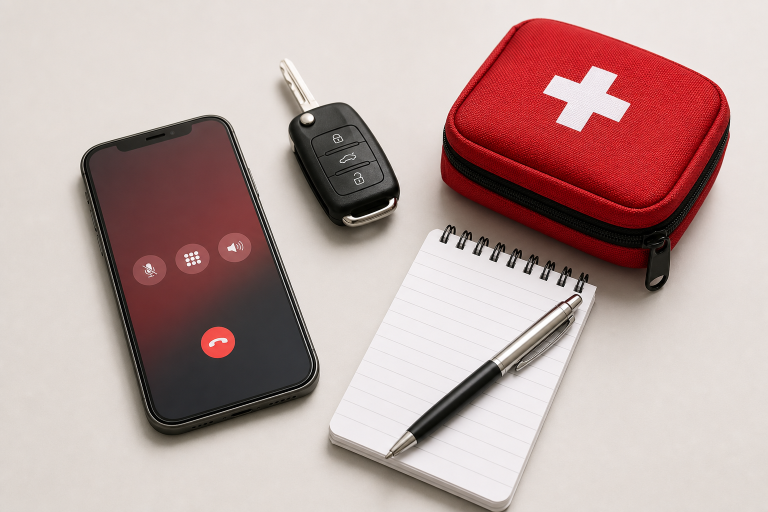
Gather information only when it is safe and when doing so does not delay medical care. Use your phone to take wide and close photographs of vehicles, license plates, intersections, traffic lights, lane markings, debris, road conditions, weather, and visible property damage.
Information to Exchange
- Names, phone numbers, and addresses.
- Driver’s license and insurance information.
- Vehicle make, model, color, year, and license plate number.
- Names and contact details for independent witnesses.
A short voice note can help preserve fresh details, including the time, what each driver said, where each vehicle came to rest, and whether nearby businesses or homes may have security cameras.
Why Medical Care Should Not Wait
Some crash injuries are not obvious at the scene. Adrenaline can mask pain, while headaches, stiffness, dizziness, numbness, or confusion may emerge later. Seek prompt medical attention when symptoms appear, follow discharge instructions, and return for care if your condition worsens.
Head injuries deserve special attention. Worsening headaches, repeated vomiting, slurred speech, unusual behavior, increasing confusion, weakness, or difficulty staying awake can require emergency care. The CDC explains that symptoms may need continued medical attention after a mild TBI or concussion, especially when they persist or worsen.
What to Record After a Medical Visit
- The date, time, provider, diagnosis, and follow-up instructions.
- Daily symptoms, pain levels, mobility limitations, and sleep problems.
- Medication, transportation, treatment, and out-of-pocket expenses.
- Missed work, school, childcare, and regular activities.
How to Handle Insurance Calls
Notify your insurer promptly, in accordance with your policy requirements. Reporting a crash is different from giving a detailed recorded statement. Provide accurate basic facts, keep your claim number, and save emails, letters, estimates, and notes from every phone call.
- Answer honestly, but do not guess when you do not know the answer.
- Avoid calling an injury minor before receiving medical guidance.
- Read any release, settlement document, or repair authorization carefully.
- Keep copies of settlement offers and deadlines in one place.
Insurance procedures, coverage rules, and legal deadlines vary by state. A crash involving major injuries, uncertain fault, or substantial losses may require more careful review before you agree to a payment or sign documents.
Evidence to Save After Leaving the Scene
Once you are safe, create one digital folder for crash-related records. Save the police report, photos, repair estimates, towing bills, medical records, receipts, dashcam footage, messages with insurers, and pay records showing missed work. Photograph damaged personal items before repairing, discarding, or replacing them.
A simple timeline is also valuable. Write down appointments, changes in symptoms, conversations, expenses, and important dates while they are fresh. Consistent records can reduce confusion weeks or months later.
Common Mistakes That Can Make Recovery Harder
- Leaving before a report is made when police involvement is needed.
- Posting details, photos, or injury updates on social media.
- Arguing about fault or apologizing in a way that may be misunderstood.
- Ignoring symptoms because the vehicle damage seems minor.
- Throwing away damaged property before documenting it.
- Accepting a quick settlement without understanding what rights it releases.
- Missing insurance, medical, or state-specific deadlines.
When to Consider Legal Guidance
Not every minor crash requires a lawyer. However, professional guidance may be useful when fault is disputed, injuries require surgery or long-term care, a commercial truck or rideshare vehicle is involved, coverage is insufficient, an insurer denies the claim, or the collision involves a fatality, government vehicle, or dangerous road condition.
During an initial consultation, ask about fees, expected communication, who will handle the matter, possible time frames, evidence that could strengthen or weaken the claim, and any applicable deadlines. Clear questions help you decide whether professional assistance fits your situation.
A Simple 24-Hour Crash Checklist
- Call 911 for injuries or serious hazards.
- Move to safety when reasonable and allowed.
- Exchange information and identify witnesses.
- Take photographs only when it is safe.
- Seek medical care for injuries or new symptoms.
- Notify the appropriate insurer and save the claim number.
- Preserve reports, receipts, records, and damaged property.
- Avoid public posts about the collision.
- Review applicable insurance and legal deadlines.
Final Thoughts
After a collision, safety and health come before paperwork. Timely care, factual communication, and organized records can make the days ahead more manageable. When the crash is serious or the responsibility is unclear, getting informed local advice can help you make decisions with greater confidence.